

TOP>Stock List>1995model Porsche 550 Spyder by BECK“Little Bastard” — James Dean Tribute
1995model
Porsche 550 Spyder by BECK“Little Bastard” — James Dean Tribute






↑↑↑Please watch the archived video above with audio if possible...
There was an enthusiast who poured every ounce of dream and passion into completely recreating the “Little Bastard” loved by James Dean...! Authentic right down to the smallest details...! This 1995 Porsche 550 Spyder by BECK “Little Bastard” James Dean Tribute is a machine that carries dreams and romance—and drives brilliantly...!
Chapter One…
A life of only 24 years, just three starring films, and only nine days with “Little Bastard”… The astonishingly rich youth that James Dean lived at full speed…
America in 1955…
Ten years after the end of World War II, America was enjoying unprecedented prosperity, and the automobile industry centered on Detroit had entered its golden age…
It was an era when America dreamed of an even more prosperous future…
Rapid advances in aviation spread a fascination with the skies into everyday life and automotive design. The so-called Jet Age was reflected vividly in industrial design: bold tailfins recalling jet fighters, massive chrome bumpers, bright two-tone colors, and powerful V8 engines…
American cars of the period brilliantly reflected prosperity and freedom, together with optimism for the bright future that science and technology seemed certain to open…
Everyone looked toward tomorrow with hope, believing life would become richer still…
New rock ’n’ roll shook the jukeboxes, and through fashion, music and the automobile—the object closest to daily life—a freer, more individual youth culture was beginning to emerge, unconstrained by the values of the past…
Into that America of the 1950s appeared one young actor…
His name was James Byron Dean…
Born in Marion, Indiana, on February 8, 1931, he lost his mother while still young and was raised by his aunt and uncle…
He eventually set his sights on acting, learning his craft through stage and television work in New York. In 1955 he shot to prominence in Elia Kazan’s East of Eden…
That was followed by Rebel Without a Cause and, finally, Giant—only three films in which he held a starring role…
Remarkably, only East of Eden reached theaters during his lifetime. The remaining two became posthumous releases after his death…
Tousled hair, a white T-shirt and jeans, sometimes a red jacket, and a gaze carrying a trace of melancholy…
He rebelled against established values, yet deep inside seemed to be searching for affection…
The longing for freedom and rebellious spirit he expressed set him apart unmistakably from the Hollywood stars who had come before, and James Dean captured the hearts of young people almost instantly…
Yet behind the glamorous image of the movie star, he had another side…
He loved speed itself, loved the sports cars that embodied it, and took the wheel to compete as a racing driver…
In February 1955, Dean finally acquired the Porsche 356 Super Speedster he had long desired…
In an America dominated by large cars with big-displacement V8 engines, he chose instead another automotive culture that had arrived from postwar Europe: a small, German-built, air-cooled sports car…
A Porsche with a lightweight body and superb handling—one that rewarded the skill of its driver…
Drawn to that appeal, Dean was not satisfied merely to own the 356 Super Speedster…
In March of the same year, he entered his first road race at Palm Springs, California, organized by the California Sports Car Club…
Astonishingly, he won the preliminary race on the first day and finished second overall in the final the next day…
In May, at an SCCA sports-car event in Bakersfield, he again showed real promise as a racing driver, finishing third overall in the preliminary race and winning the FP class…
Warner Bros., meanwhile, strictly limited his racing activity by contract in order to avoid an accident during filming…
The more successful he became as a movie star, the harder it became to race freely…
Yet even in that ironic situation, Dean’s passion for motorsport never cooled…
Then, in September 1955, as filming of his third movie, Giant, neared completion…
He finally obtained the car he had truly longed for…
It was a 1955 Porsche 550 Spyder—chassis No. 550-0055, engine No. P90059…
July 15, 1955…
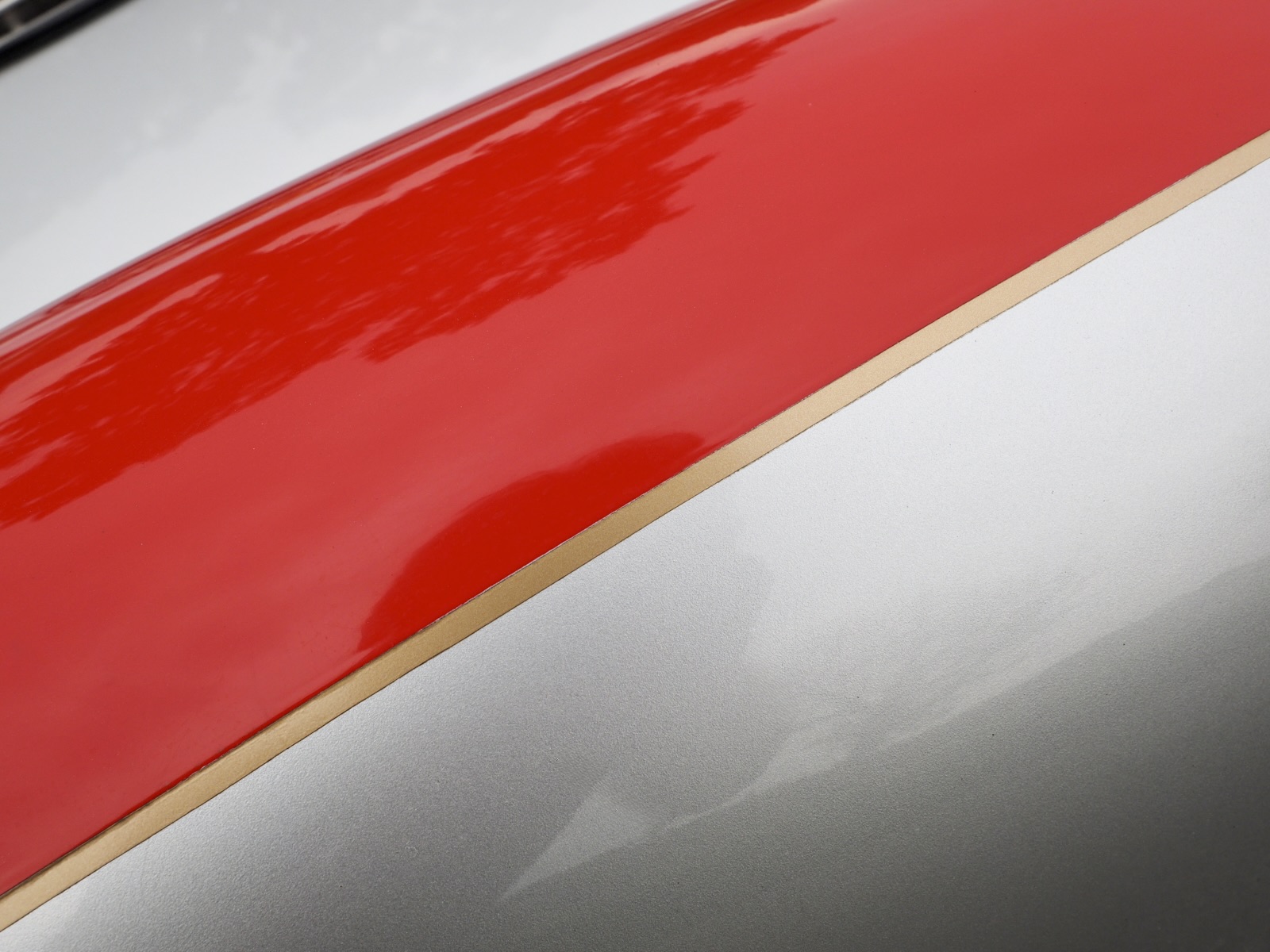
Completed at Porsche’s Zuffenhausen factory in Germany, the car wore a flowing aluminum body built by the renowned Reutlingen coachbuilder Wendler Karosserie, silver paint, a vivid red interior, and—true to its racing purpose—a red identification stripe edged by a fine gold pinstripe over the rear fender for distinguishing cars in endurance races such as Le Mans. Weighing only 550 kg, it was an extraordinarily light sports racer, fundamentally different from the Porsche 356 Dean had driven until then…
This silver Porsche 550 Spyder crossed the Atlantic for export to North America, then the world’s largest market, and was delivered to Competition Motors, the official Porsche dealer in Hollywood, California…
September 18, 1955…
Dean’s close friend and fellow Porsche enthusiast Lew Bracker happened to spot a silver 550 Spyder at Competition Motors in Hollywood…
He excitedly told Dean about it, and only three days later, on September 21…
James Dean traded in his beloved Porsche 356 Super Speedster, added $3,000, and finally acquired the 550 Spyder he had dreamed of…!
Introduced in 1953, the Porsche 550 Spyder was a true racing sports car that distinguished itself in major events such as the 24 Hours of Le Mans and the Carrera Panamericana…
From the factory, 550s often carried vivid red, blue, green or yellow rear-fender stripes edged with a delicate gold line about 2 mm wide, allowing otherwise similar silver German-national-color cars to be identified from a distance…
A low, flowing aluminum body and an ultralight structure of around 550 kg…
Behind the driver sat the Type 547, a 1,498 cc air-cooled flat-four with four camshafts—a pure racing engine…
Approximately 110 horsepower in a car weighing only about 550 kg…
With a top speed exceeding 220 km/h, its performance was astonishing for the era…
The fact that one could still drive a newly purchased car home the same day is a charming reminder of how deeply automobile culture has long been woven into everyday American life…
On September 21, 1955, after paying the additional $3,000 and driving away in his new Porsche 550, James Dean immediately went to Lew Bracker’s home to show off his new car…
It is such a warm, timeless story—exactly the sort of thing car enthusiasts have always done…!
Around this time, the two would drive their Porsche 356s together on winding roads outside Los Angeles and even dreamed of one day opening their own Porsche specialist shop called ‘James Dean Motors’…!
James Dean was captivated by Porsche sports cars to that degree…
And he clearly had no intention of leaving his newly acquired 550 Spyder—chassis 550-0055, silver body, red interior and red identification stripe on the rear fender—exactly as delivered by the factory…
September 26, 1955…
Dean drove the Porsche 550 Spyder himself to the shop of famed pinstriper Dean Jeffries in Lynwood, outside Los Angeles, where he began turning it into his own special racing car…
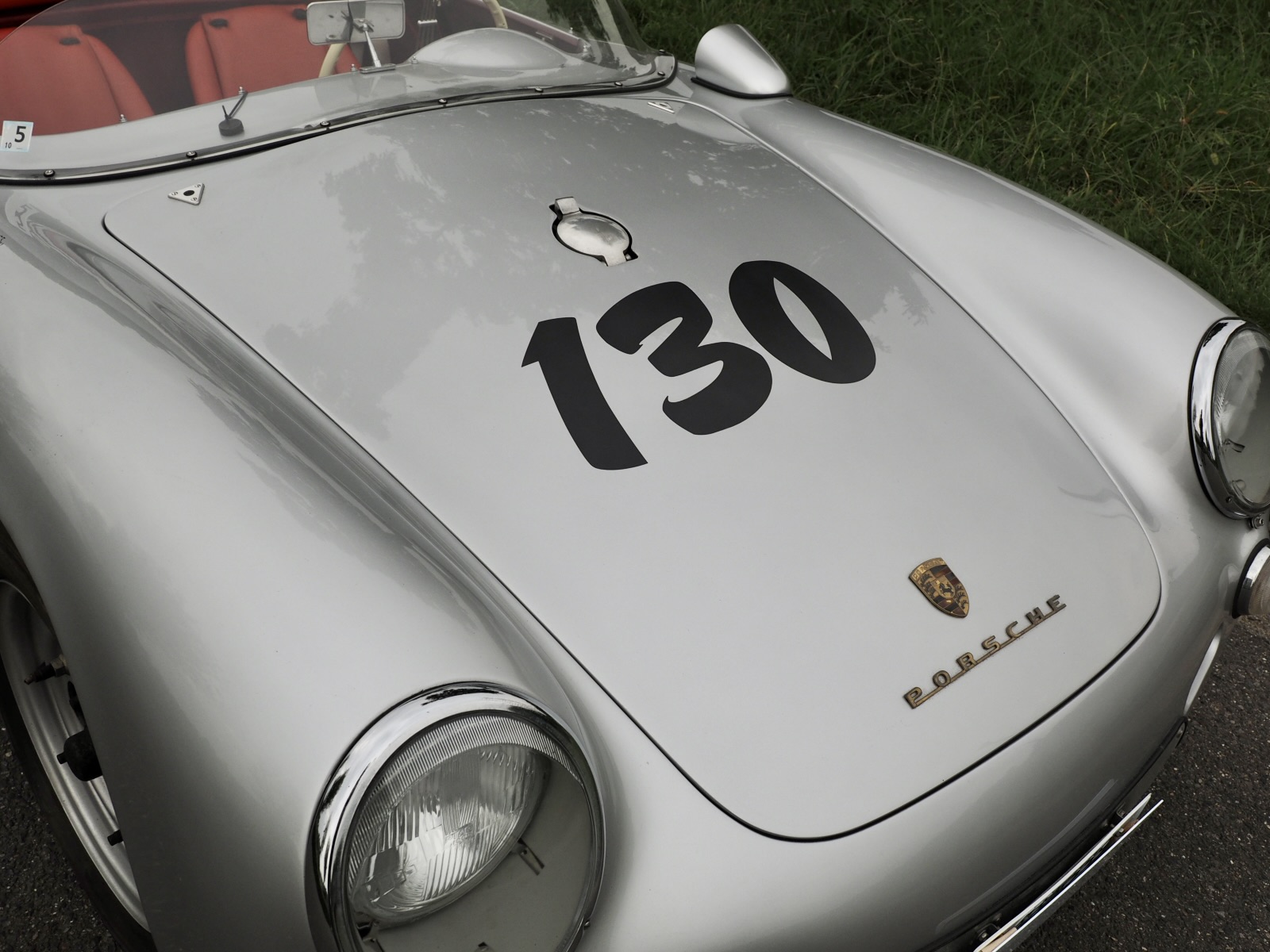
Large black racing numbers were painted on the front hood, both doors and the rear cowl…
The number was ‘130’…
In fact, Dean and his close friend Lew Bracker had originally wanted racing number ‘13’…
But because the race organizers of the era would not allow the supposedly unlucky number 13, Dean chose 130 and Bracker chose 113…
Dean then wanted one more piece of lettering added to the rear cowl…
“Little Bastard.” That name is crucial to understanding this story…
The English word ‘bastard’ was originally slang…
It can certainly be used as an insult and is hardly a refined expression, but among close friends it can also be teasing—something closer to ‘you little rascal’…
One origin comes from Dean’s friendship with Hollywood stunt driver Bill Hickman, who later drove the Dodge Charger in the legendary chase scene in Steve McQueen’s Bullitt. Hickman reportedly called Dean ‘Little Bastard,’ and Dean jokingly called him ‘Big Bastard’ in return…
Another origin has emerged through more recent research, and it reflects Dean’s rebellious character even more clearly…
After filming East of Eden, Dean was reluctant to vacate the trailer house Warner Bros. had provided for him on the studio lot…
Frustrated by this, Warner Bros. chief Jack Warner is said to have called him a ‘Little Bastard’…
Dean reportedly heard the remark…
And his response was essentially: ‘If you are going to call me a little bastard, I might as well put that name on my racing car…!’
Perhaps it carried his own delightfully defiant response to the studio that had restricted his racing activities…
Exactly… ‘Little Bastard’ was originally a nickname for James Dean himself…!
Dean deliberately gave that same name to the 550 Spyder he loved…
Dean Jeffries, the pinstriper who actually painted the lettering on the car, later described the work of that day in detail…
Because the official competition number had not yet been finalized, the ‘130’ racing numbers were painted in removable black paint. The ‘Little Bastard’ lettering, however, was done with durable, glossy black One Shot enamel…
The racing numbers were temporary, but the name ‘Little Bastard’ was painted with the intention that it remain on the car…
Jeffries later recalled that Dean himself was delighted with the finished lettering…
He had taken a rather rough expression directed at himself and turned it into the name of his own racing car…
It seems to reveal the real James Dean’s rebellious spirit and sense of humor, beyond anything seen on screen…
And so the small silver racing car became something uniquely James Dean’s own…
He planned to race ‘Little Bastard’ in the SCCA Salinas road races beginning October 1, 1955…
A genuine mid-engined racing car completely different from the Porsche 356 he had known before…
Filming of Giant was over, he was free of the studio trailer, and at last he could return to racing…
And he would make his competition debut at the wheel of the 550 Spyder he had wanted for so long…
For him, it should have been a special moment—the beginning of a new challenge as a racing driver…
But tragically… that day never came…
Friday, September 30, 1955…
James Dean left Hollywood to take part in the Salinas race…
In the passenger seat was Rolf Wütherich, Porsche mechanic and friend…
Following behind were his close friend ‘Big Bastard’ Bill Hickman and others in a Ford station wagon towing a trailer…
The 550 could have been carried on the trailer, but Dean chose to drive it to Salinas himself to break in the still-new engine and become familiar with the car’s behavior…
A weekend not as a movie star, but as a racing driver…
A new racing car carrying his own chosen name, ‘Little Bastard’…
And the anticipation of the race ahead…
It is easy to imagine how much joy he must have felt that day…
But on the evening of that same day, September 30, 1955…
Near Cholame, California, the 550 Spyder collided at an intersection with a Ford turning left. James Dean’s life ended at only 24 years of age…
Only nine days after finally acquiring the 550 Spyder on September 21, 1955…
And the first race he was meant to contest in ‘Little Bastard’ never happened…
Only 24 years of life… only three starring films… and only nine days with ‘Little Bastard’…
James Dean’s youth was astonishingly brief—and astonishingly rich…
All three films he left behind earned places in cinema history, while the racing car he owned for only nine days continues to fascinate enthusiasts around the world more than 70 years later…
What did he strive for, and what did he leave behind…?
The value of a life can surely never be measured merely by the number of years lived…
That is perhaps why the figure of James Dean—an icon of youth—continues to live in so many hearts, not merely as a tragic movie star…
Chapter Two…
A dream handed down for more than half a century…
One enthusiast who deeply admired James Dean recreated ‘Little Bastard’ with every bit of his dream and passion…!
More than 70 years have passed since James Dean died at the age of 24…
Only three starring films, and the Porsche 550 Spyder he acquired at the very end of his life…
People around the world remain captivated by that short but brilliant life, and the films, photographs and silver racing car he left behind continue to grip enthusiasts today…
Here in Japan, too, there was one enthusiast who held extraordinary admiration and respect for James Dean and set out to recreate the ‘Little Bastard’ that Dean loved at the end of his life…
The 1995 Porsche 550 Spyder by BECK featured here is the fascinating result of that person’s passion—carefully recreated and preserved for the future…
Having the opportunity to introduce this car, I studied period photographs and documents in depth and researched every detail again. The more I looked, the more amazed and excited I became by how seriously its creator had studied James Dean’s 550 Spyder…
The American-built BECK 550 Spyder was developed by enthusiast and racing-car builder Chuck Beck to recreate the 1950s Porsche 550 Spyder for the modern era…
Production began in the early 1980s. While faithfully recreating the original 550’s low, beautiful body lines, the BECK combines a dedicated tubular-steel frame with a lightweight FRP body and mounts a Volkswagen air-cooled flat-four in a mid-engine position, balancing genuine sports-car performance with comparatively straightforward maintenance…
Whereas the original Porsche 550 was a pure racing car with an advanced four-cam engine, the BECK recreated its styling and agile dynamics in a sports car that could actually be enjoyed on public roads…
This particular example, chassis No. 550000468, was first registered in Japan in July 1995…
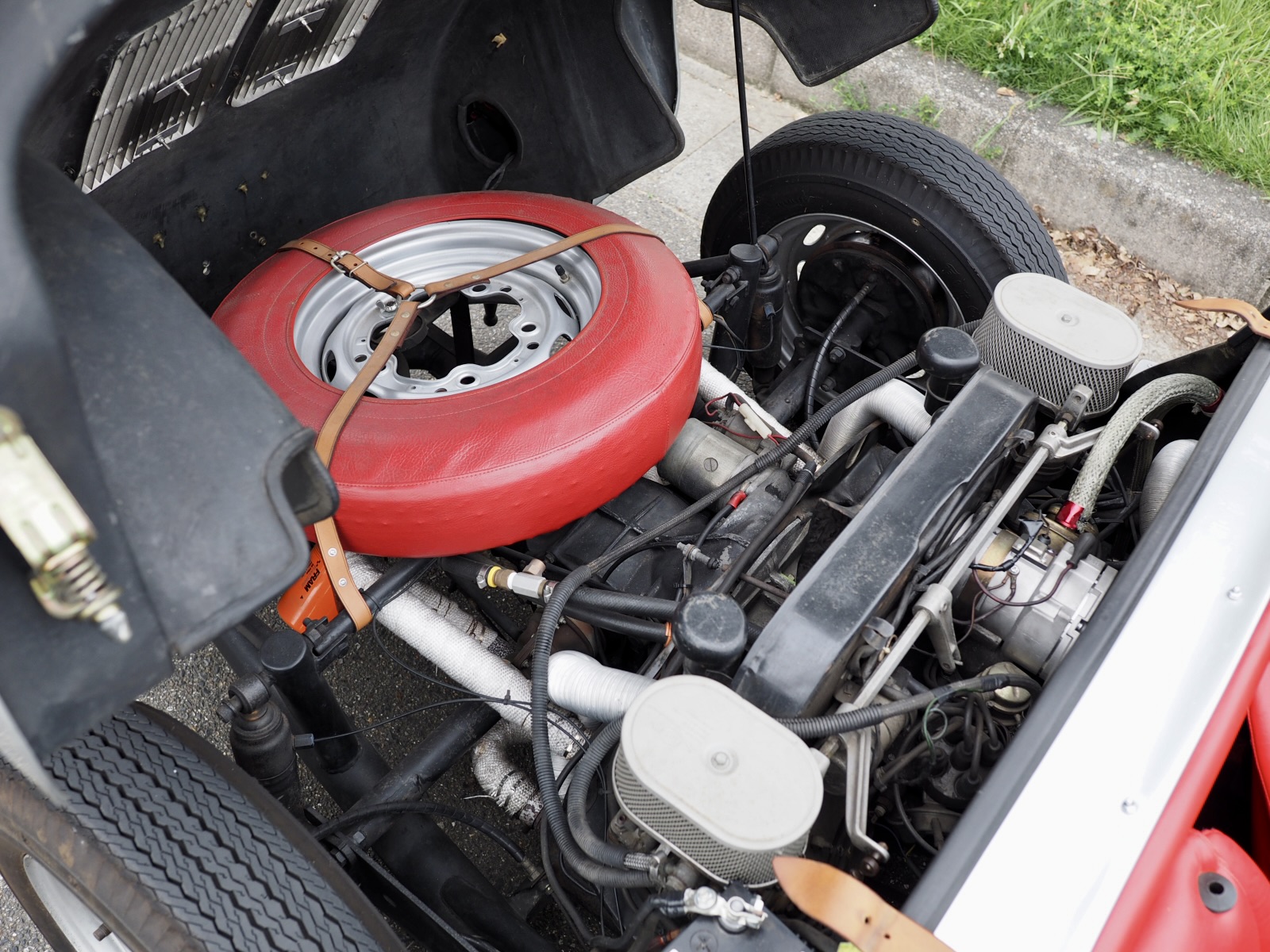
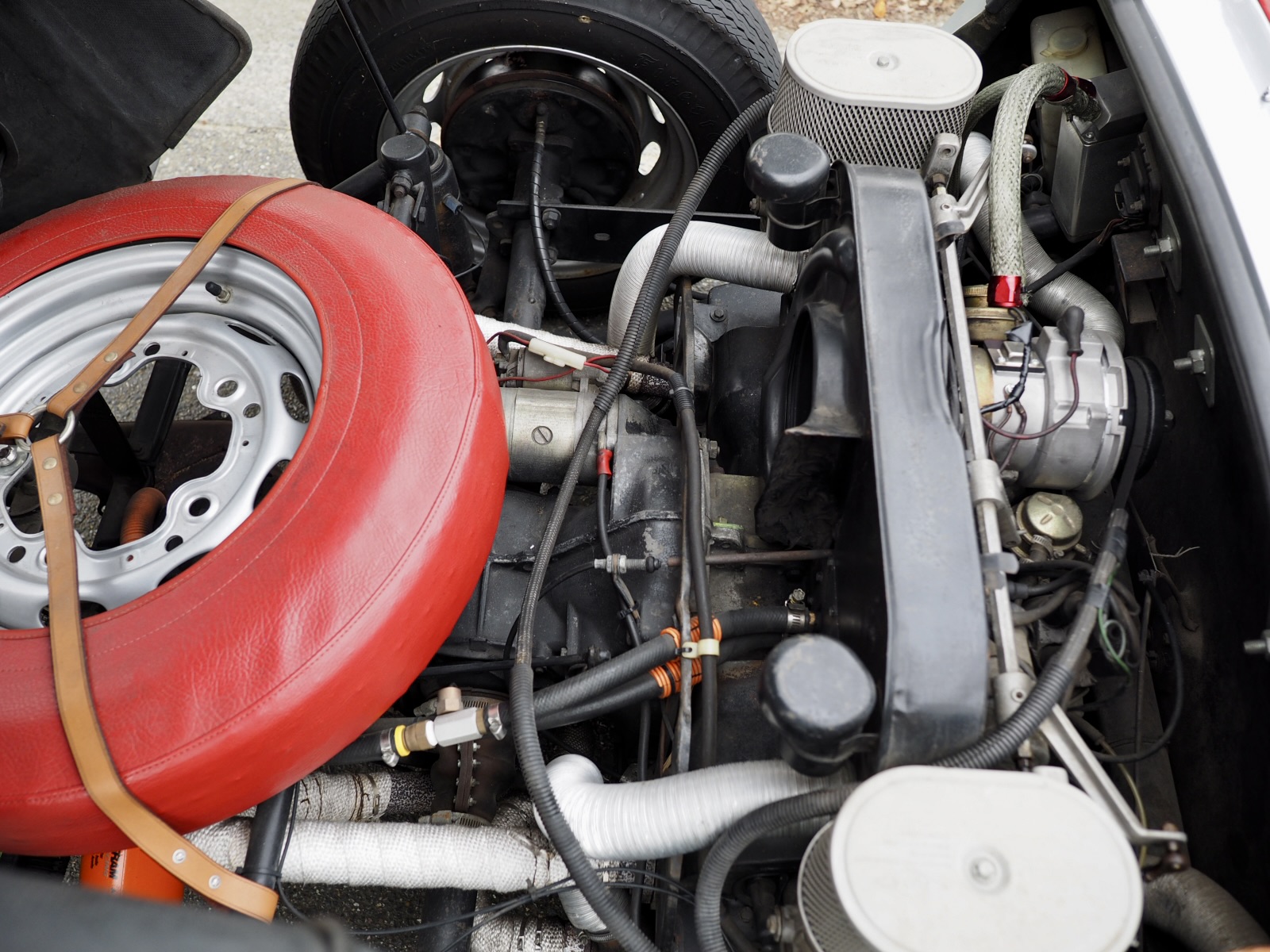
At 3,750 mm long, 1,600 mm wide, only 1,020 mm high and just 650 kg, it is astonishingly compact and light even by modern sports-car standards, and it is powered by an approximately 1,910 cc VW-family air-cooled flat-four…
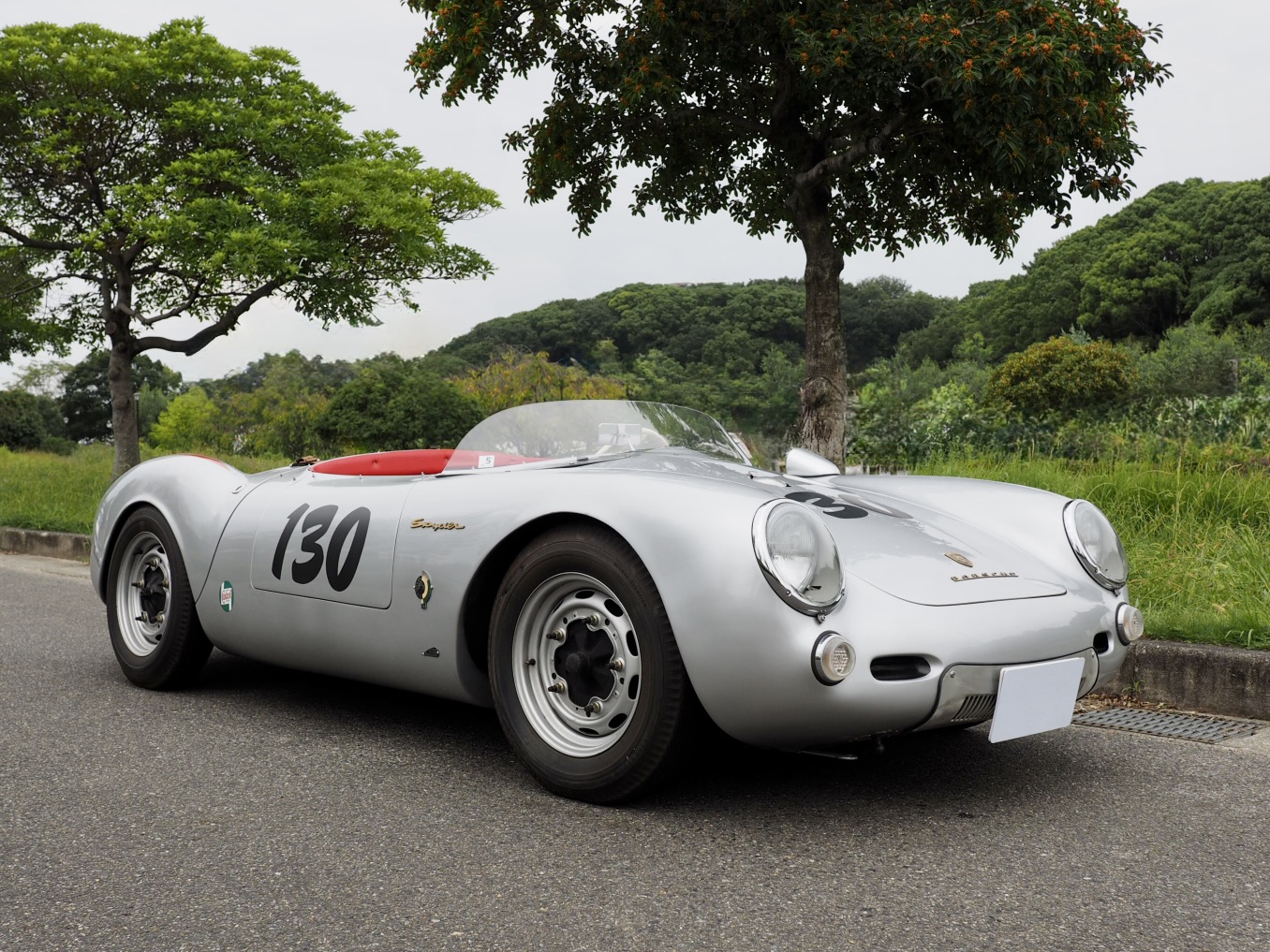
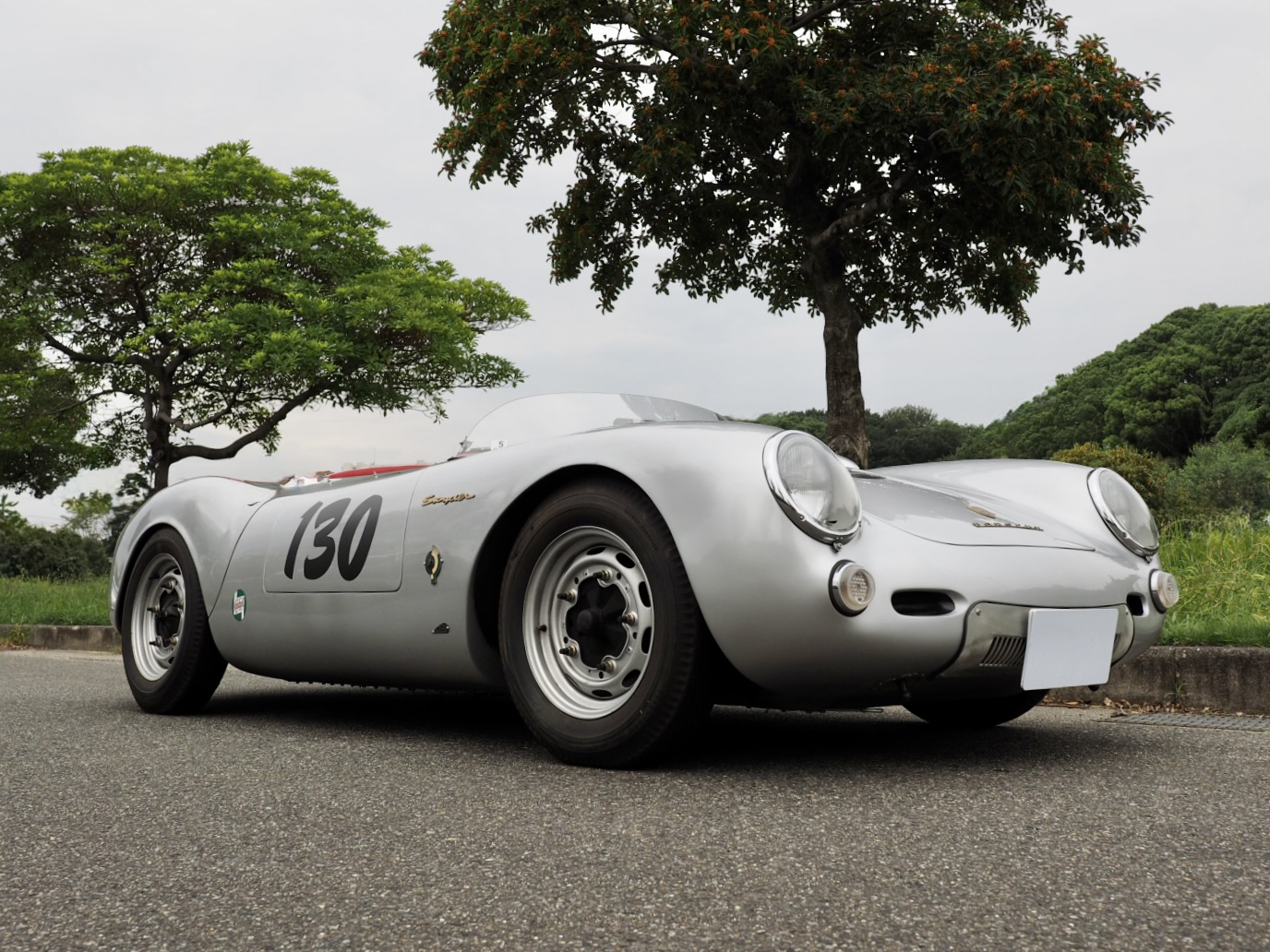
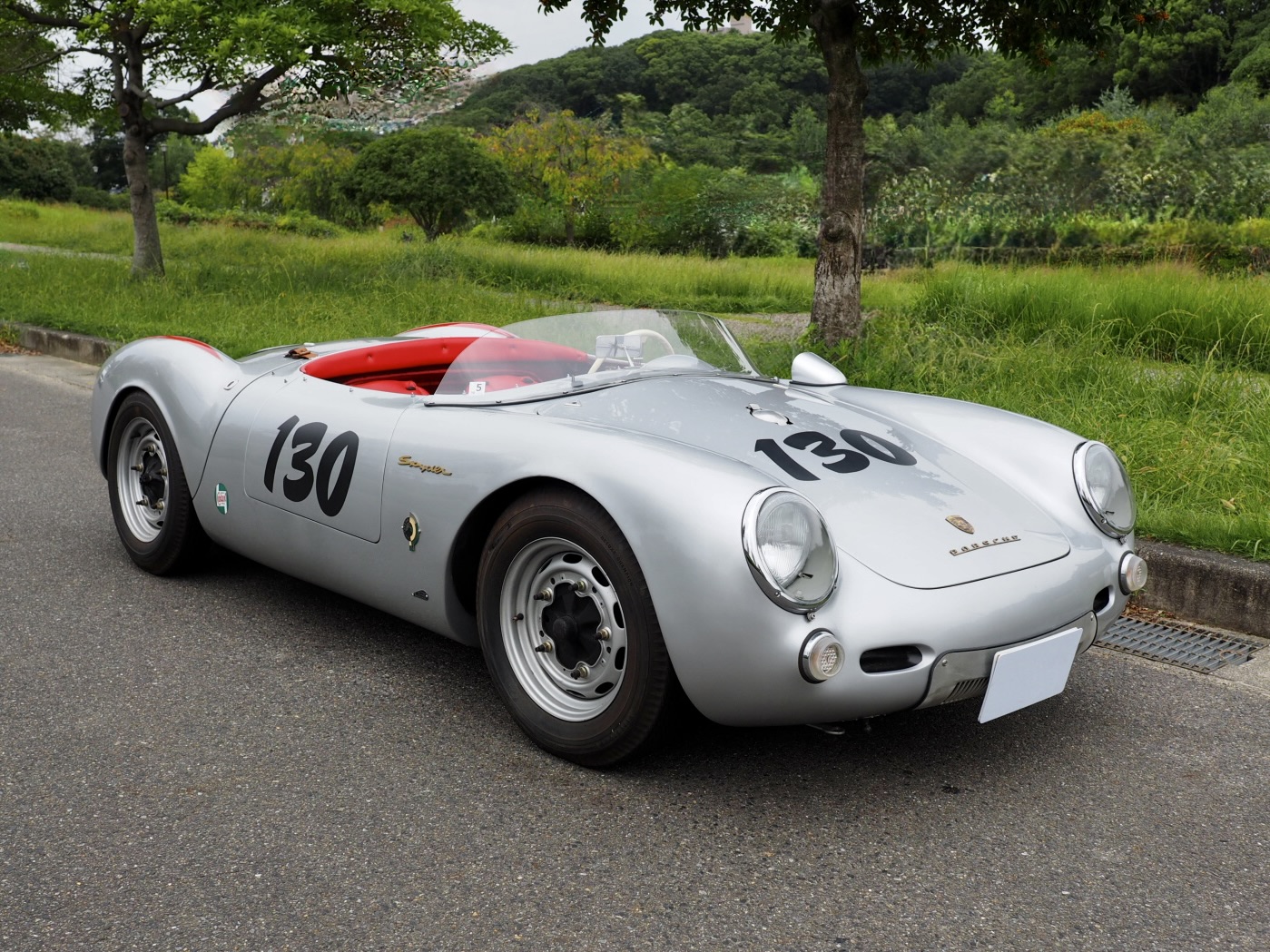
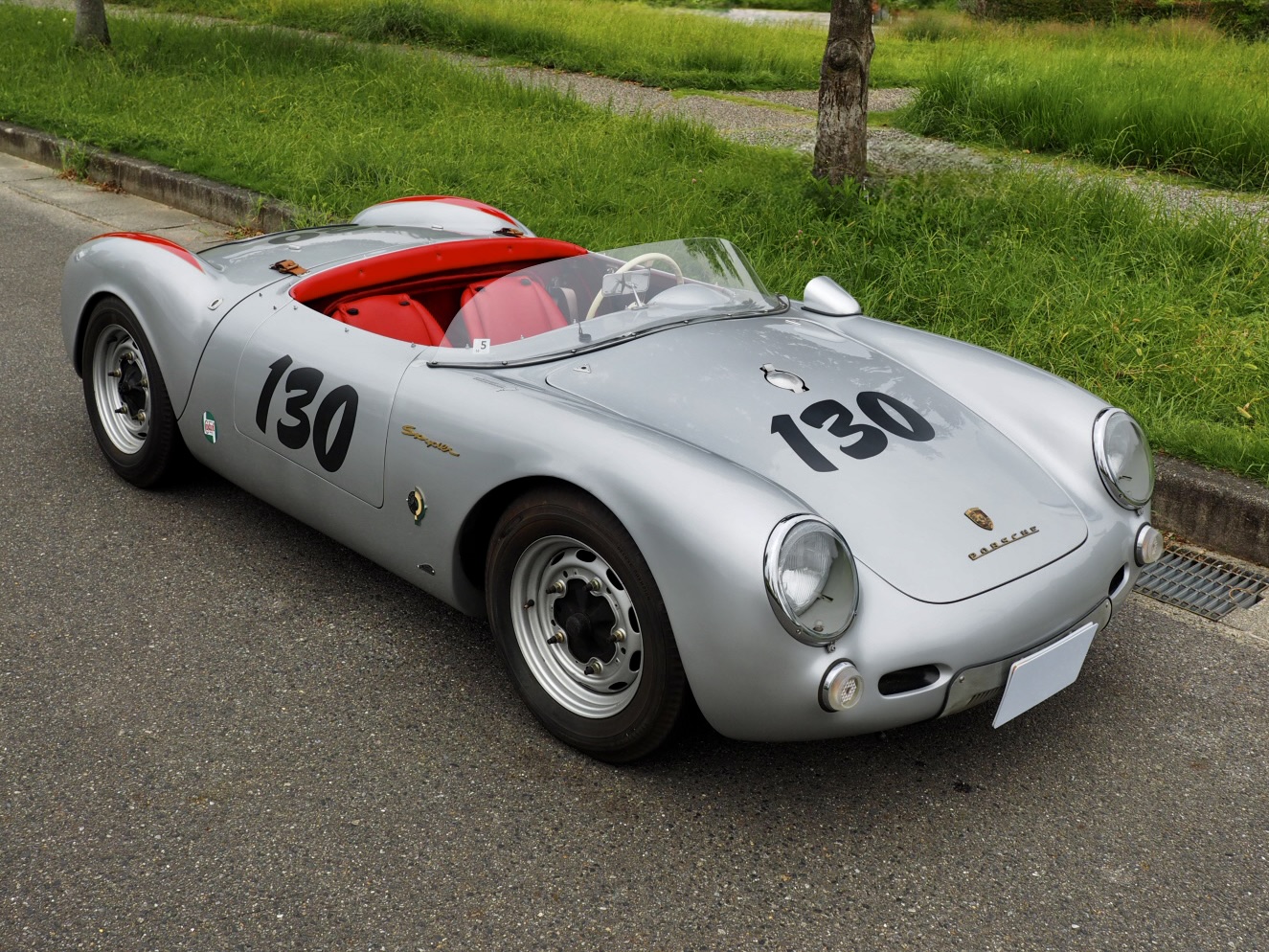
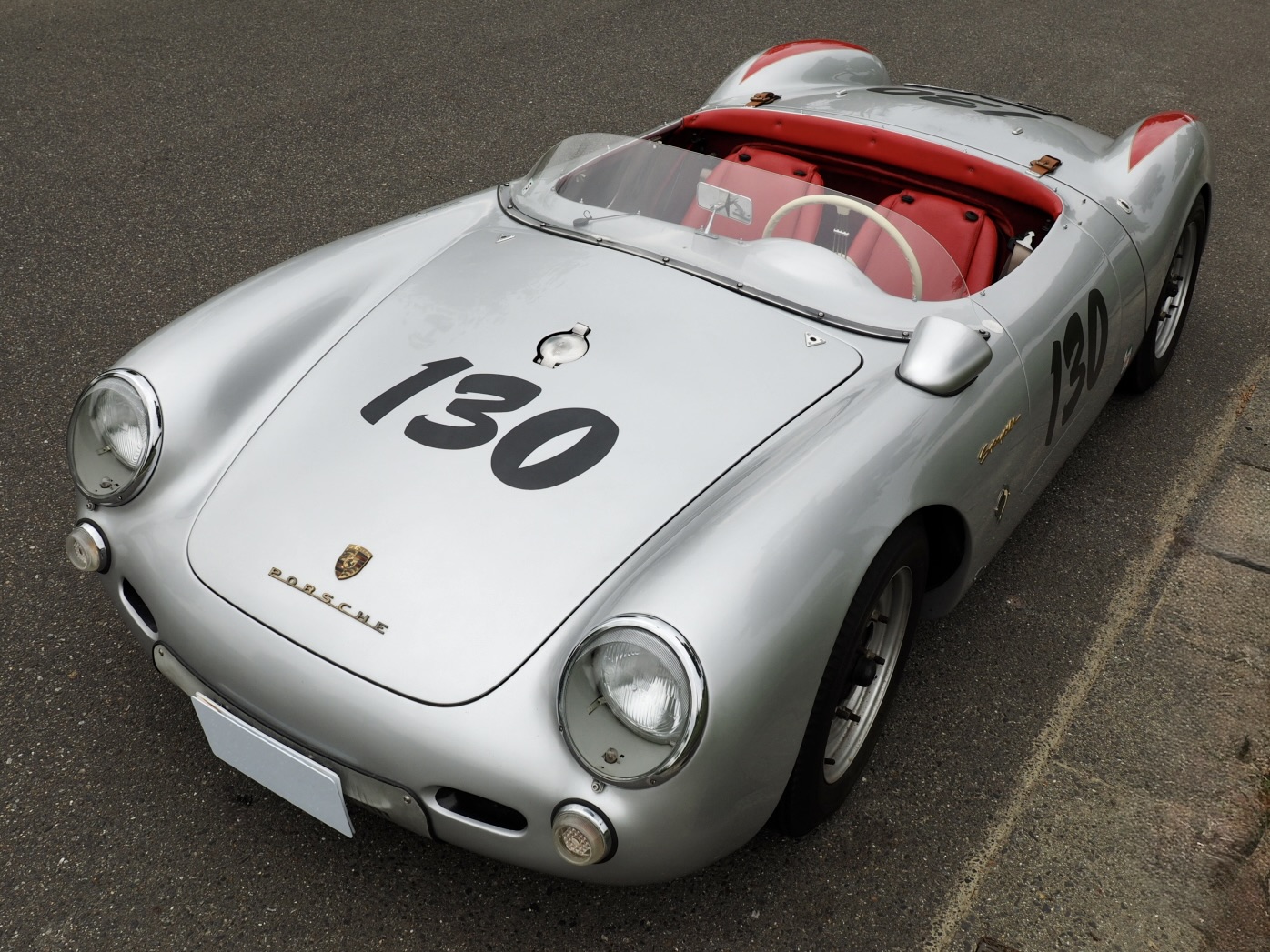
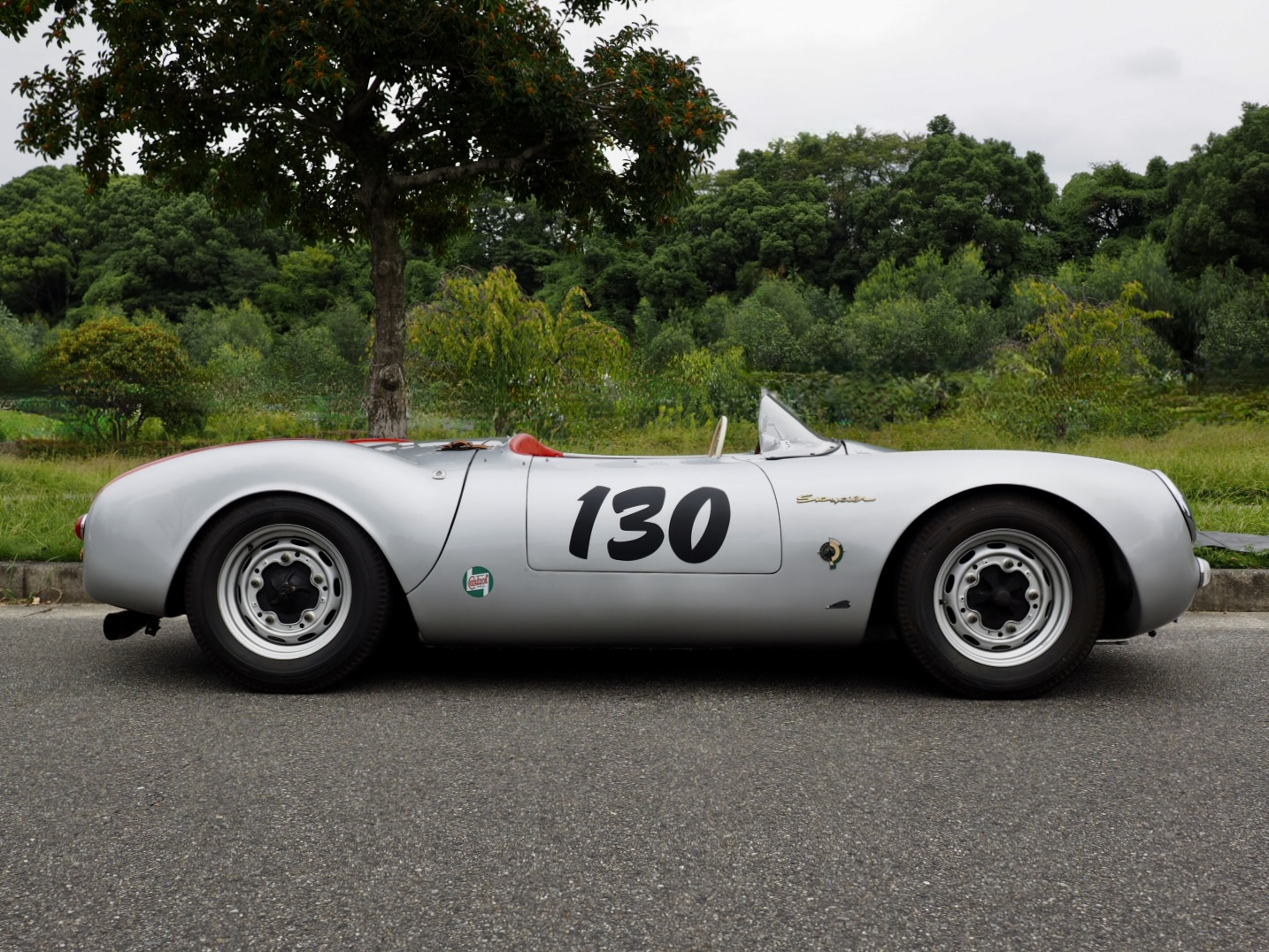
When you see the car in person, the first surprise is its beautiful styling, instantly recalling James Dean’s 1955 Porsche 550 Spyder…
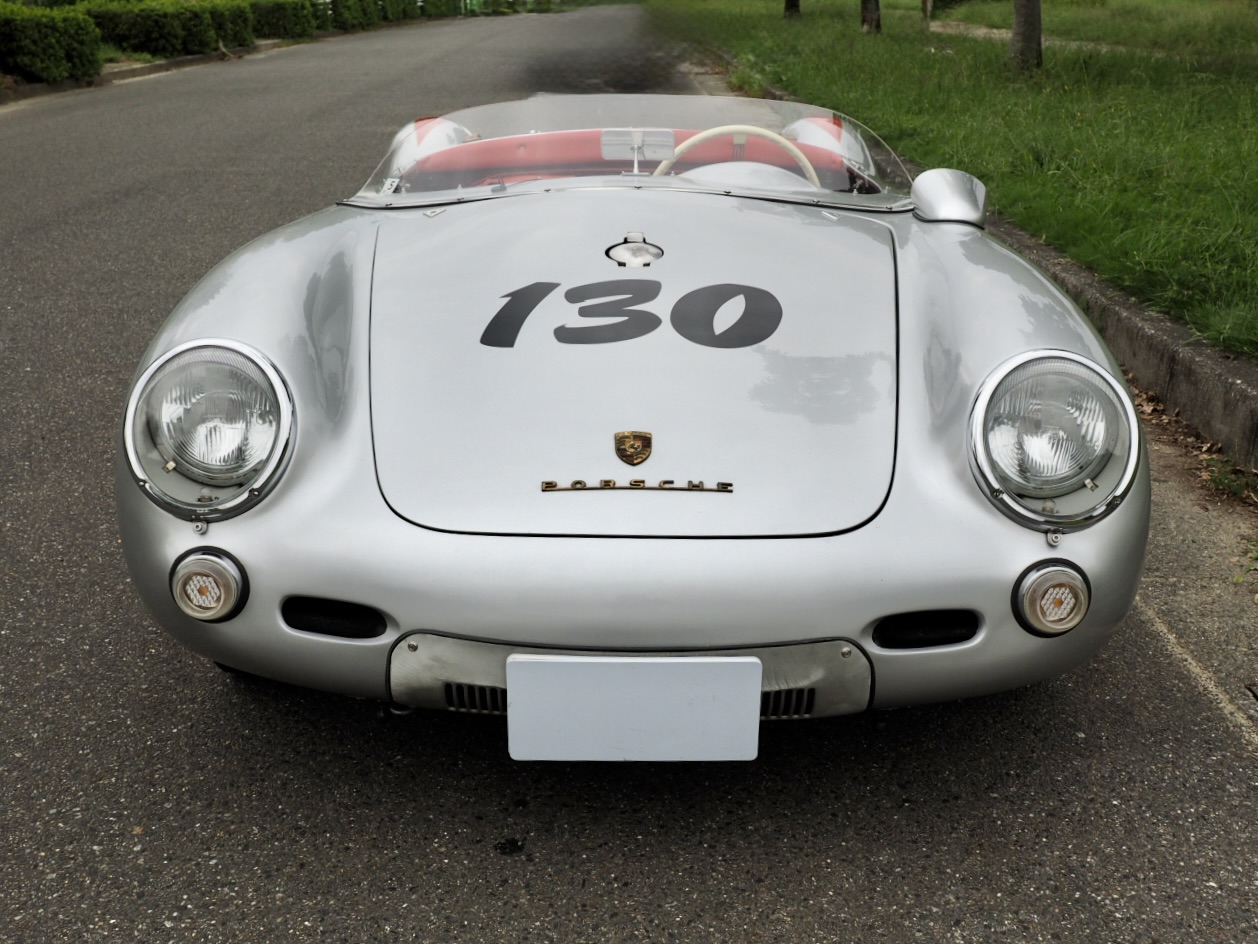
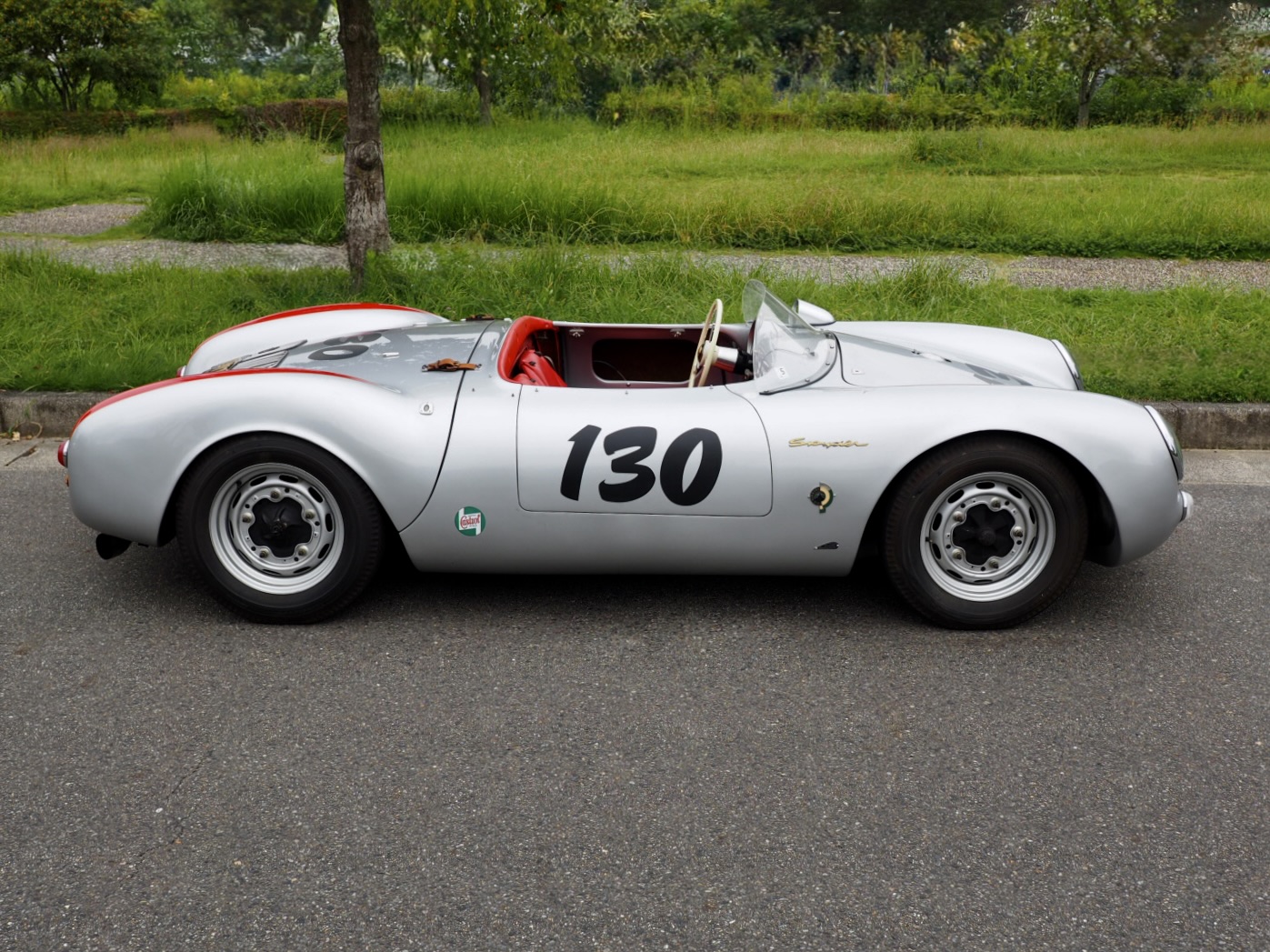
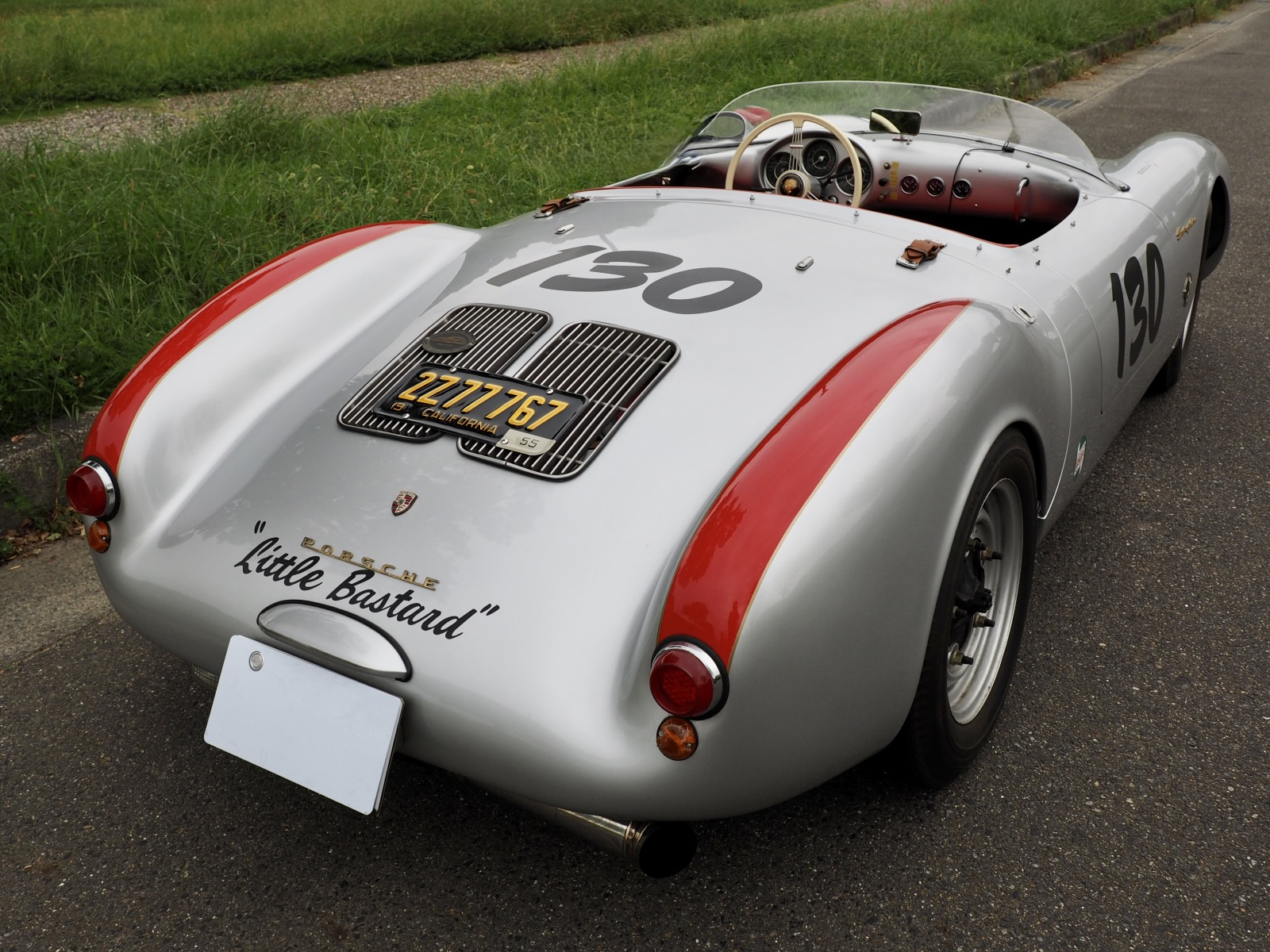
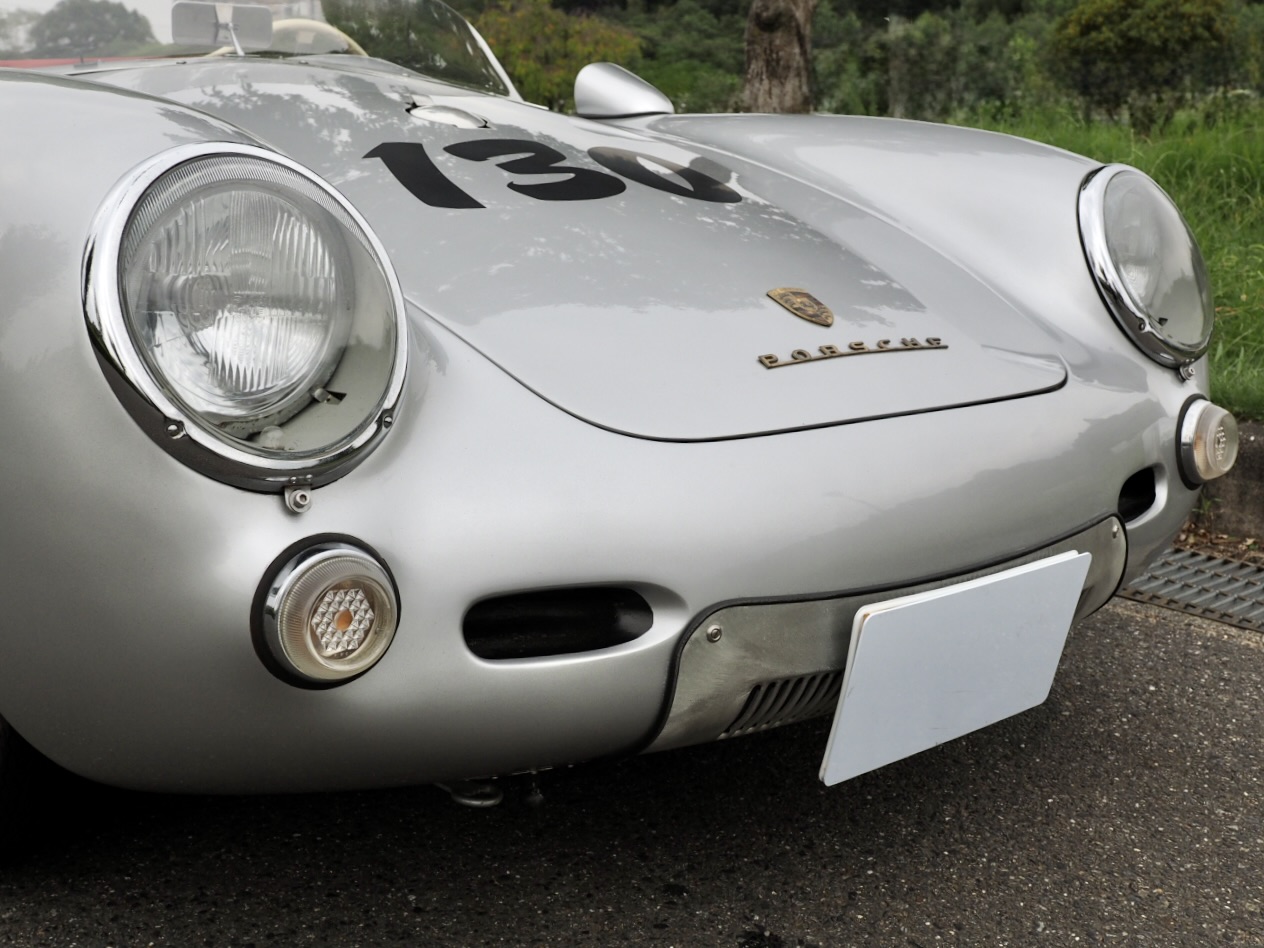
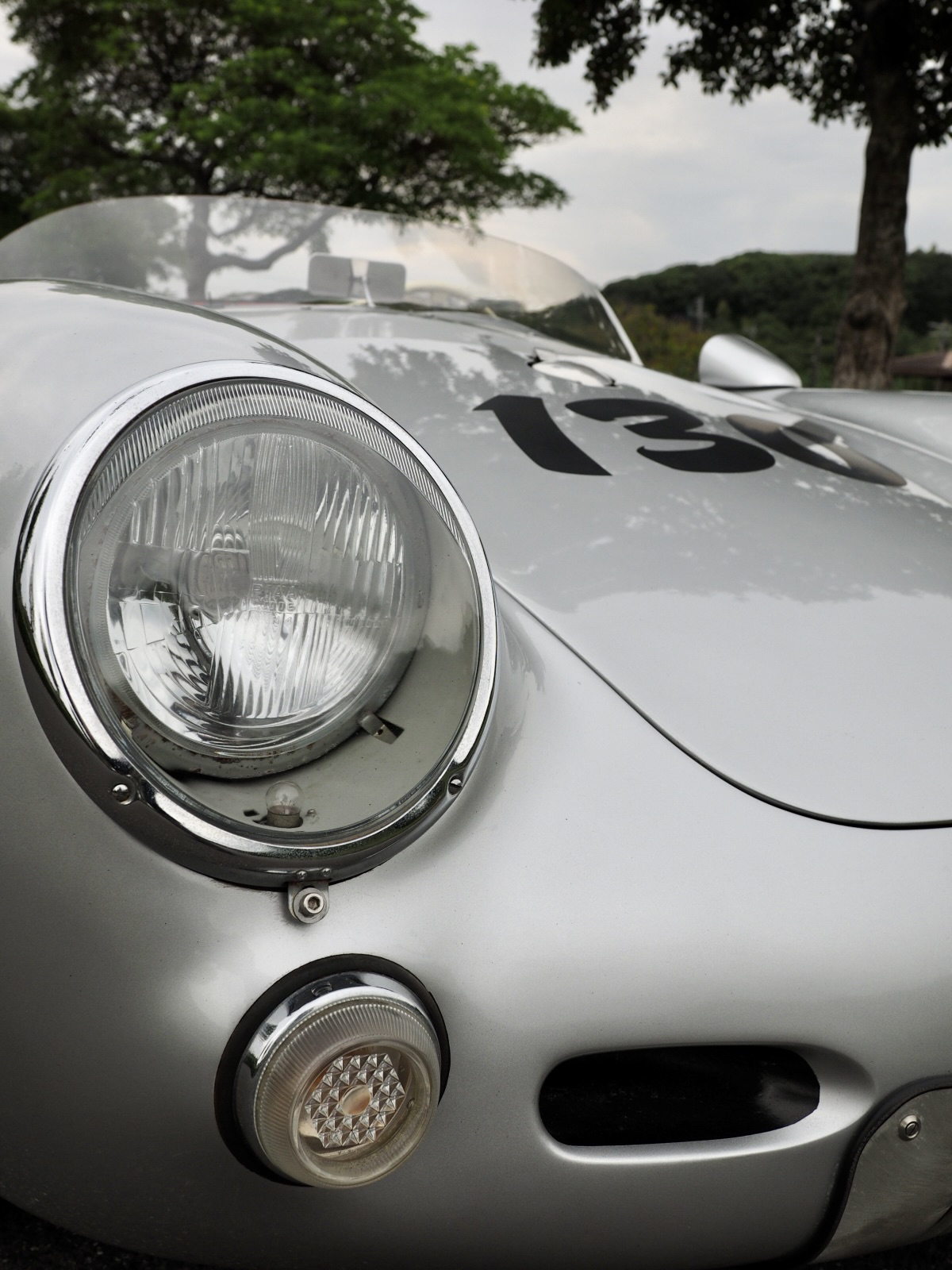
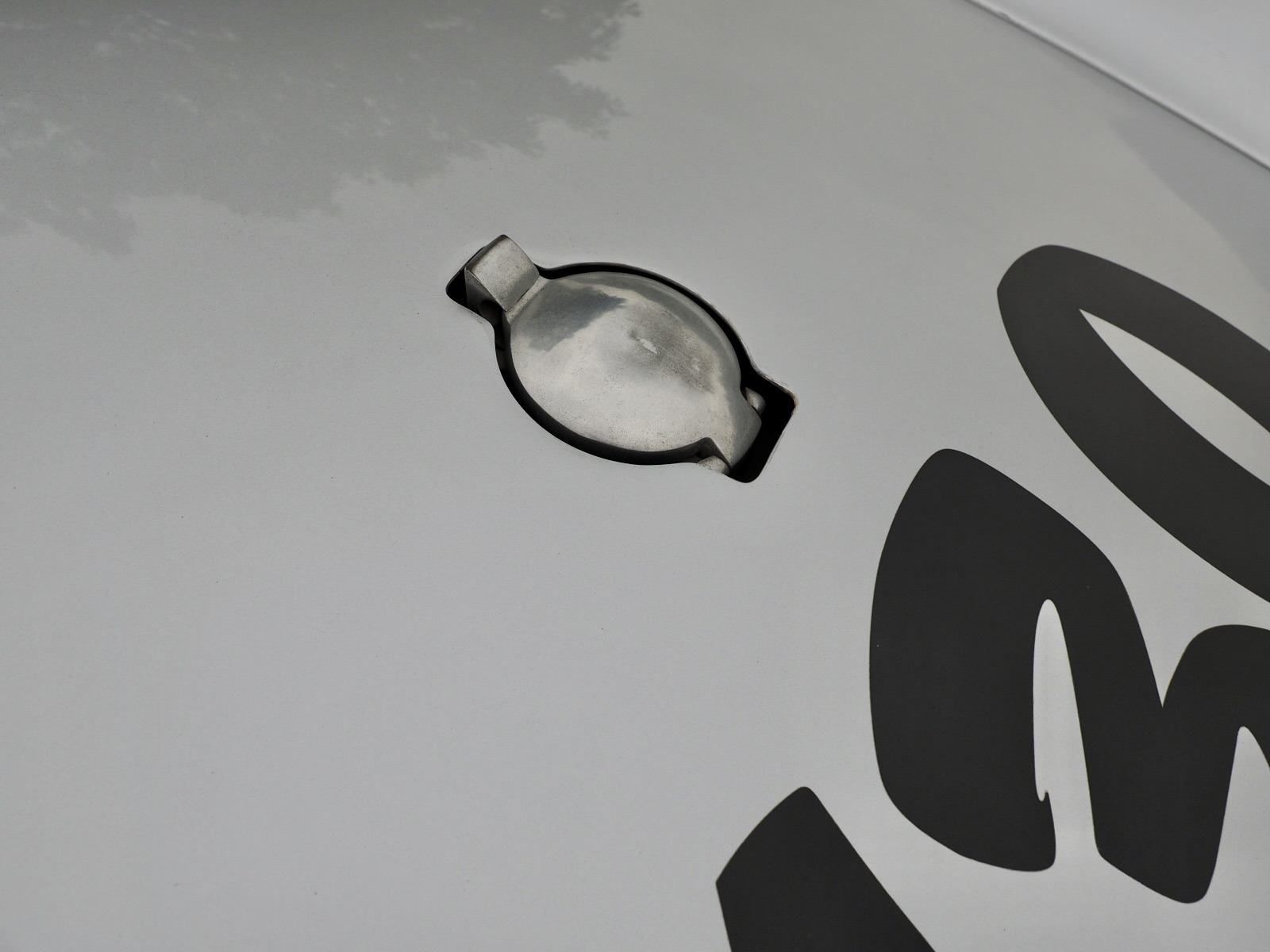
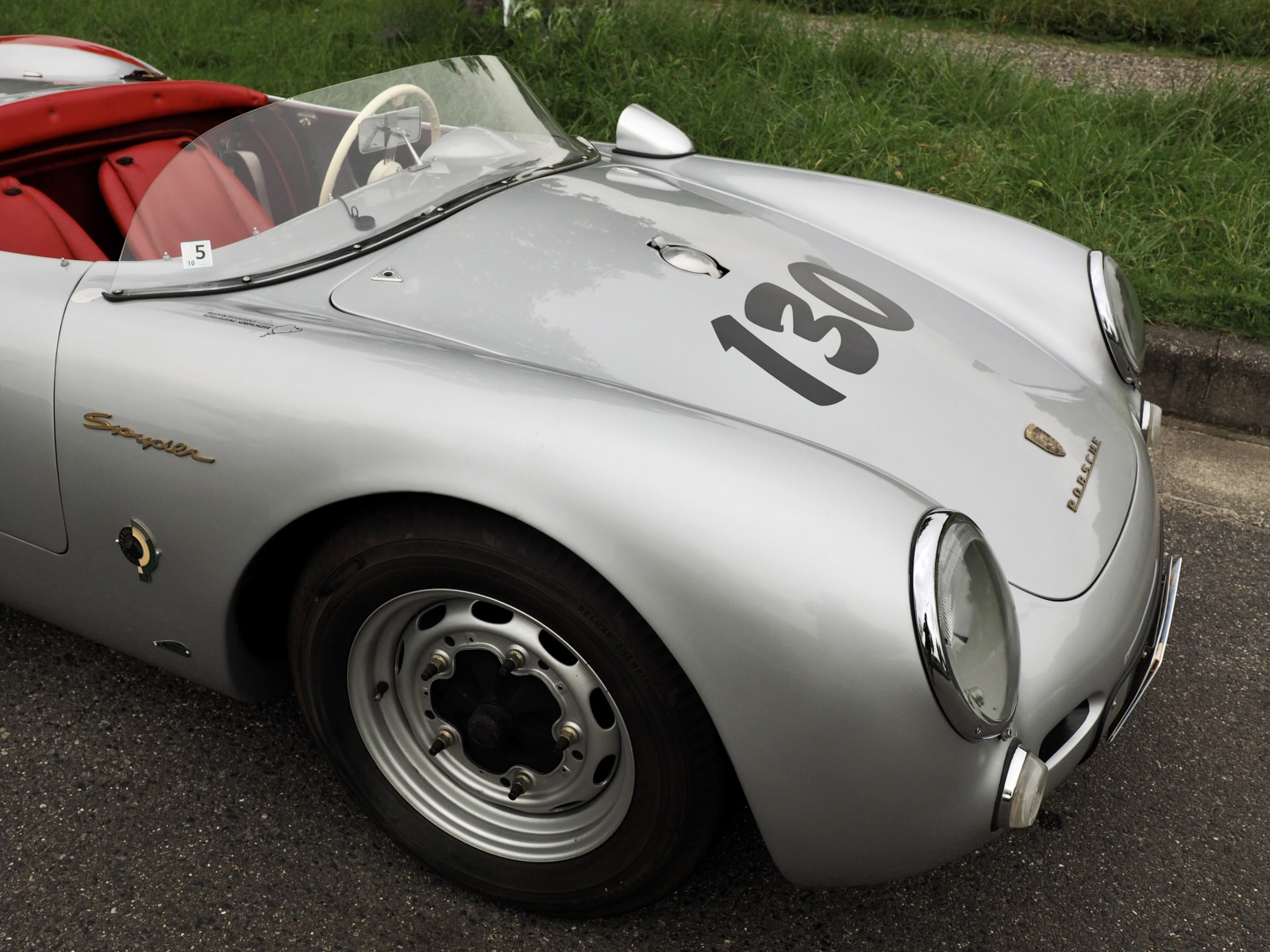
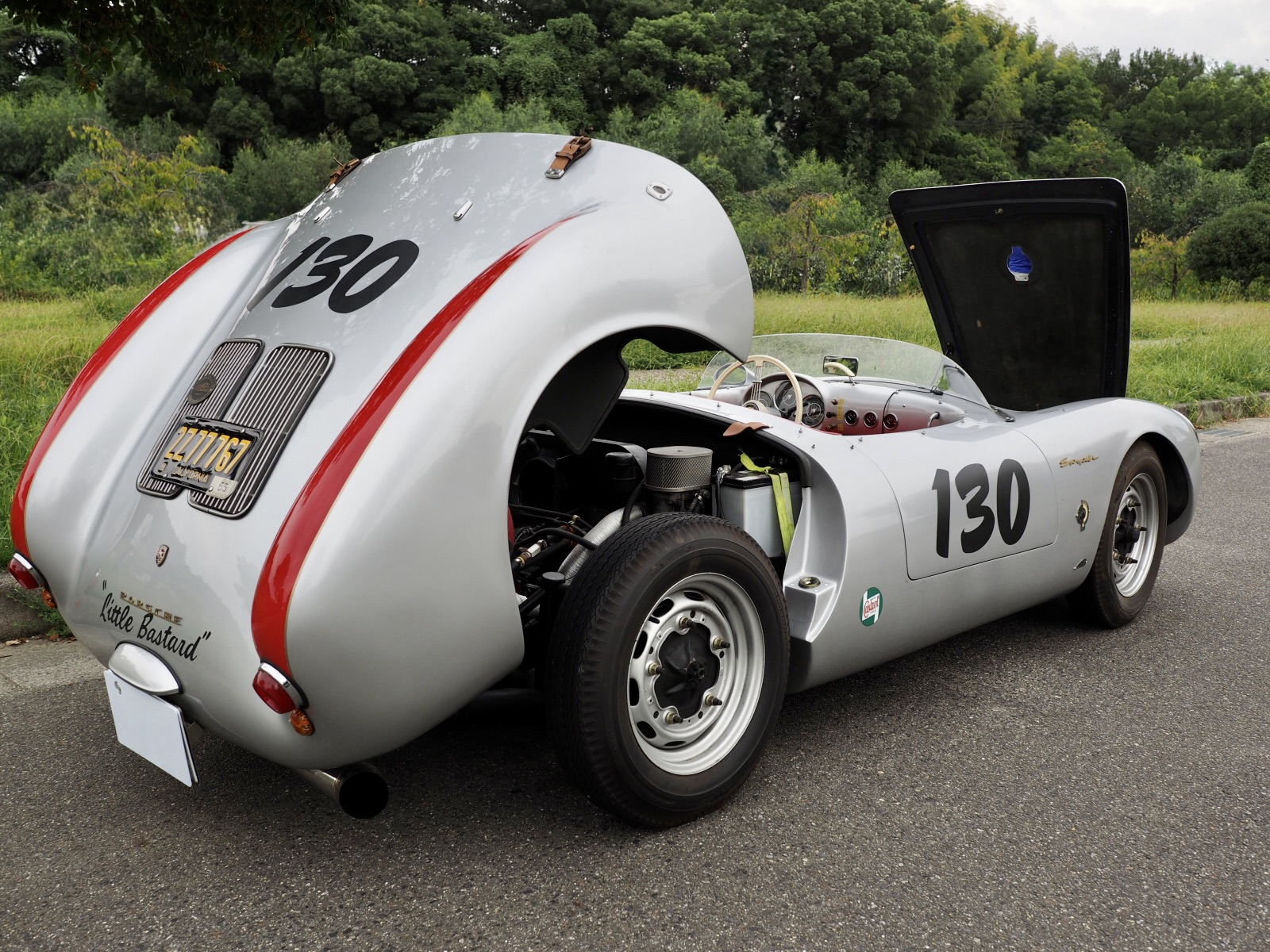
A low, flowing silver body in Germany’s national racing color… a vivid red interior… a red identification stripe across the rear fenders… and large ‘130’ racing numbers on the front hood, both doors and rear engine cowl, reproduced in the same distinctive style Dean Jeffries painted for James Dean…
This is not simply a set of ‘130’ decals. The unique Jeffries-style lettering, its scale and its placement were all recreated with period 1955 photographs in mind…
That level of homage is scattered beautifully throughout the car, right down to the small details…
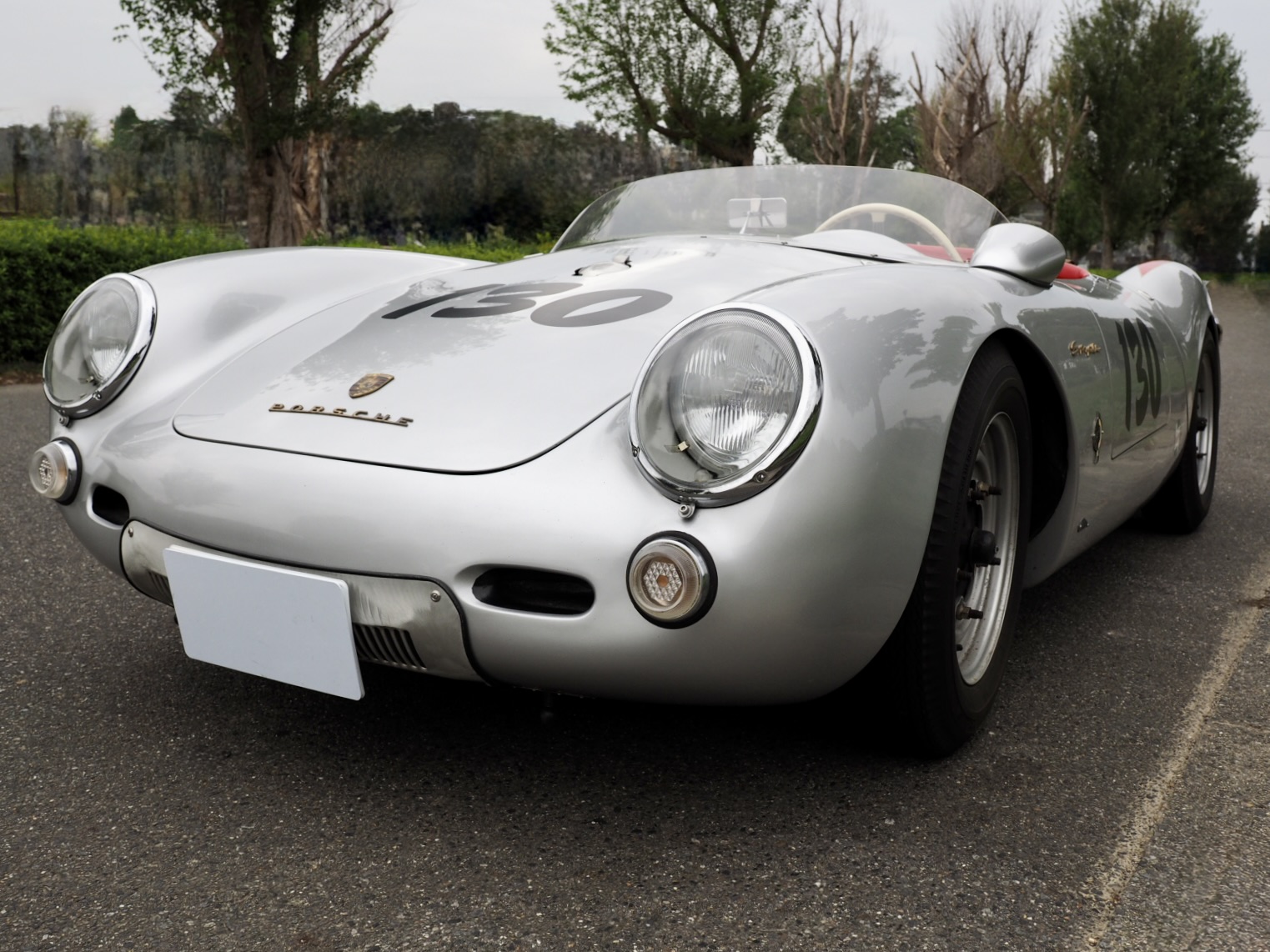
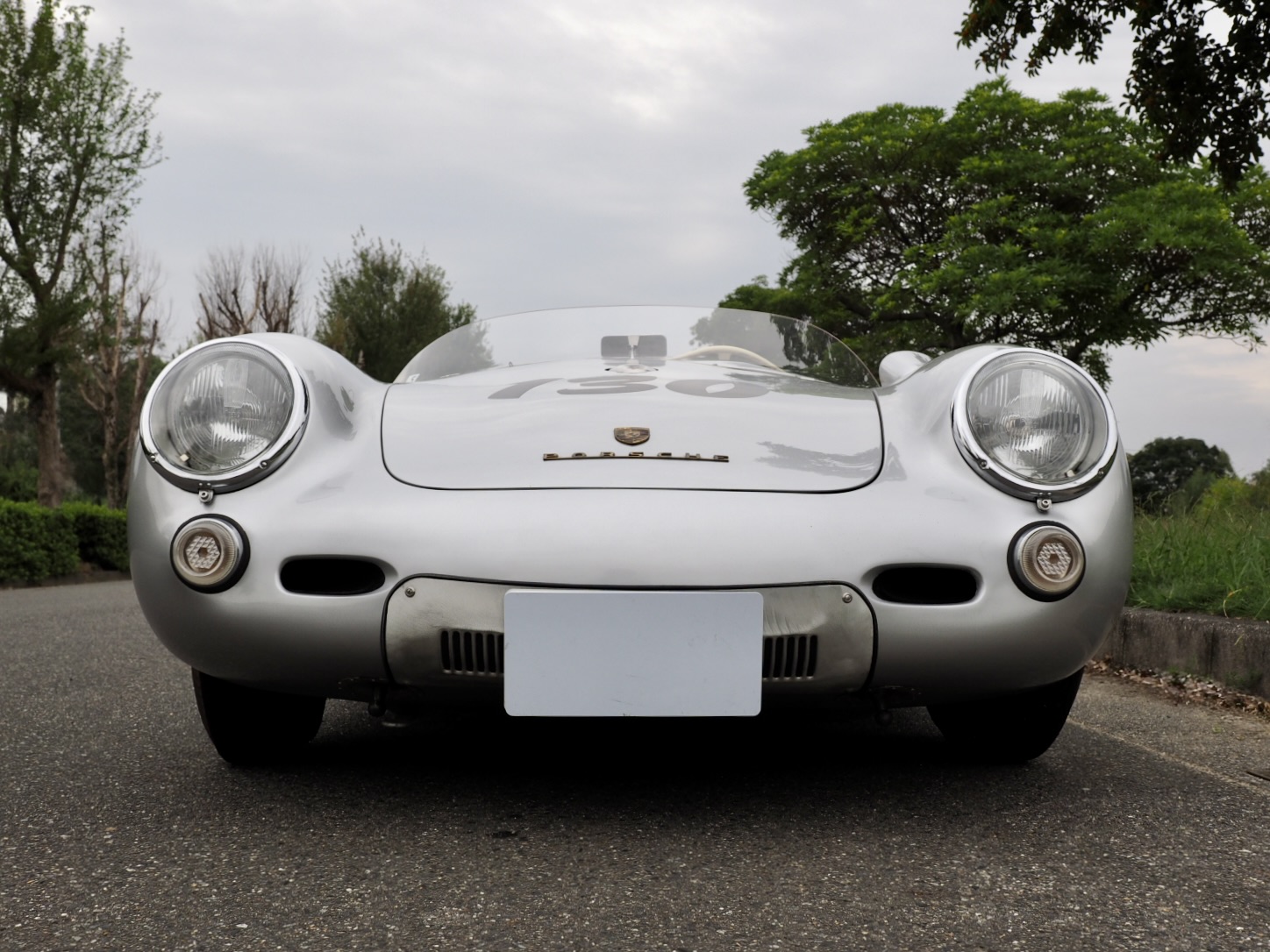
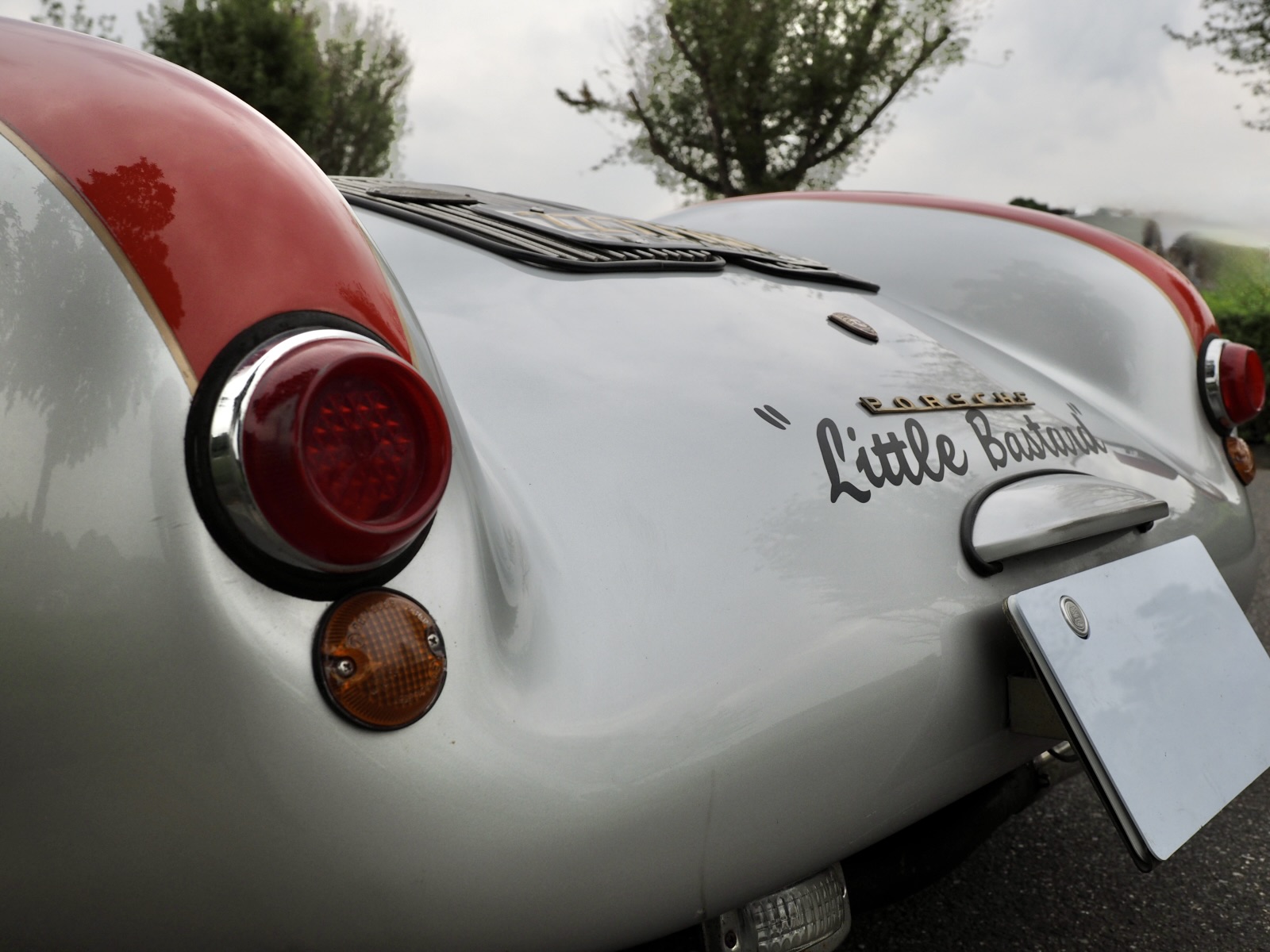
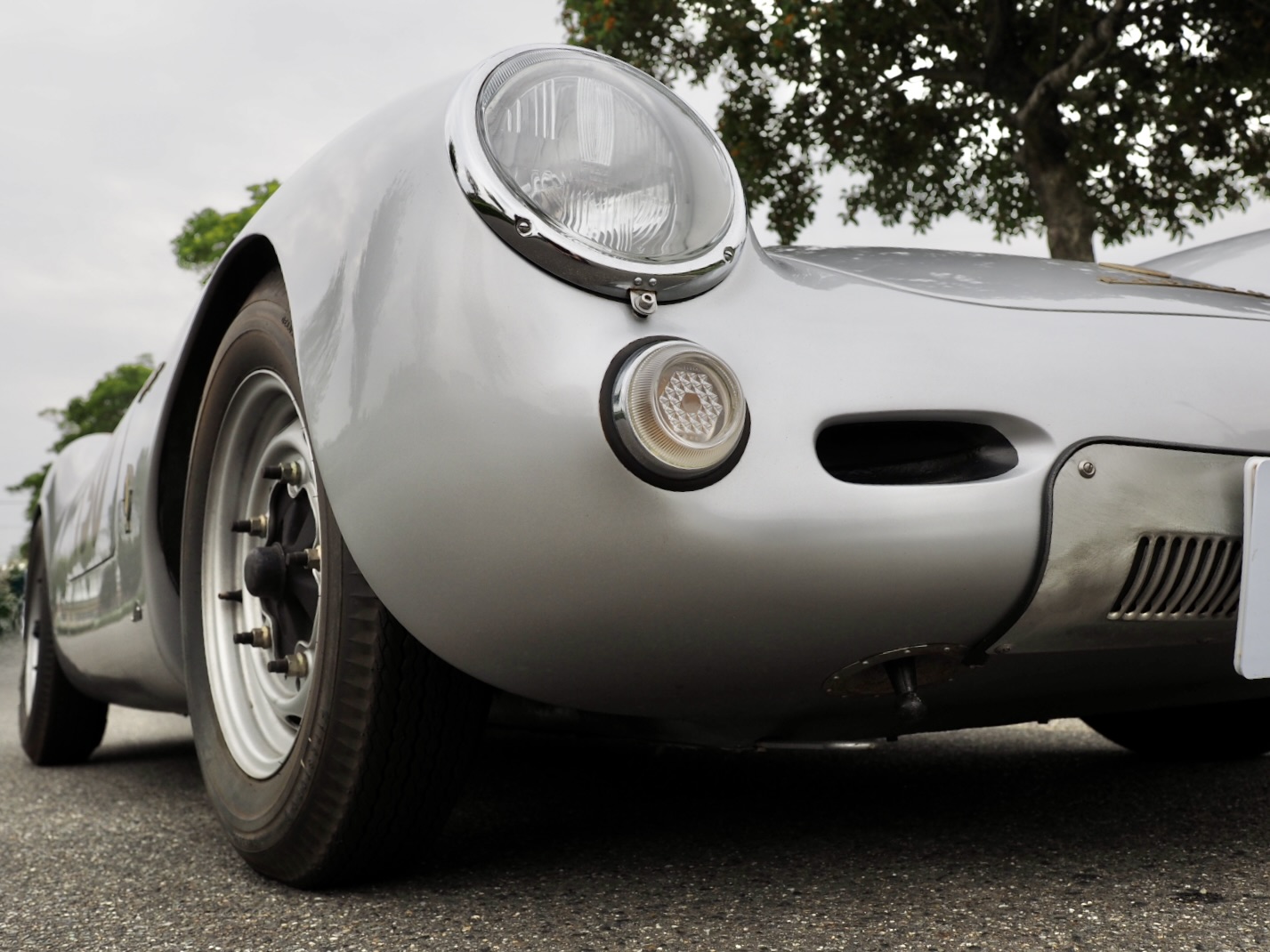
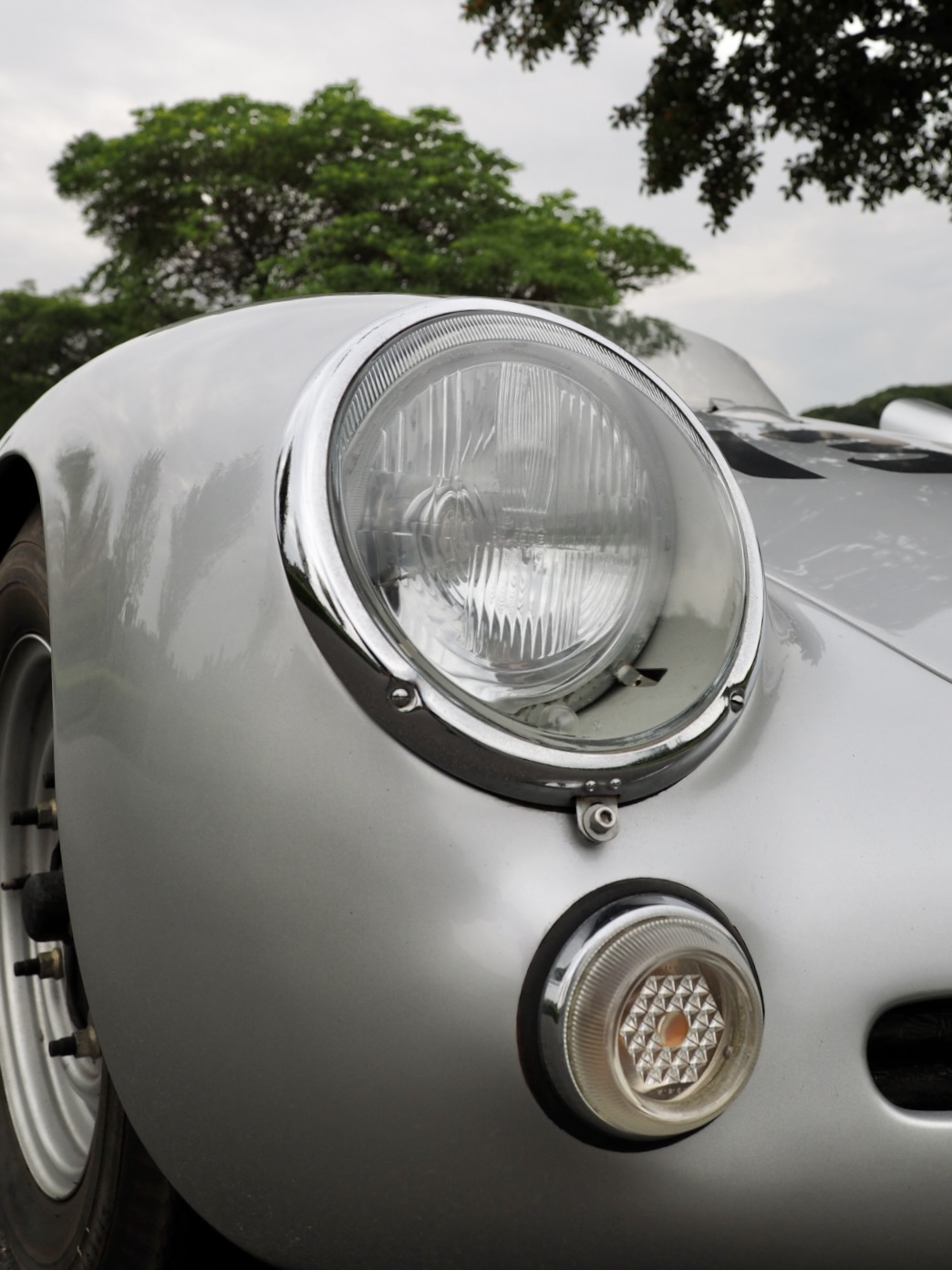
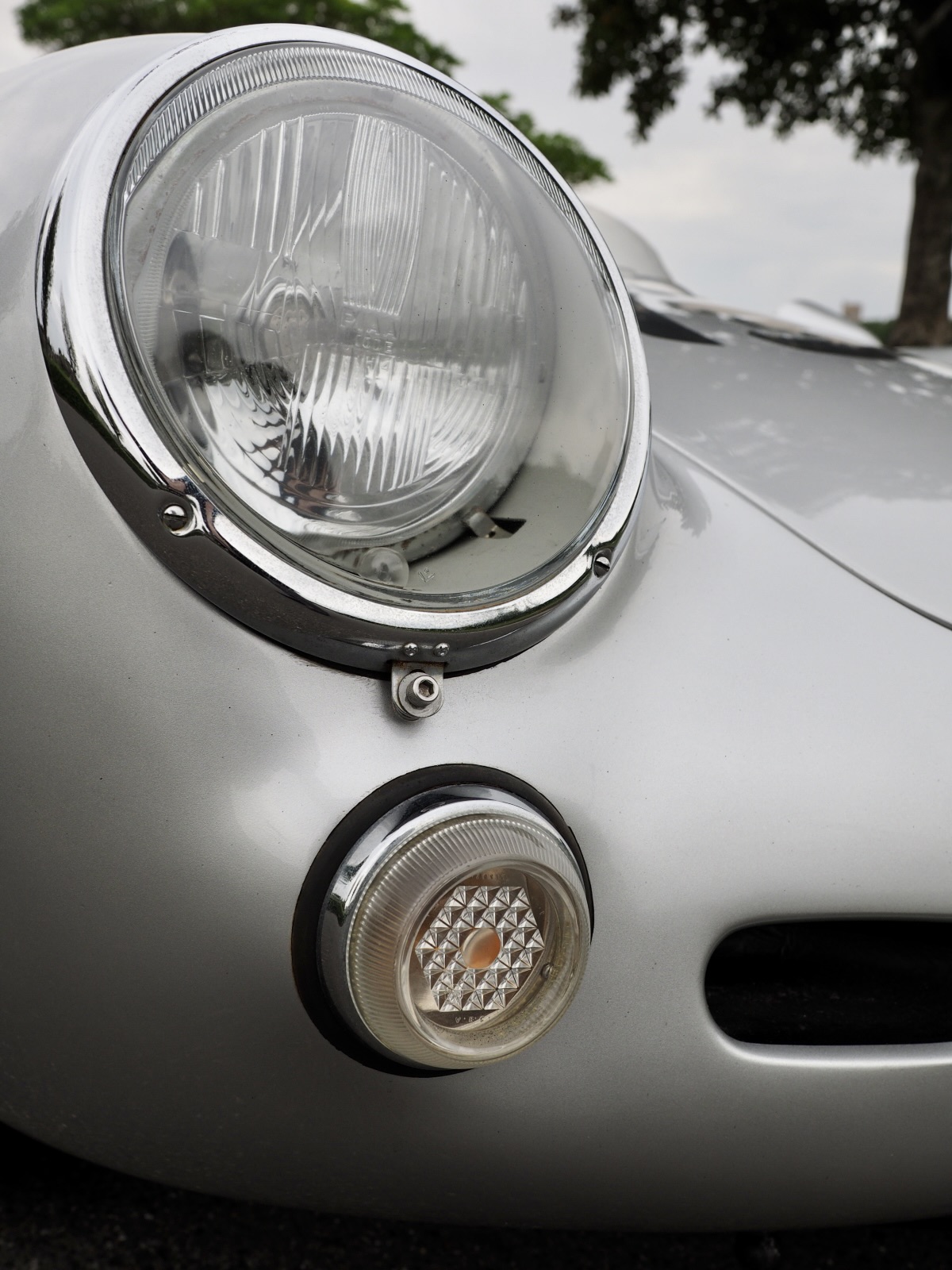
One of the first things you notice is the small round indicator lens beneath each large headlamp…
Unlike the orange round lenses commonly seen on many 1990s BECK 550s, these have been changed to smaller clear lenses recalling the original 550…
Their distinctive chrome-edged shape and mounting position clearly show how strongly the builder sought to evoke James Dean’s 1955 car…
Then there is the metal cover and cooling grille built into the lower center of the nose…
This front-end treatment is one of the details that most clearly distinguishes this car from a typical BECK 550…
On James Dean’s original Porsche 550 Spyder, a distinctive grille at the nose directed airflow to the front-mounted oil cooler…
This car carries an aluminum cover inspired by that original design, right down to the fine vertical openings…
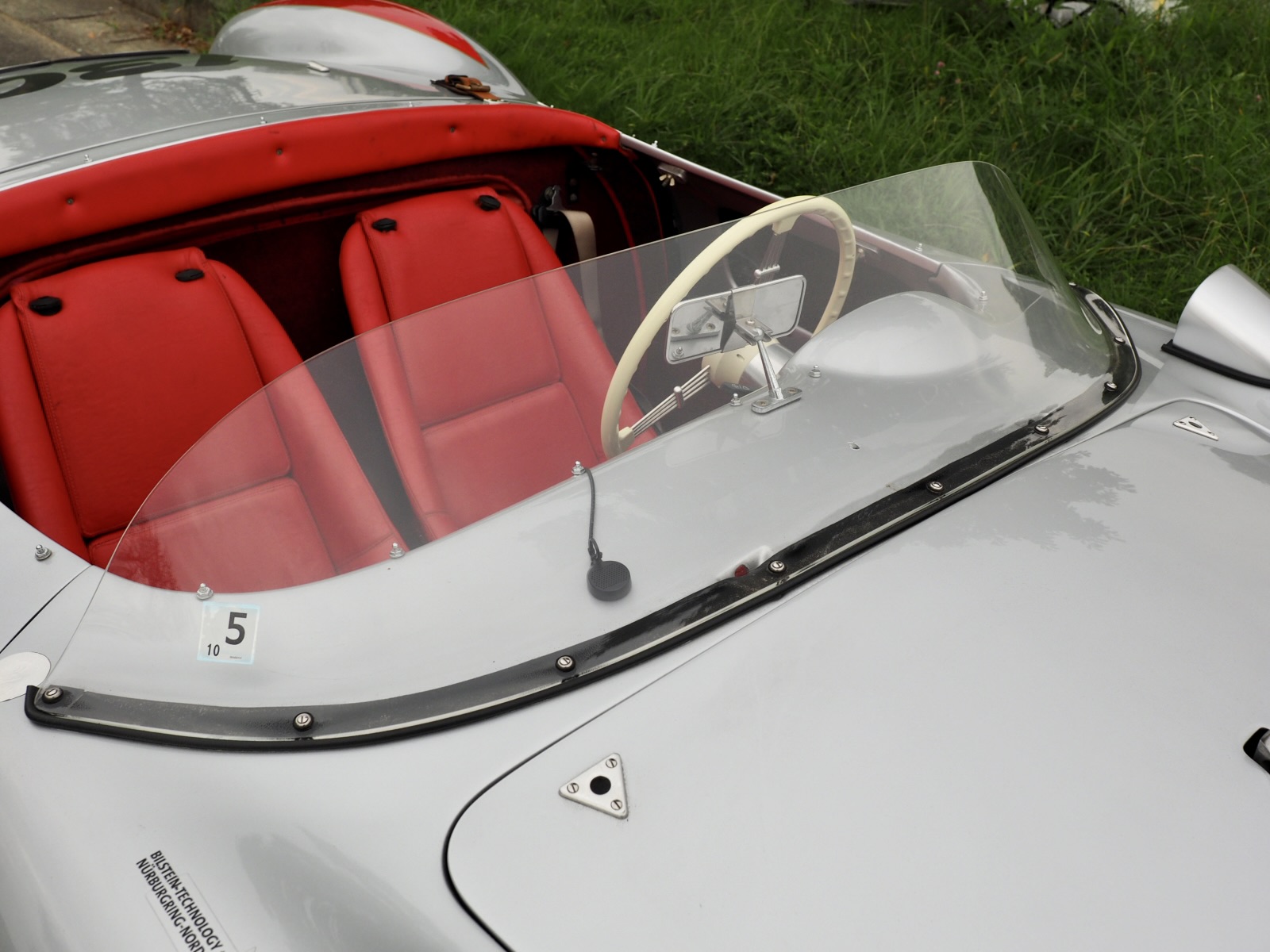
Please also notice the low, curved racing screen…
Rather than a conventional full windshield, the car is fitted with a low racing screen modeled after the 1950s Porsche 550…
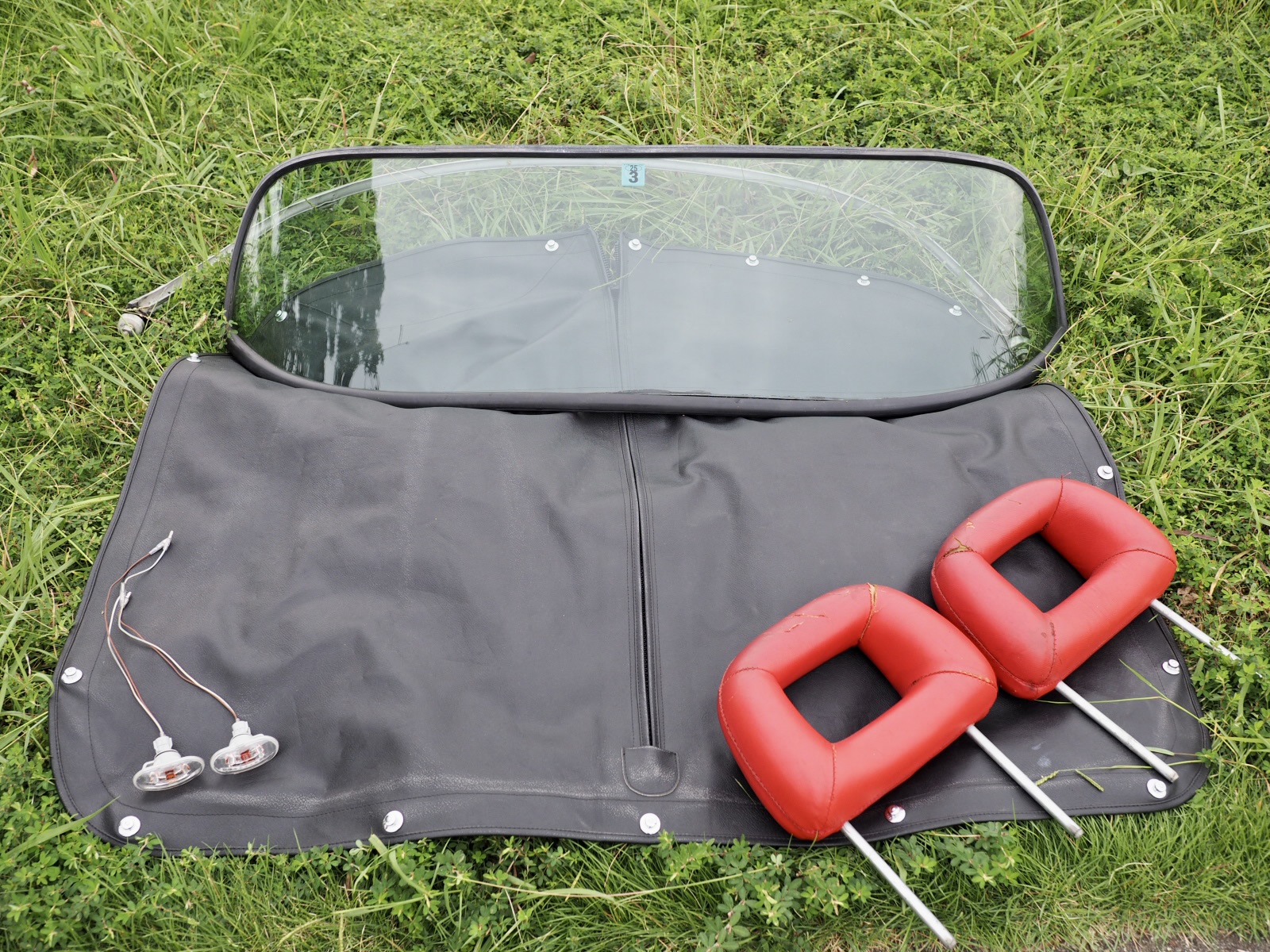
The standard windshield required for inspection is included separately, making it particularly satisfying that the car can be enjoyed in this period-correct configuration…
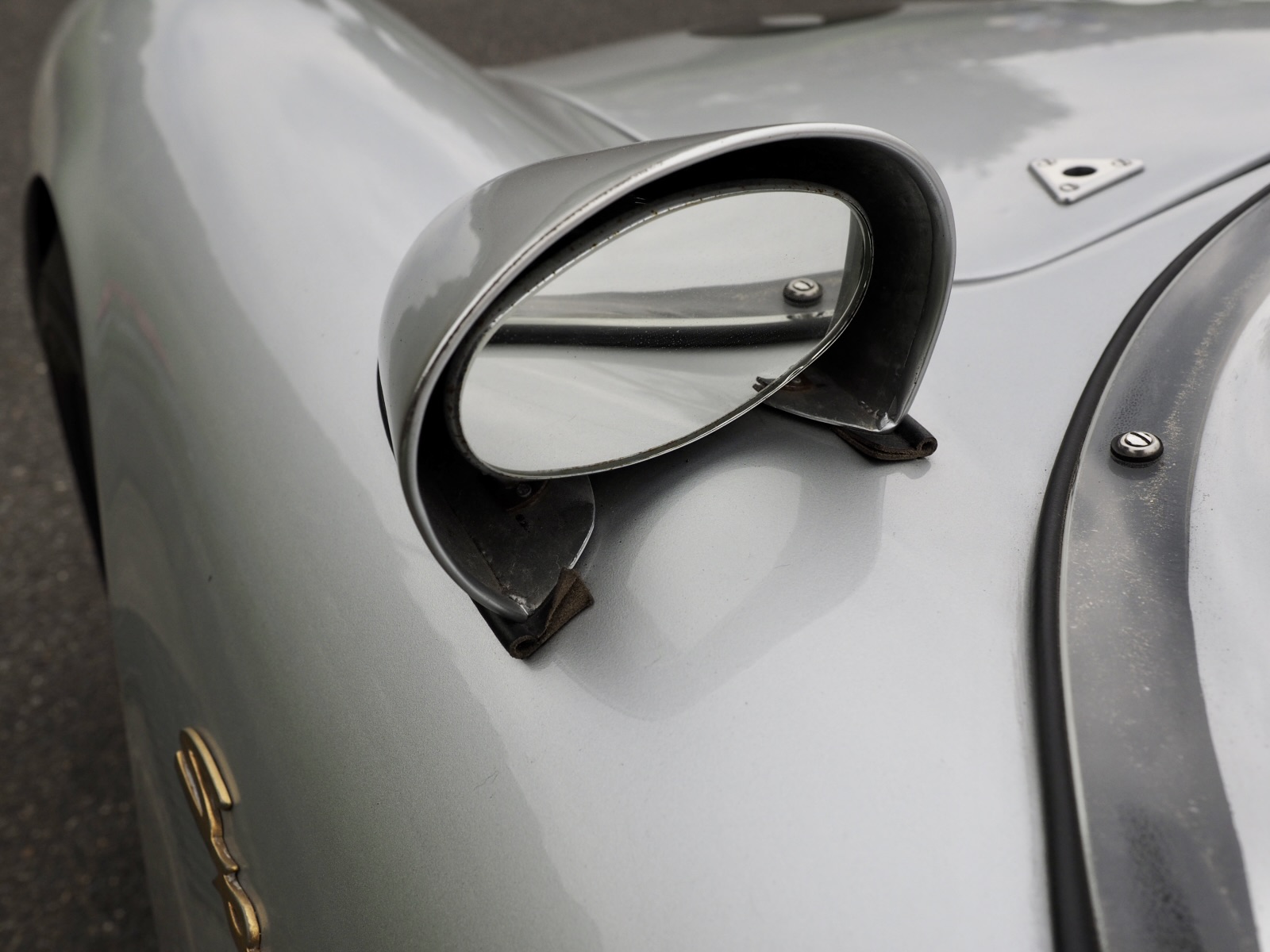
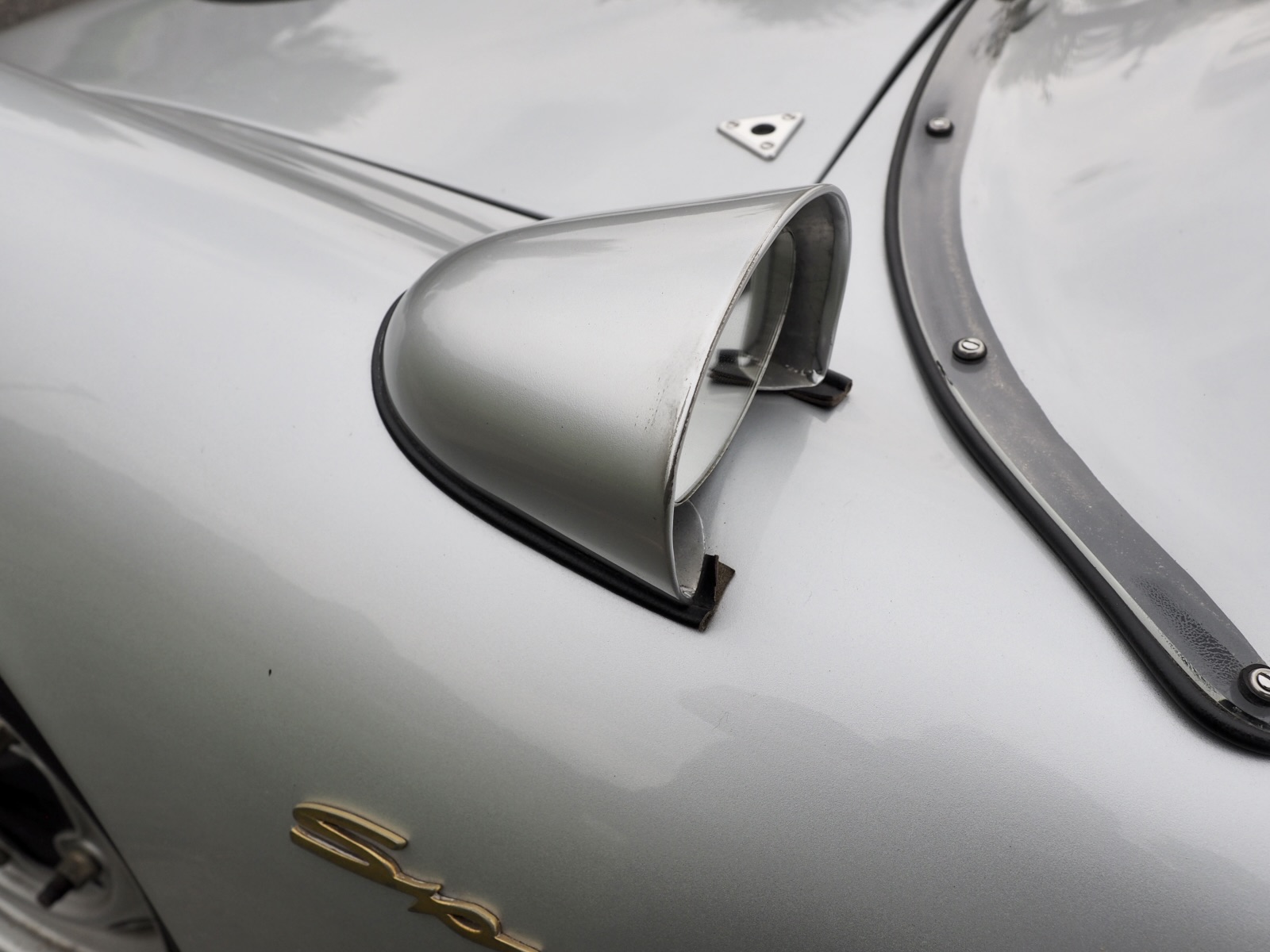
A small streamlined racing mirror is also mounted on the driver-side front fender, just as on Dean’s car…
The low screen and compact mirror leave the car’s proportions untouched and further emphasize the flowing 550 Spyder line from front fender to rear cowl…
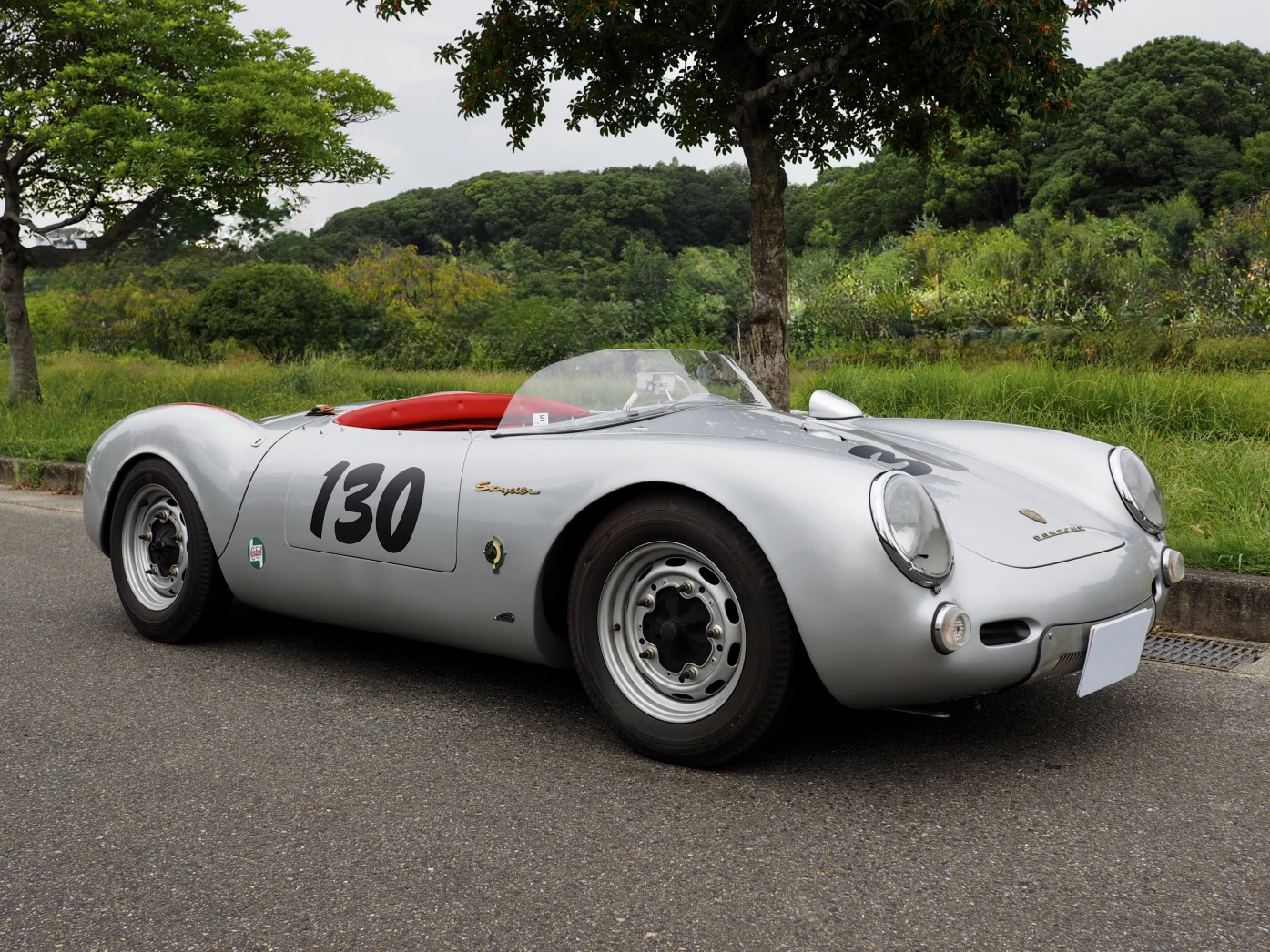
Viewed from the side, still more fascinating details emerge…
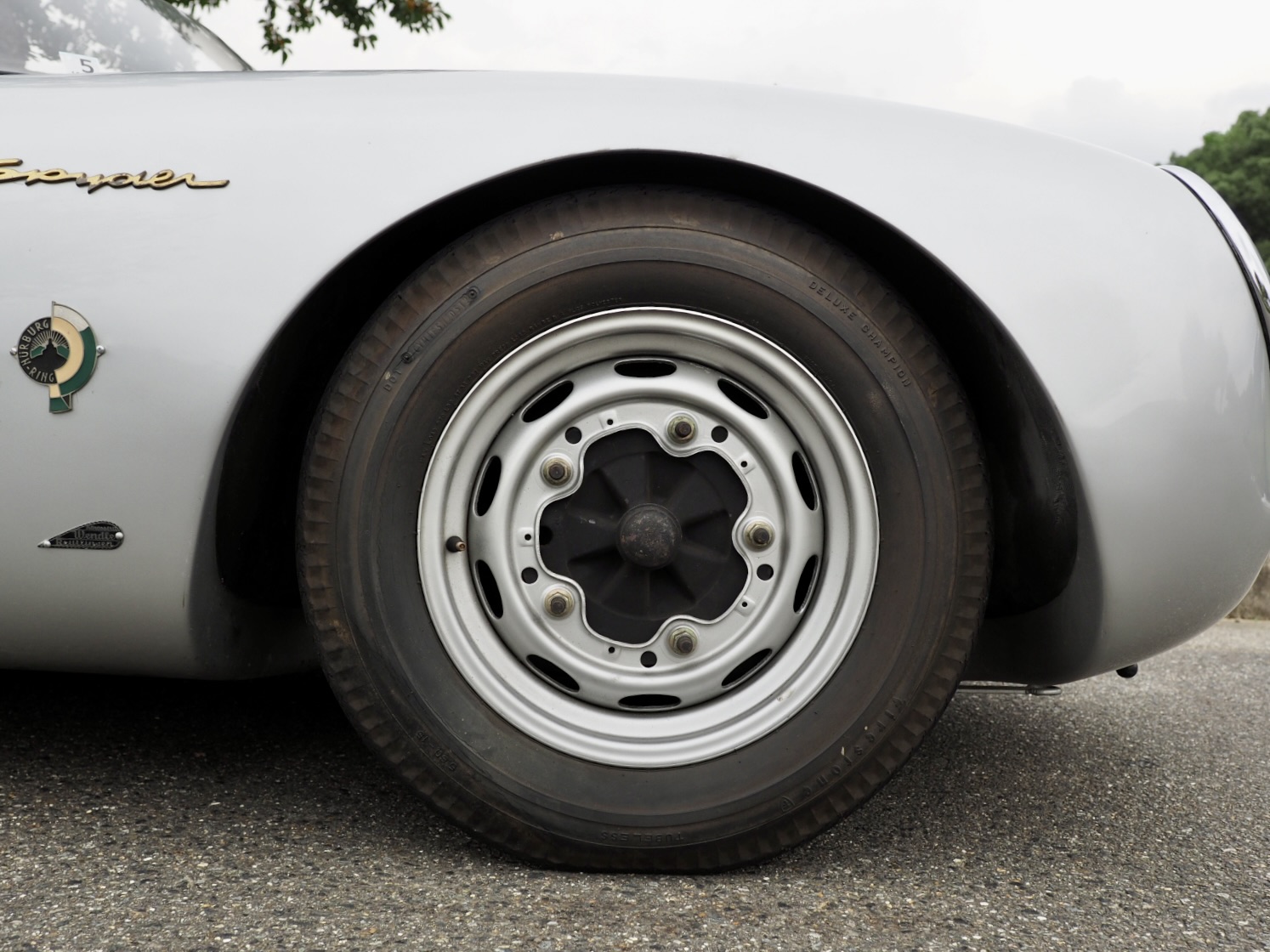
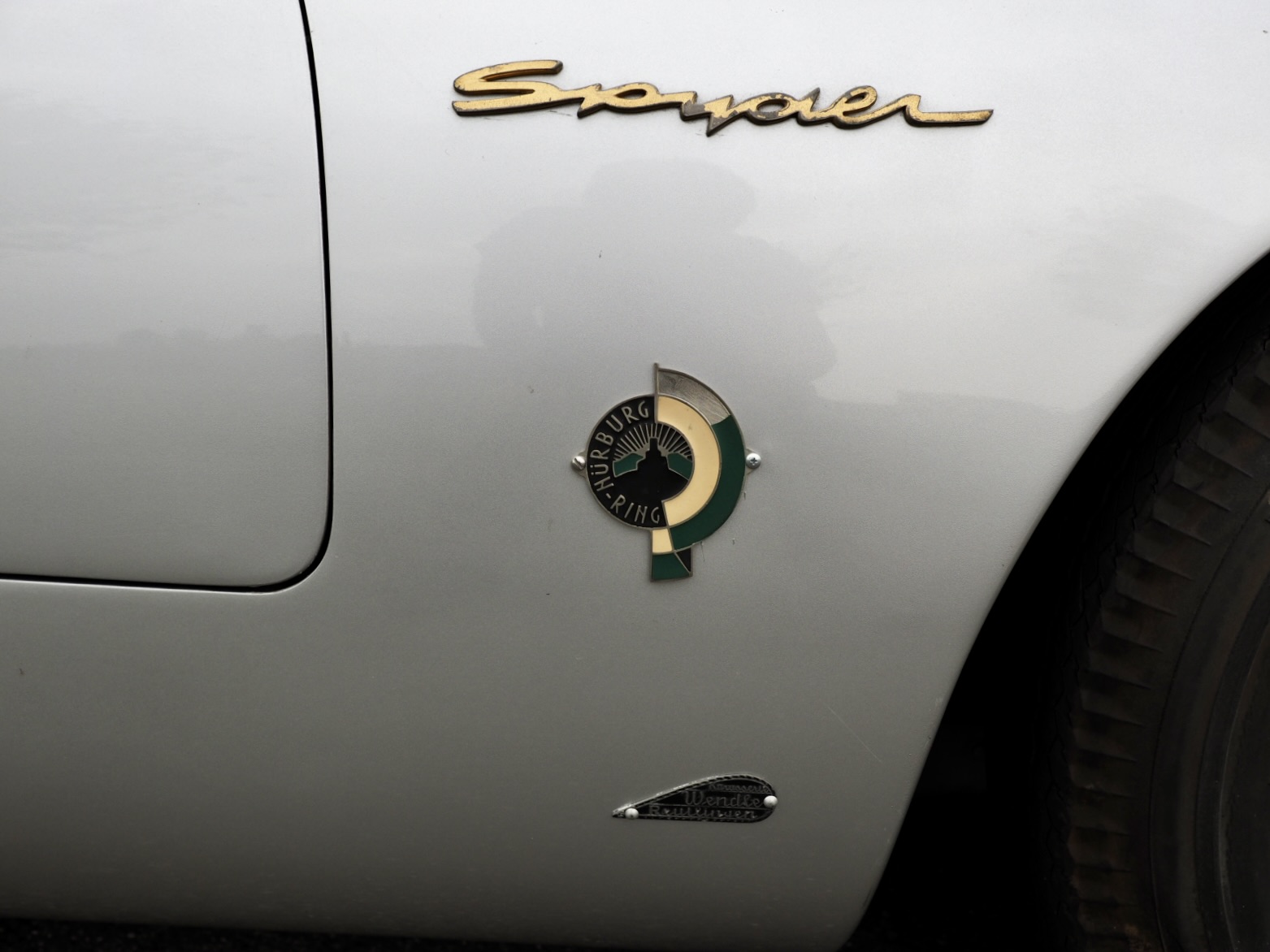
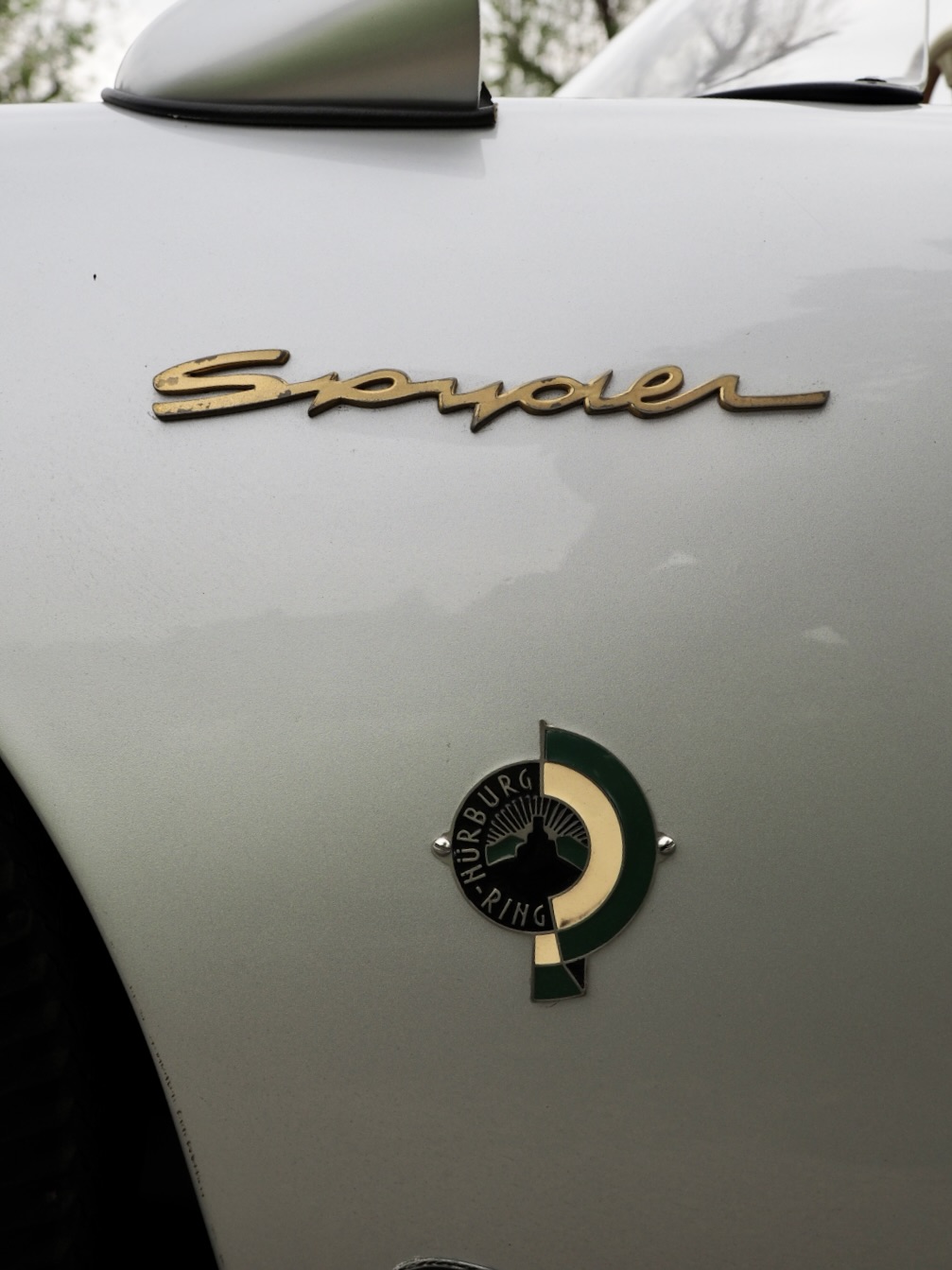
Below the ‘Spyder’ emblem behind each front fender sits an unusually shaped green, black and cream enamel badge marked ‘NÜRBURGRING’—the famous German circuit…
Its placement is exactly the same as on James Dean’s Porsche 550…
That tiny enamel badge carries a fascinating story of friendship between James Dean and Rolf Wütherich, the German mechanic who cared for his 550 Spyder…
Wütherich was a Porsche racing-car mechanic deeply familiar with the marque’s competition machinery, and he was the very person responsible for Dean’s 550 when Dean bought it…
He is said to have obtained the commemorative badge while involved with the 1954 Nürburgring 1000 km. Just before leaving for Salinas on September 30, 1955, he reportedly mounted his treasured Nürburgring badge on the left side of Dean’s 550 as a sign of their friendship…
So there was another story linking Dean with the mechanic who accompanied him on that final drive described in Chapter One…!
On this BECK, the Nürburgring badge is mounted in precisely the same location as on Dean’s car…
Though tiny, it carries a story of 1950s motorsport and the friendship of two men…
Below that Nürburgring badge sits a small teardrop-shaped metal plate…
Look closely and it reads ‘Wendler Karosserie’…
It reproduces the coachbuilder plate of Wendler, the celebrated Reutlingen firm introduced in Chapter One…
In the 1950s, Porsche 550 Spyders combined Porsche-designed chassis and engines with aluminum bodies built by Wendler…
Skilled craftsmen formed sheets of aluminum into complex curves in a process completely unlike modern mass production. The Wendler plate fitted to the original 550 was therefore also a mark of coachbuilder pride…
A small Castrol sticker behind the door likewise recalls 1950s motorsport and has been reproduced here just as on the original car…
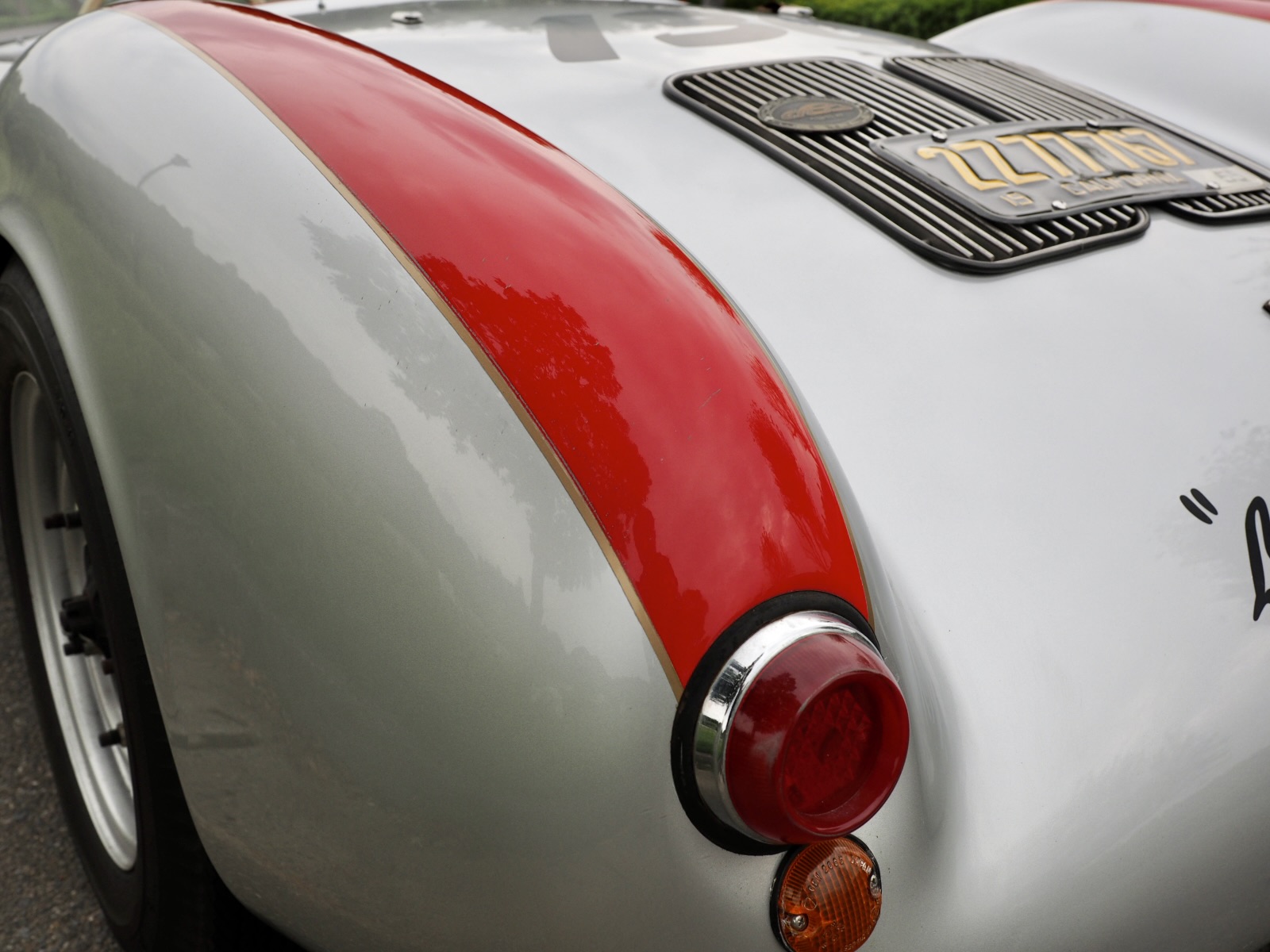
Now let us look at the rear fenders…
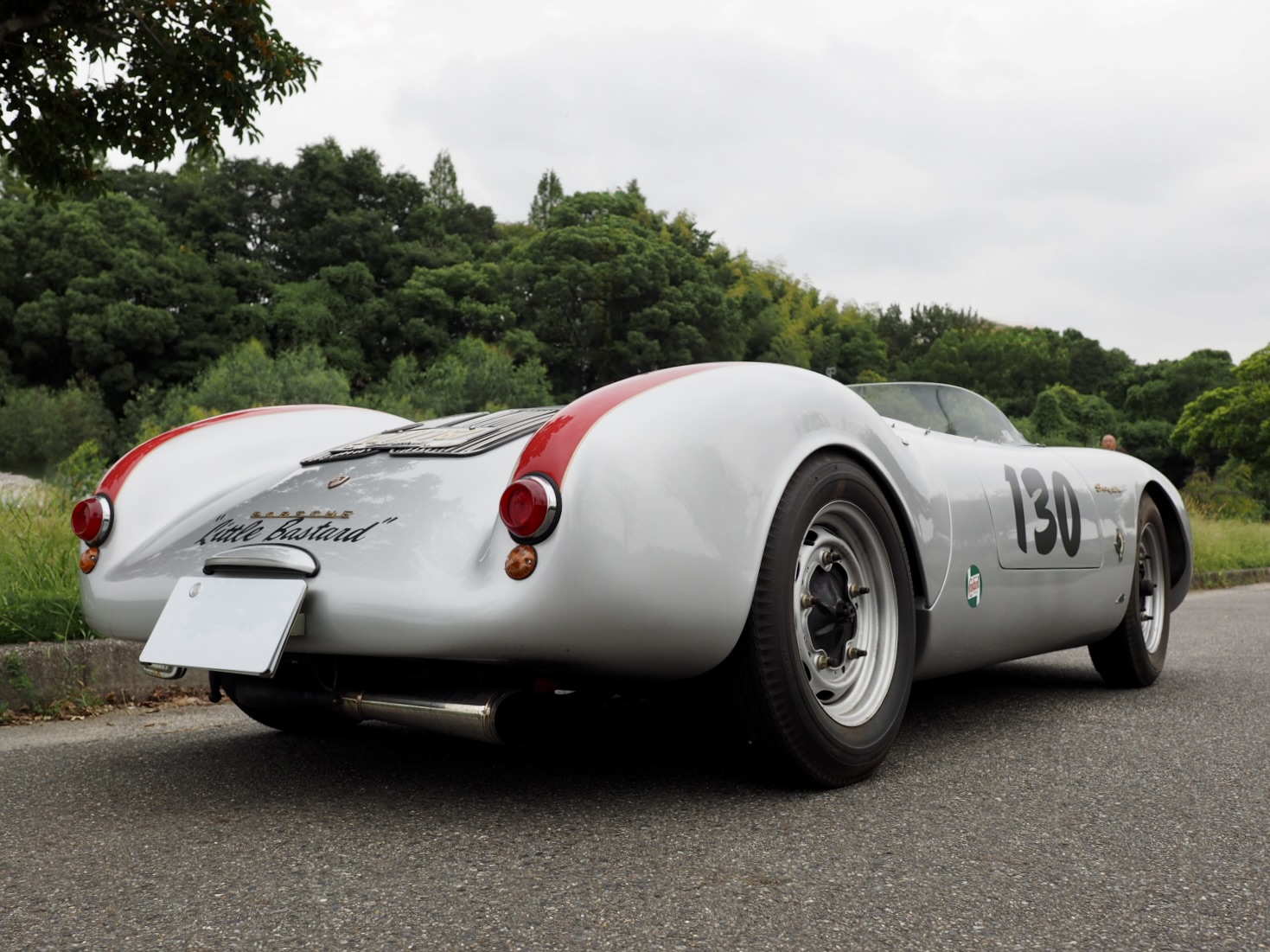
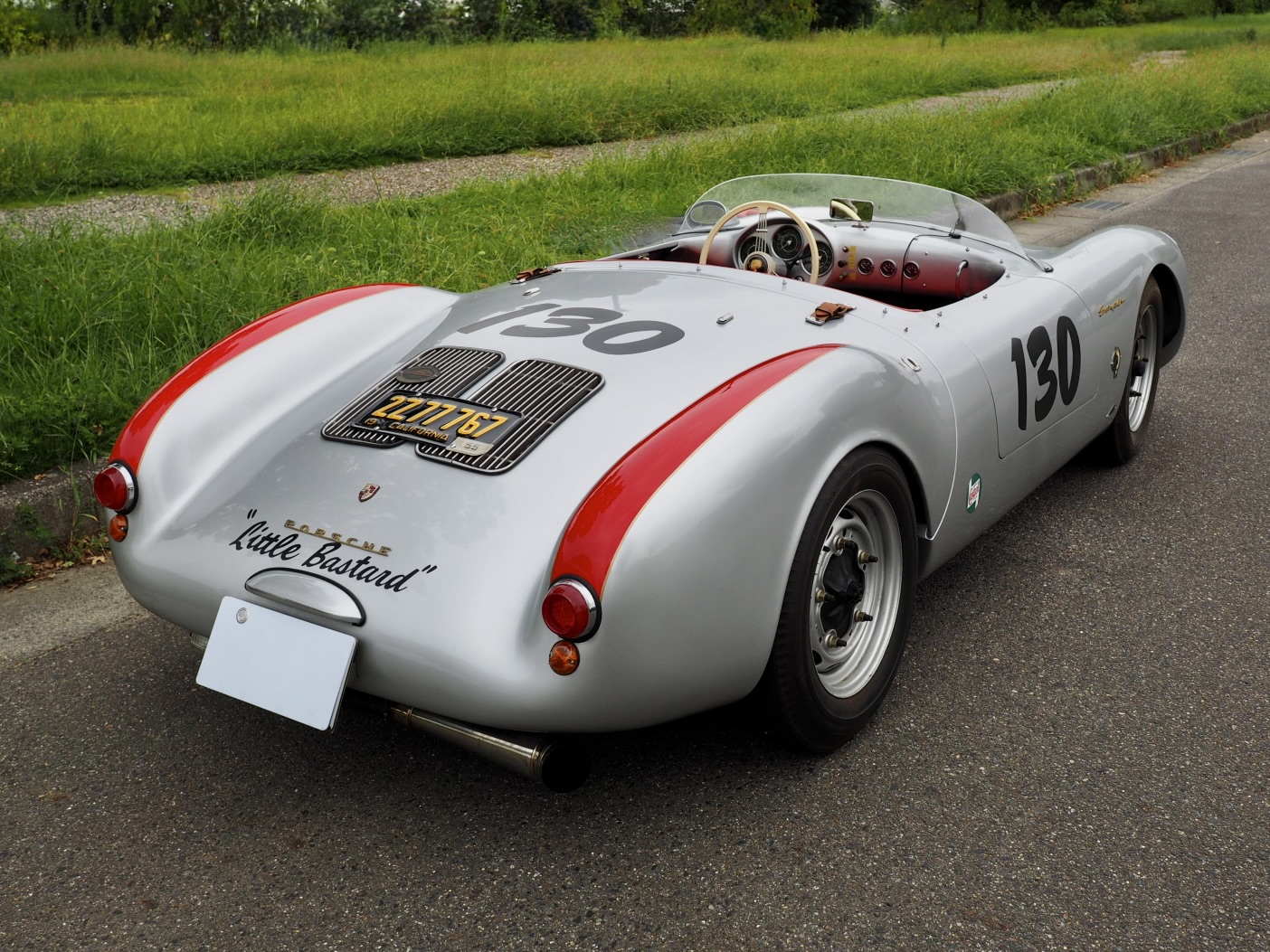
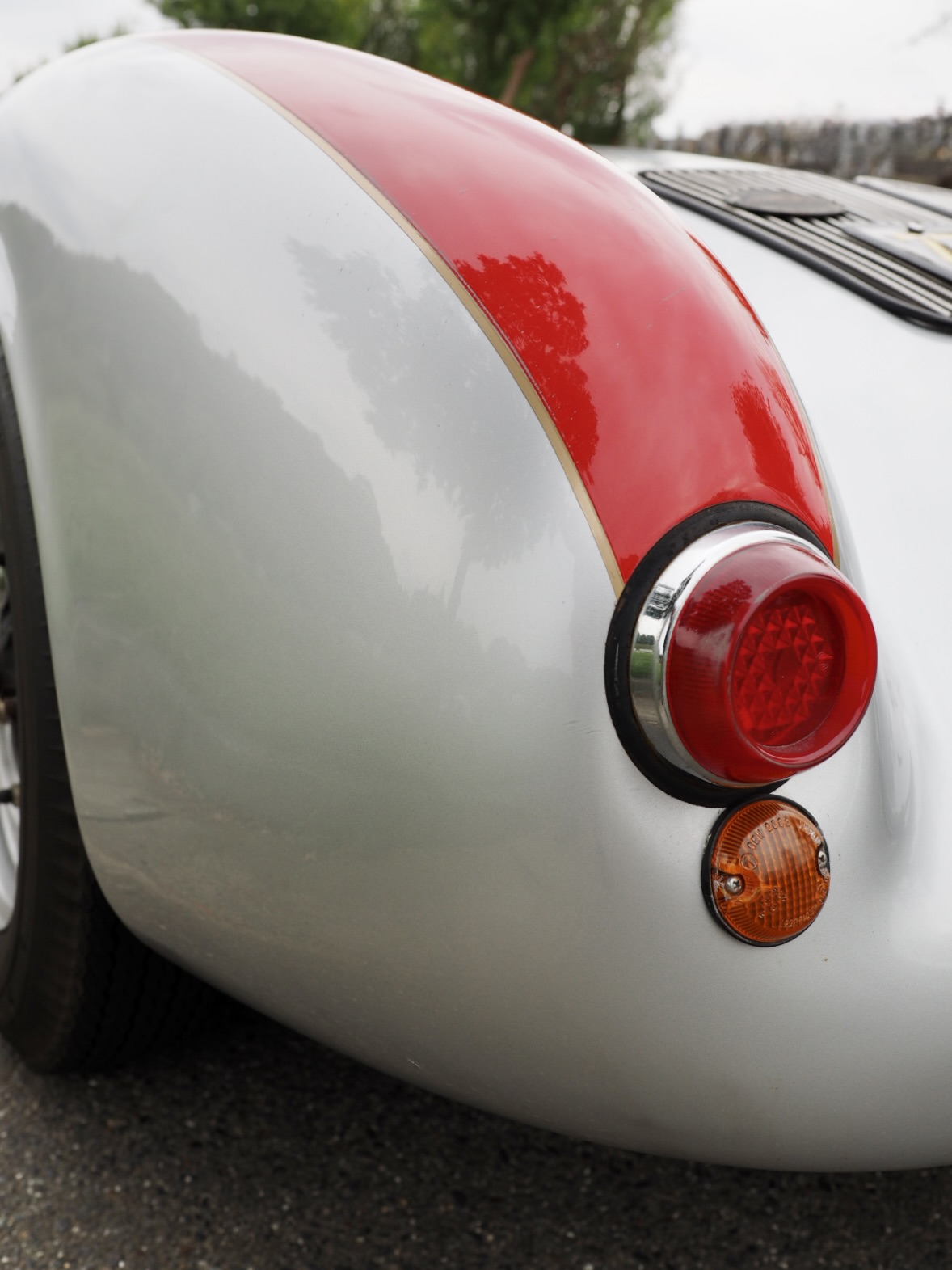
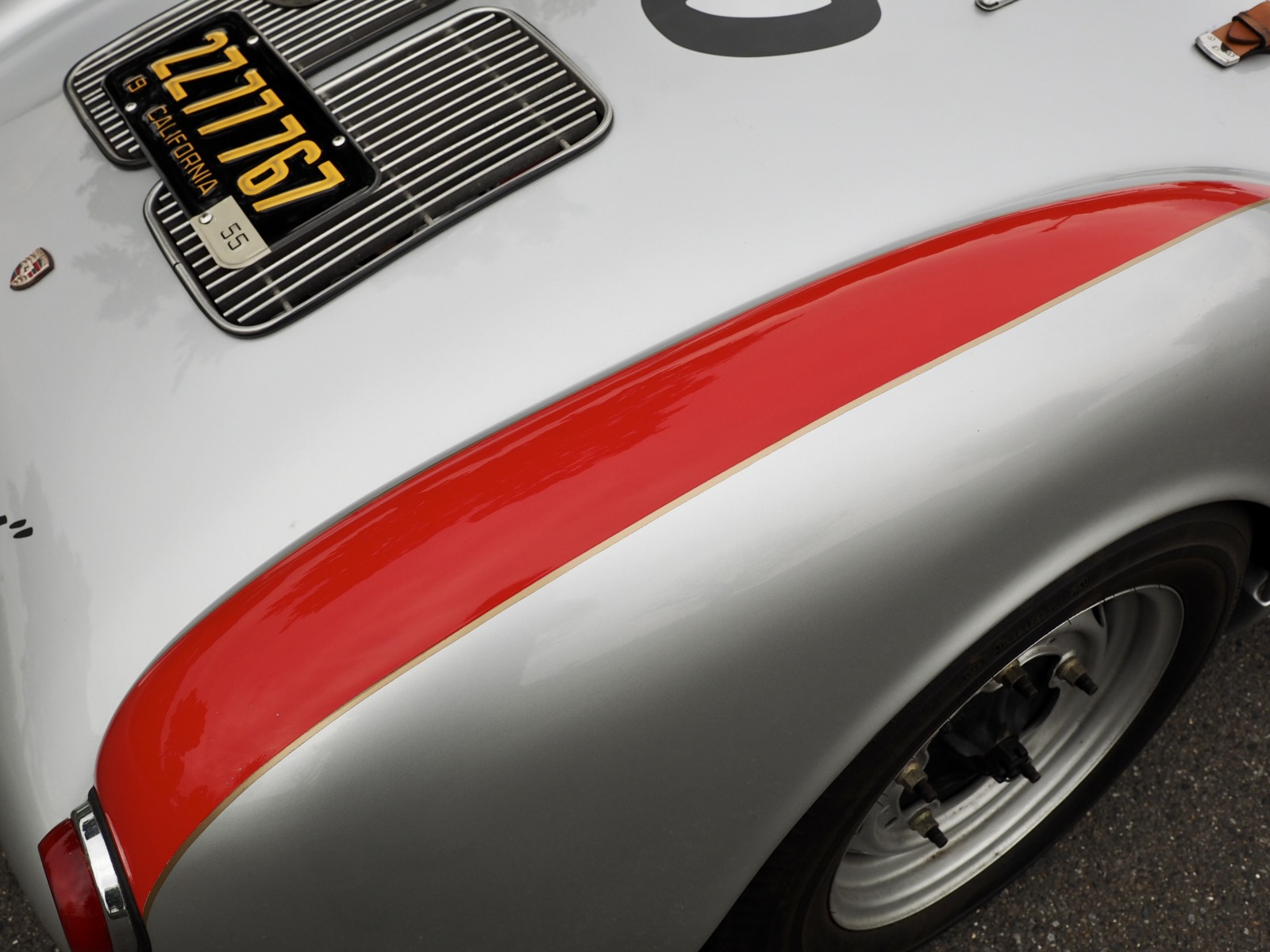
The vivid red circuit-identification stripe flowing from front to rear across the silver body is one of the defining features of James Dean’s 550 Spyder…
As noted in Chapter One, original 550s used red, blue, green, yellow and other stripes so multiple silver cars could be distinguished in endurance races. Chassis 550-0055 carried red stripes from new, and that detail has been beautifully recreated here…
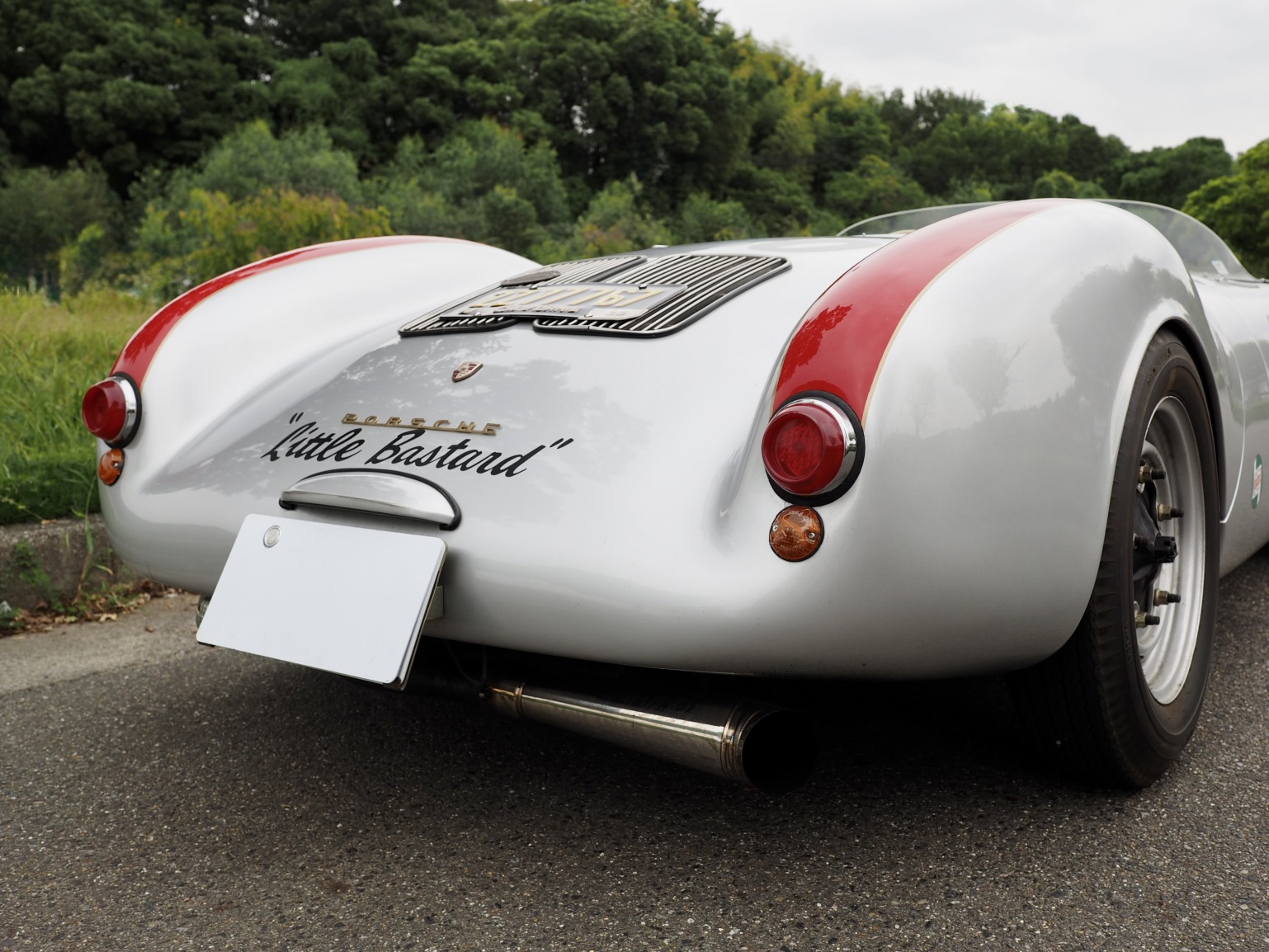
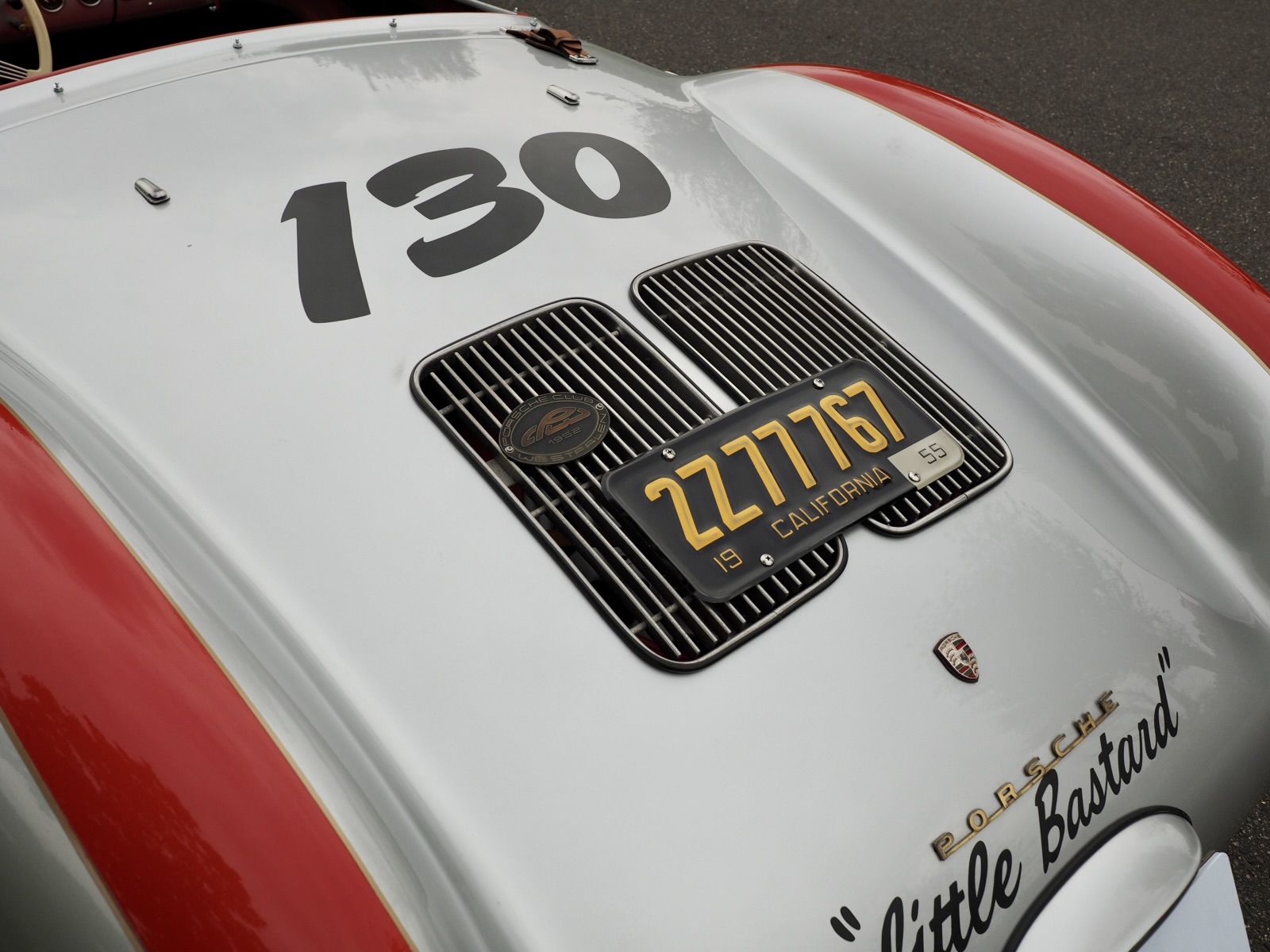
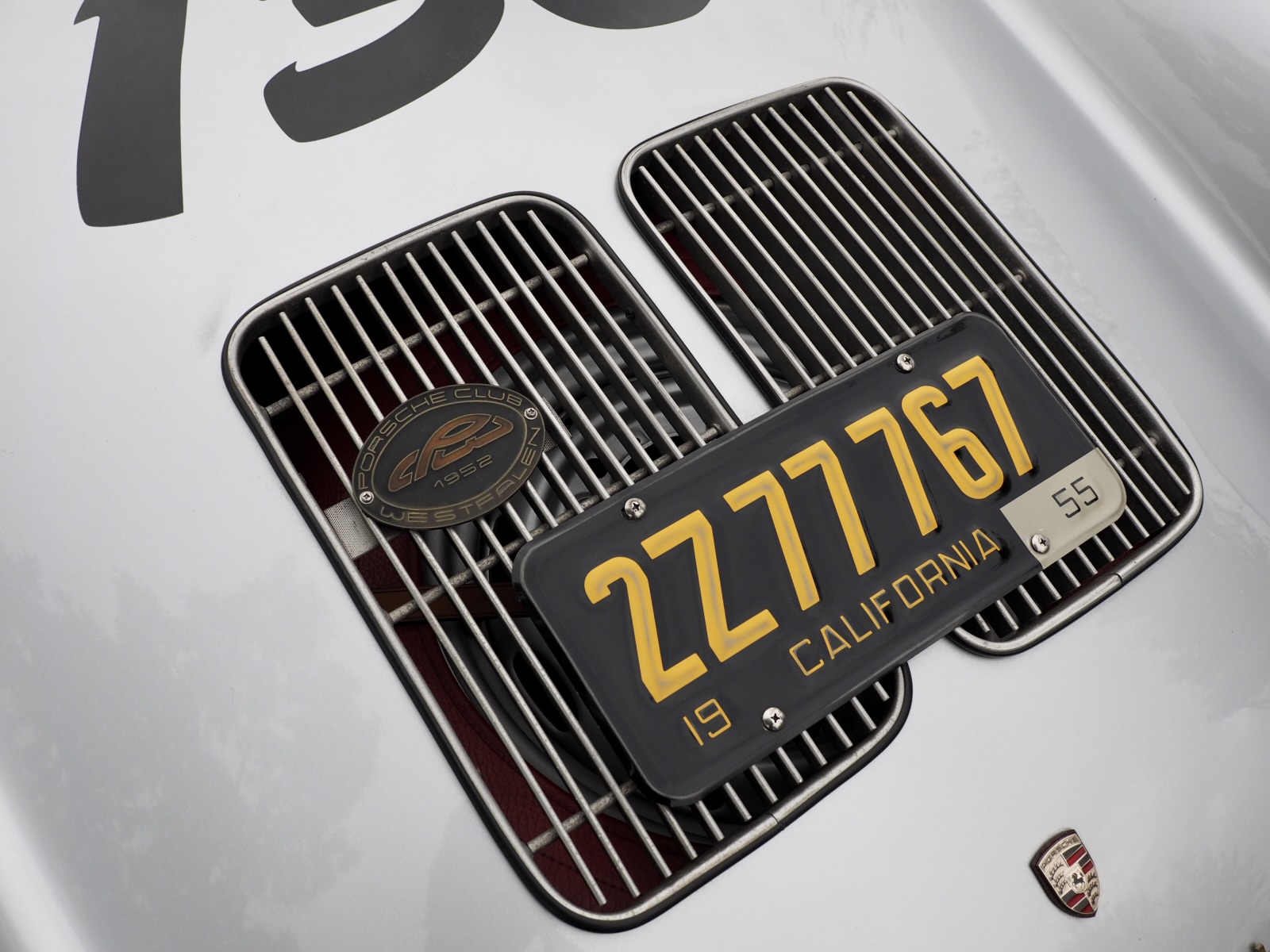
Move to the rear cowl and the reproduction becomes even more striking. A large racing number 130 dominates the center. Below it are twin metal engine grilles, above which sits a black-and-yellow California license plate in the style used in 1955…
The number is ‘2Z77767’—the actual registration number of James Dean’s Porsche 550 Spyder, chassis 550-0055, in 1955…
And this car recreates not only the number, but the period California plate colors, the ‘55’ registration-renewal tab, and even the mounting position above the rear engine grille, using specially ordered reproduction pieces from the United States…
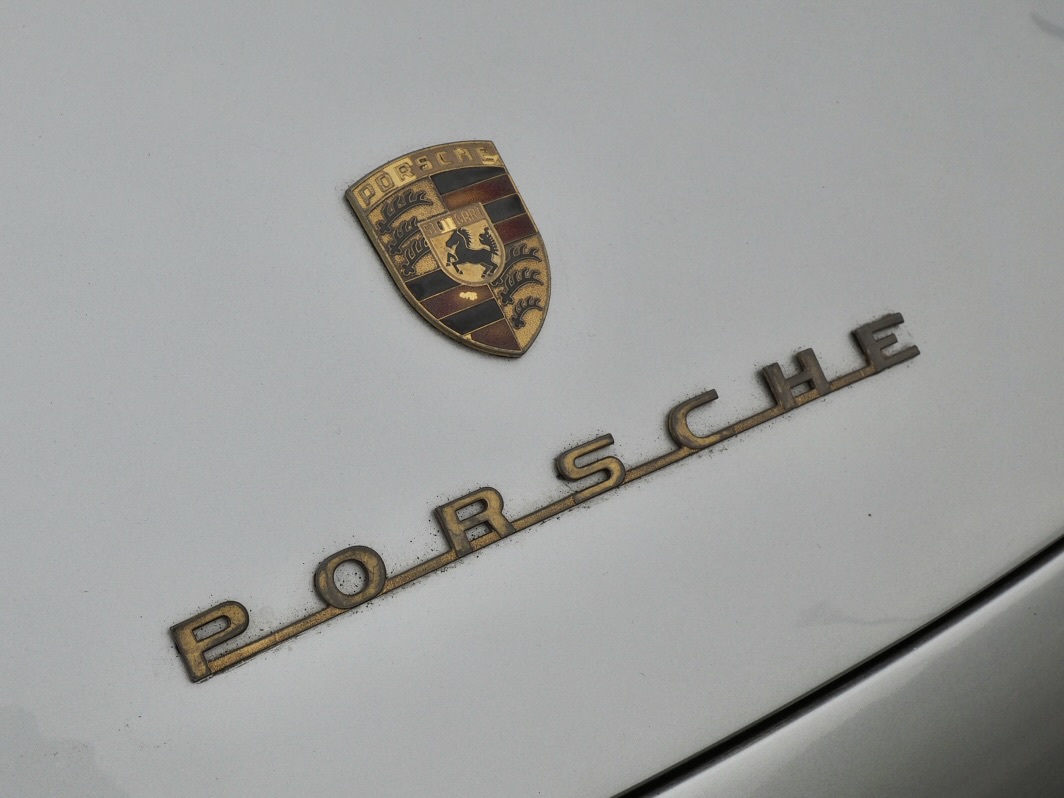
Lower on the rear cowl are the Porsche crest, gold PORSCHE lettering, and beneath them the name of this car—the nickname of James Dean himself: ‘Little Bastard’…
That distinctive vintage script reproduces the lettering Dean Jeffries painted for James Dean in September 1955…
Together, these details brilliantly recreate the rear view that came to symbolize James Dean’s 1955 car…
Near the front edge of the rear cowl are leather retaining straps on both sides, again matching Dean’s 550…
Even their position, leather width and metal buckles have been chosen with the original appearance in mind…
The wheels deserve attention as well…
The silver-painted steel wheels feature oval ventilation openings around the rim, with the black hub centers and wheel nuts exposed…
A normal classic road car might wear hubcaps here, but this car deliberately leaves them off…
Again, exactly like James Dean’s car…
The exposed-center steel wheels have the purposeful look of a period racing car, harmonizing perfectly with the low racing screen, silver wheels and bold number 130…
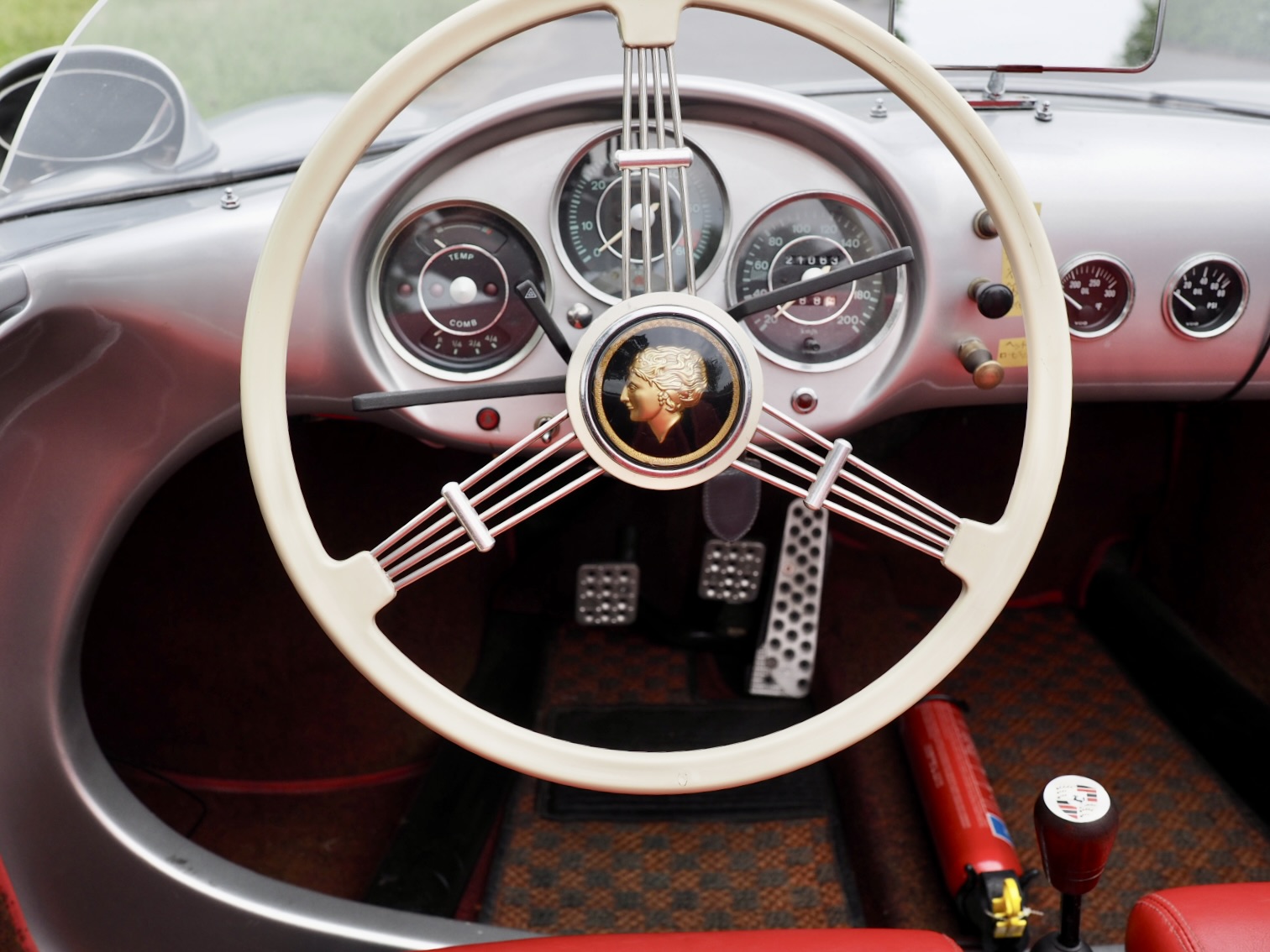
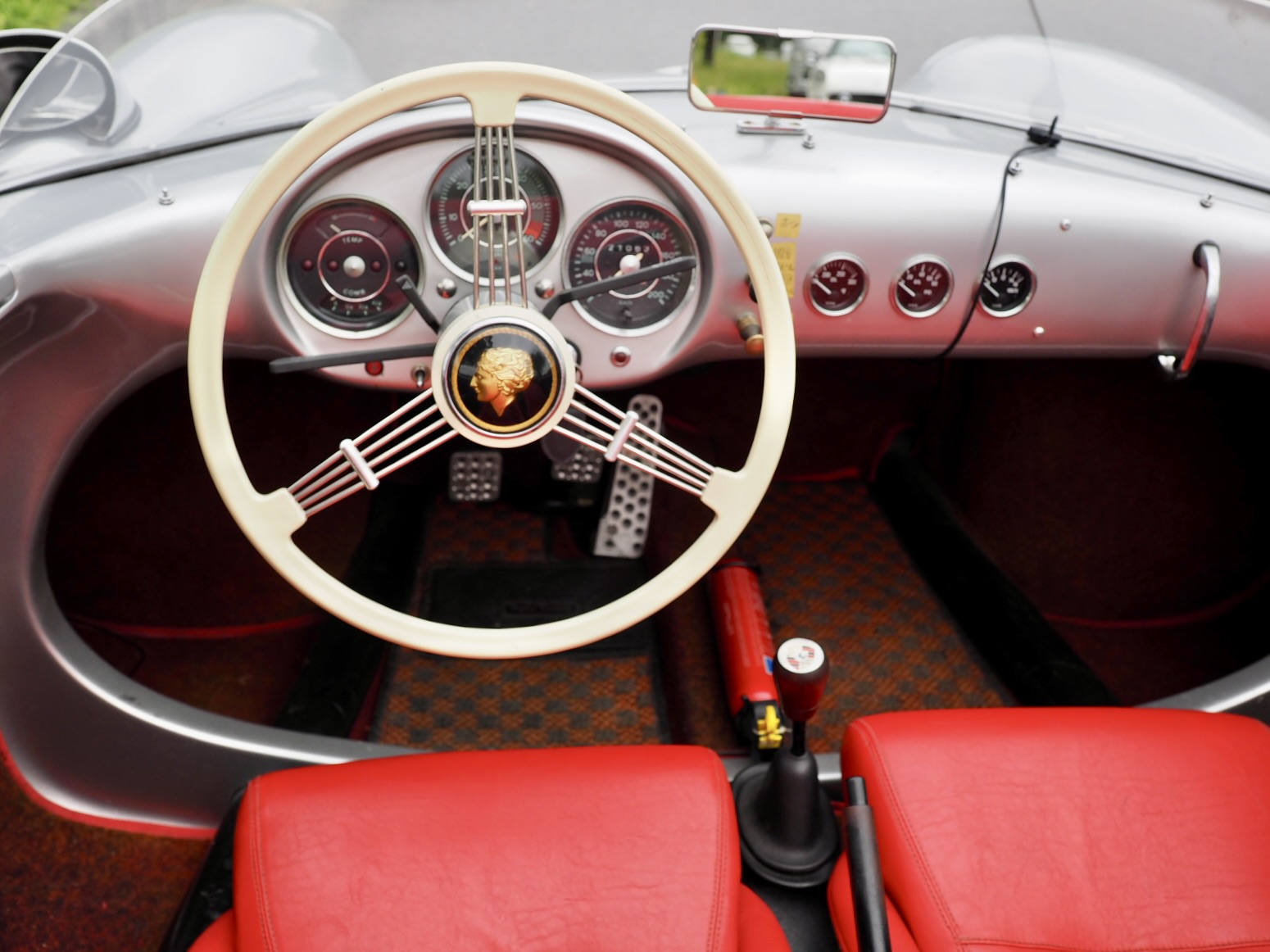
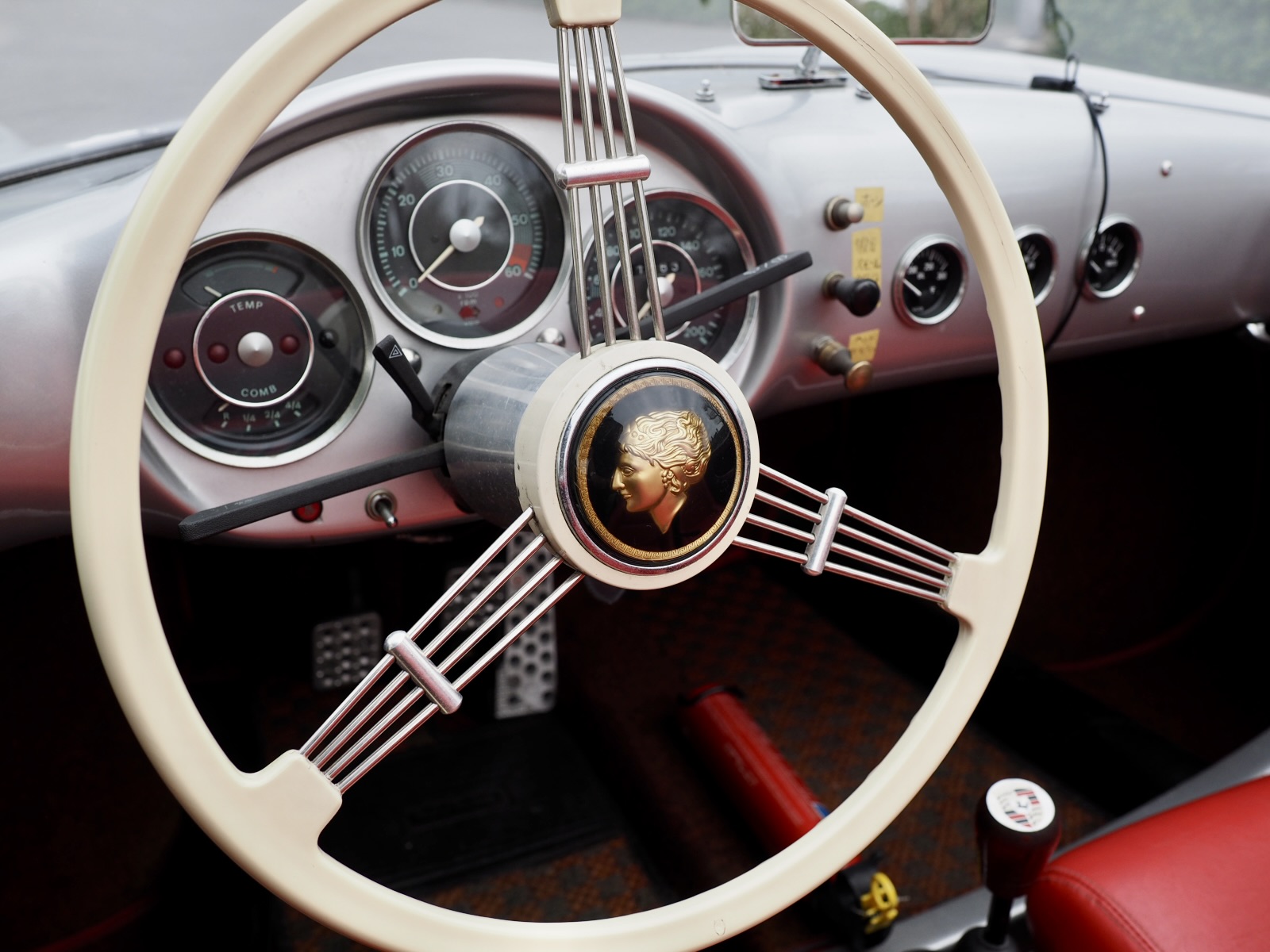
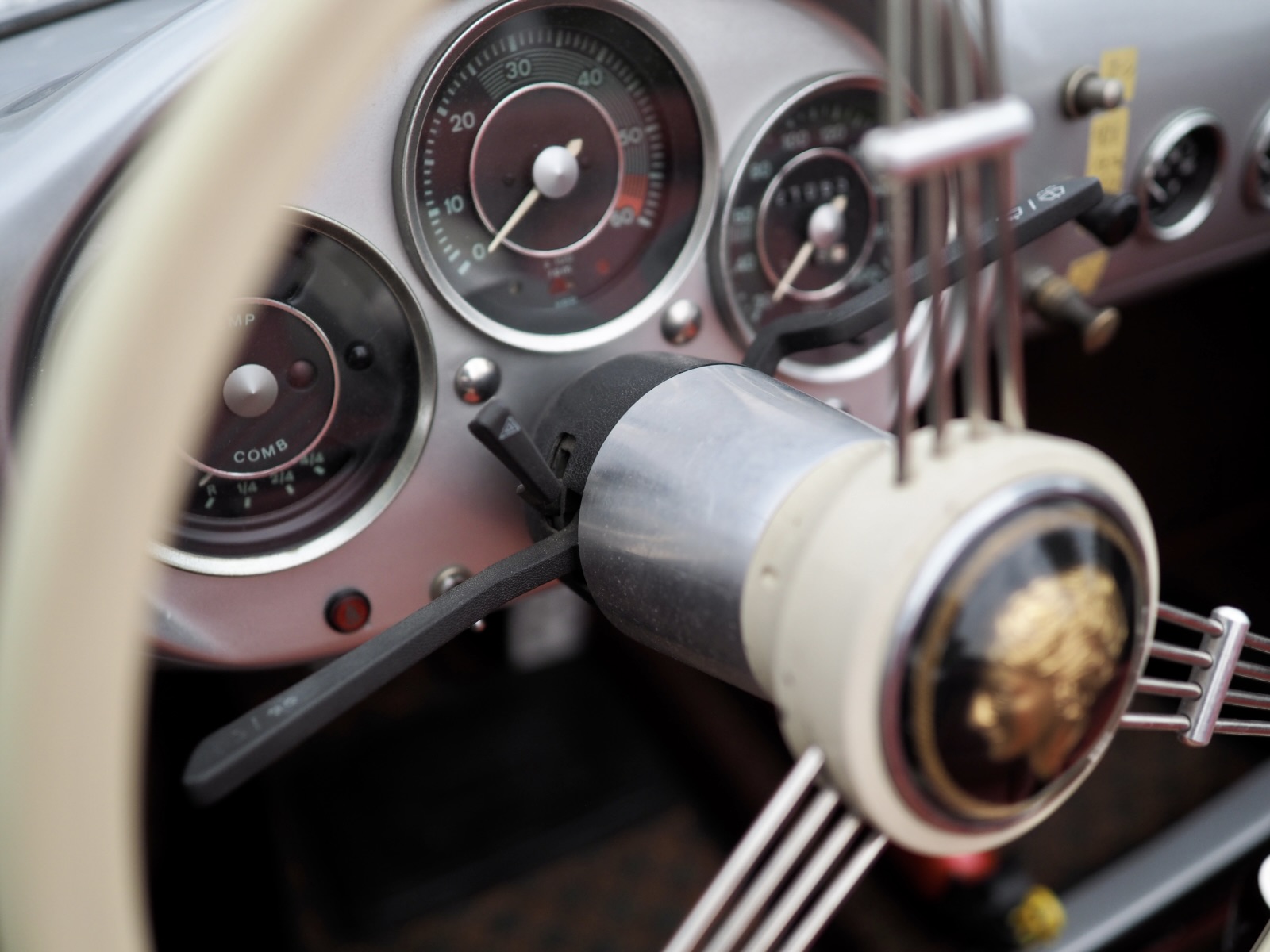
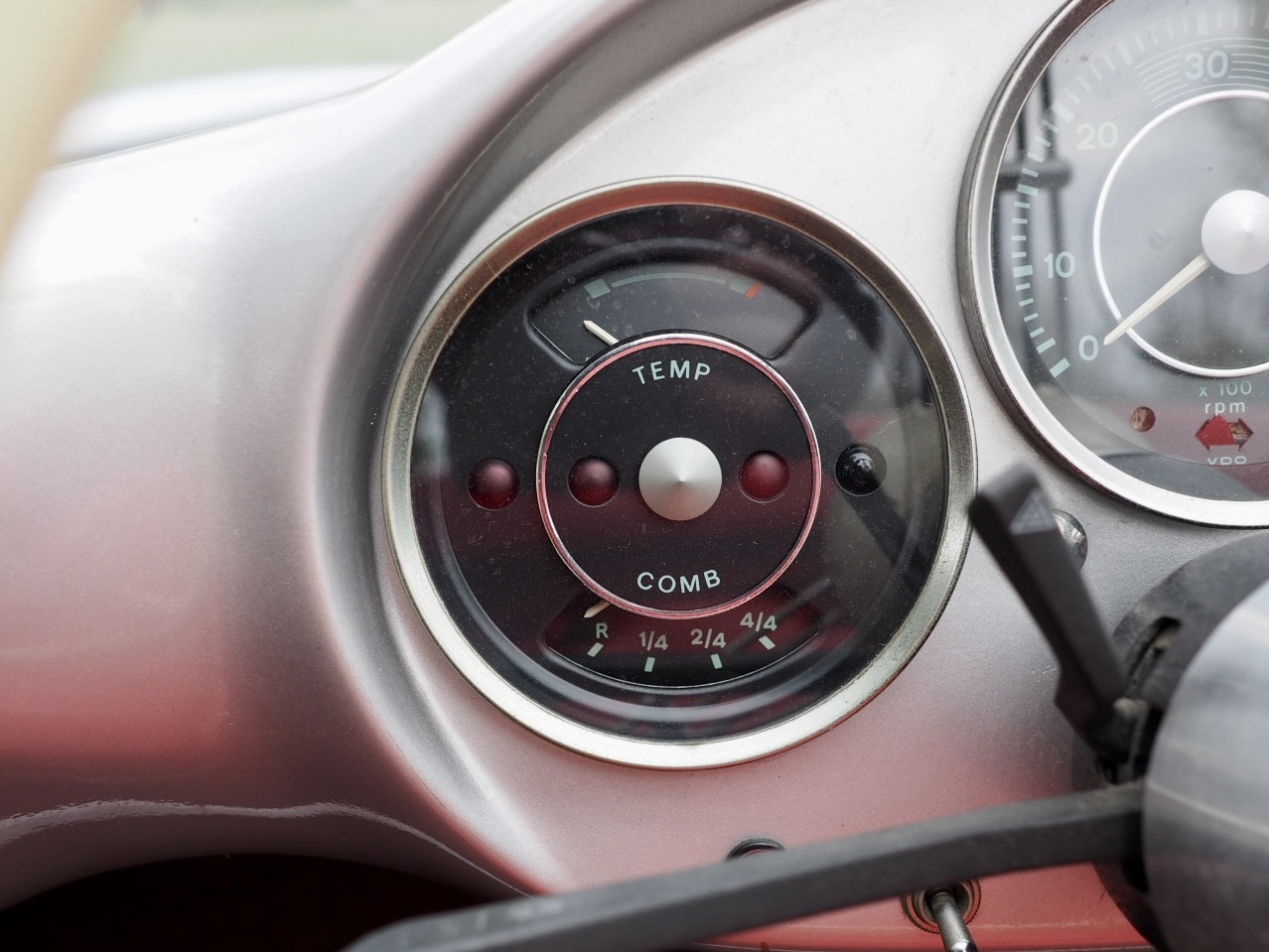
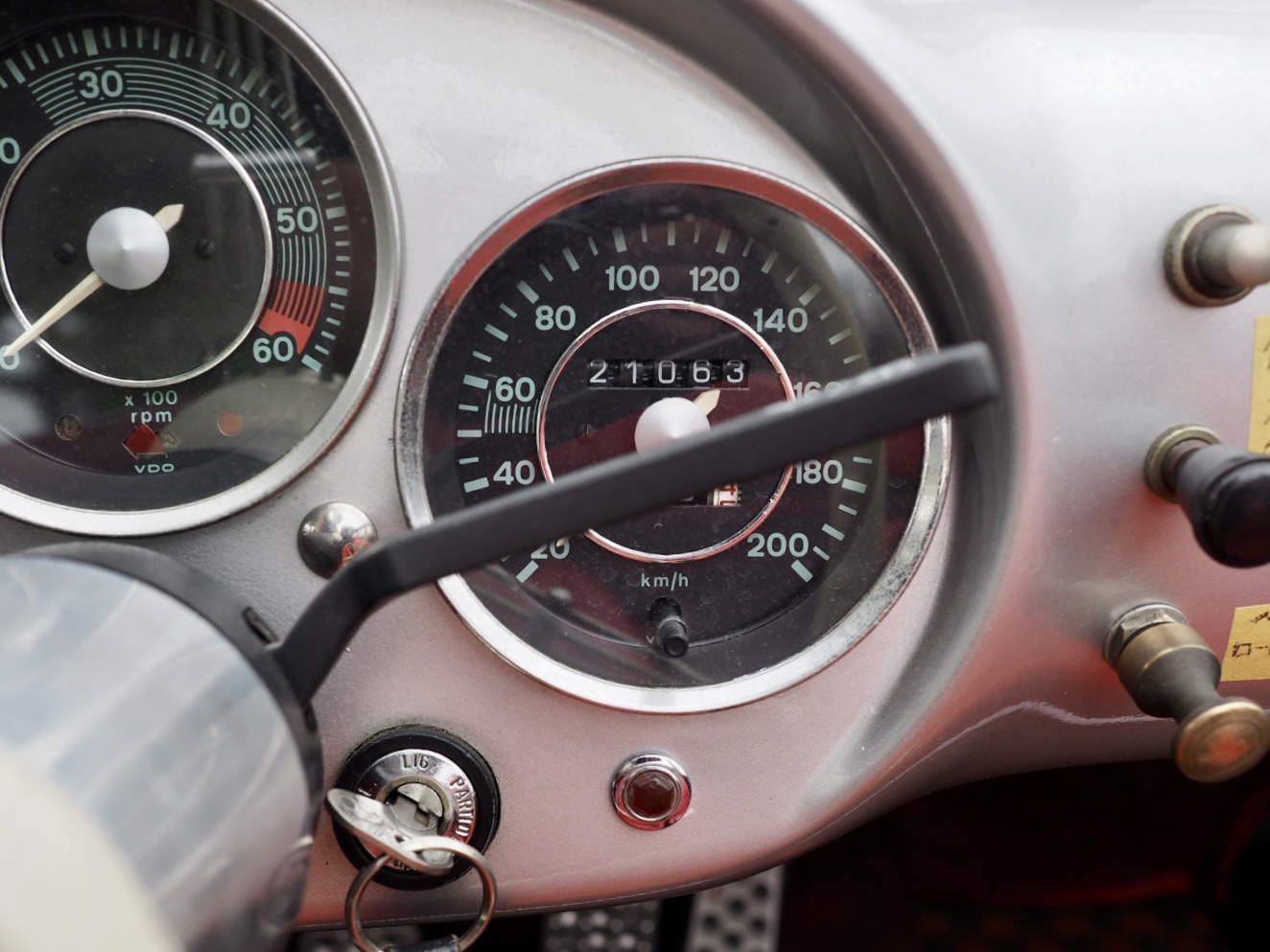
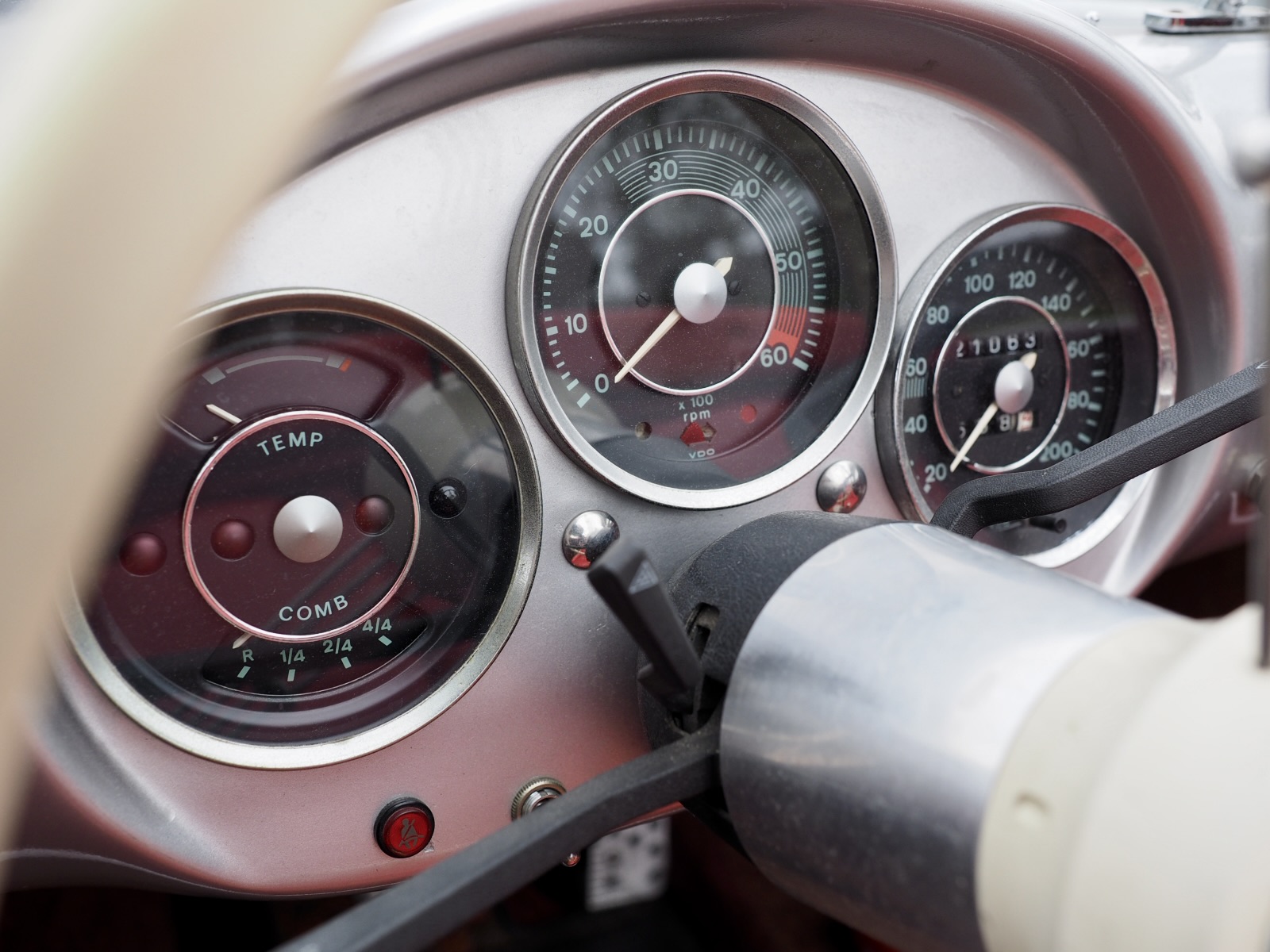
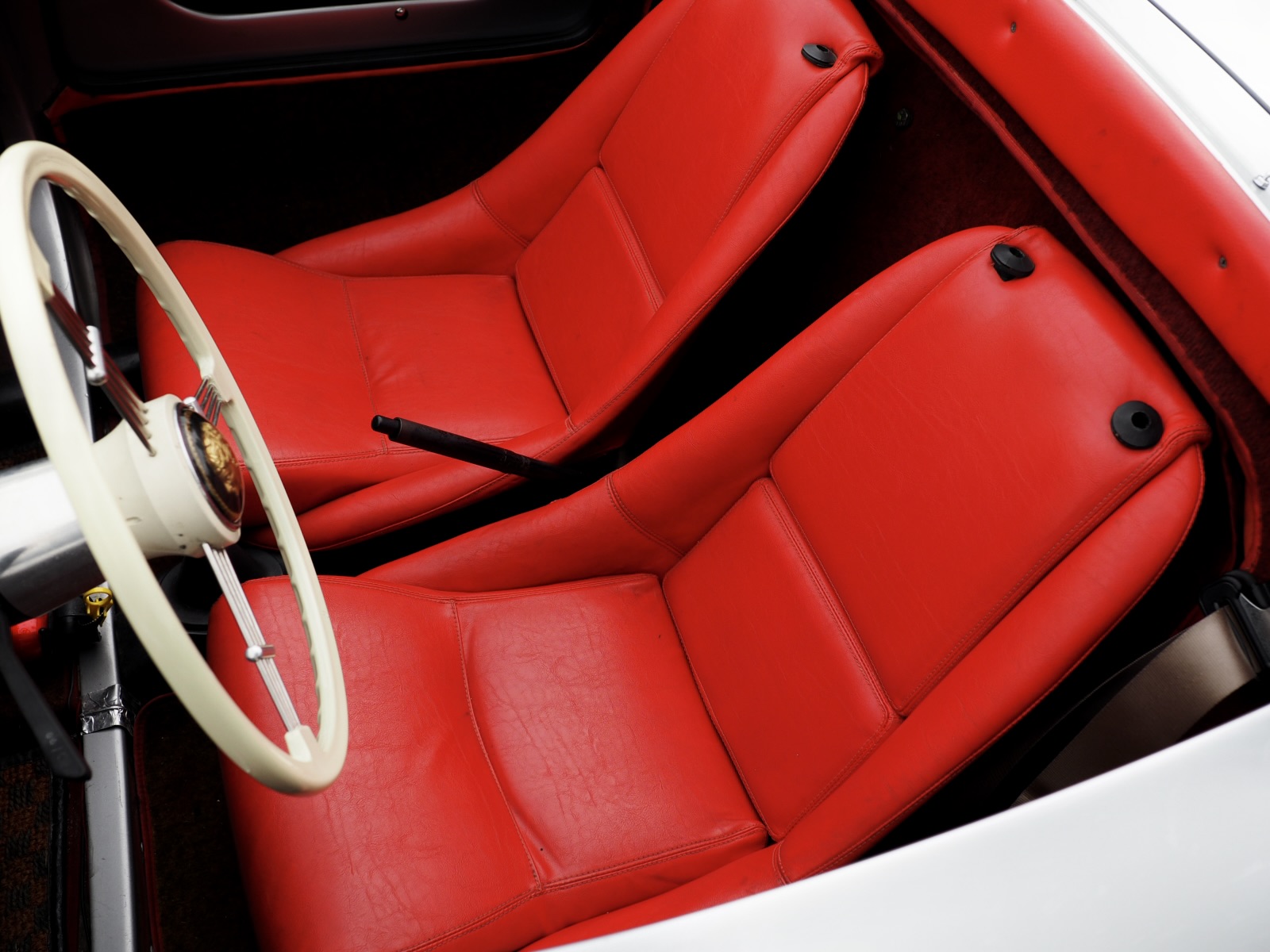
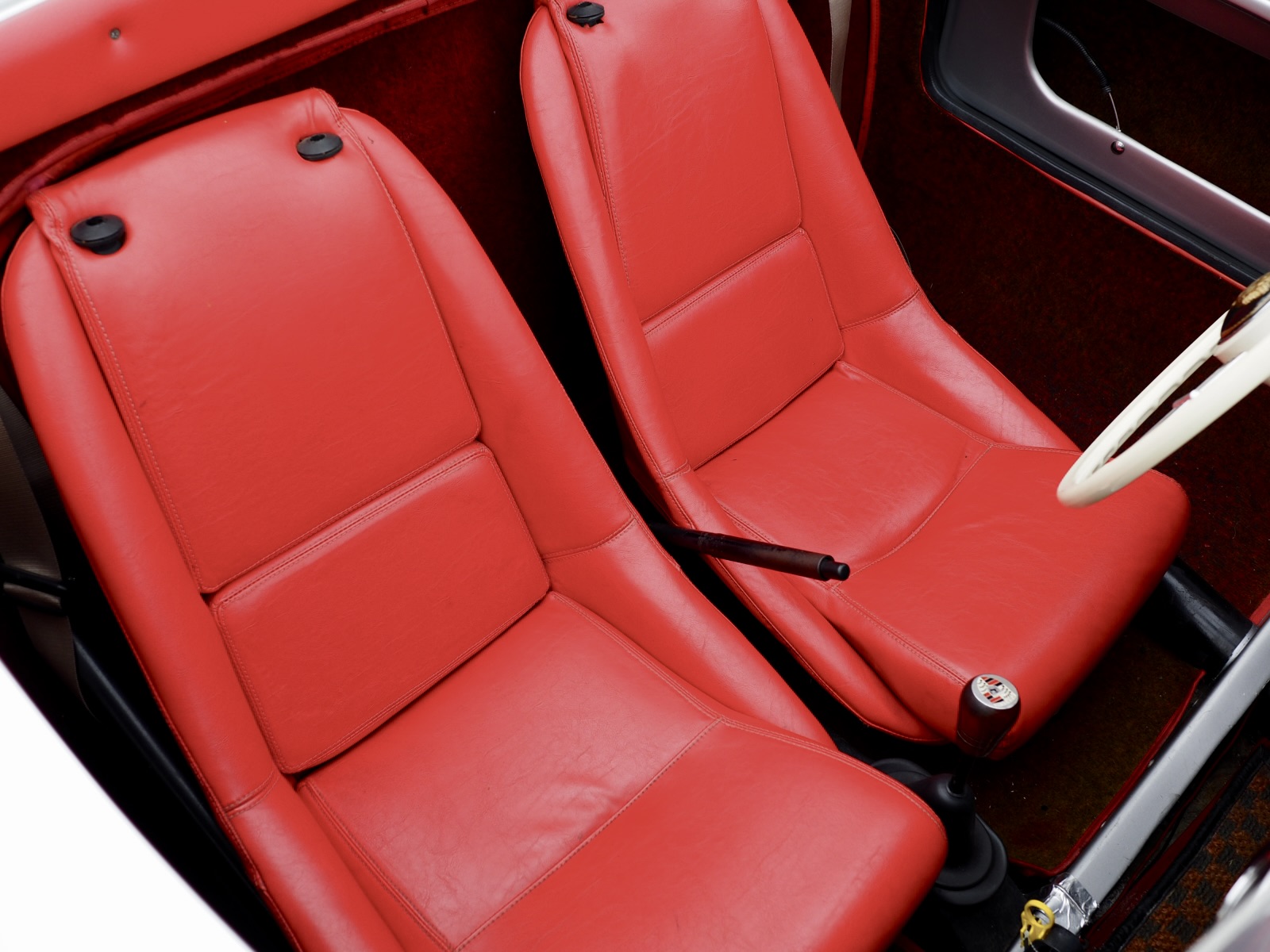
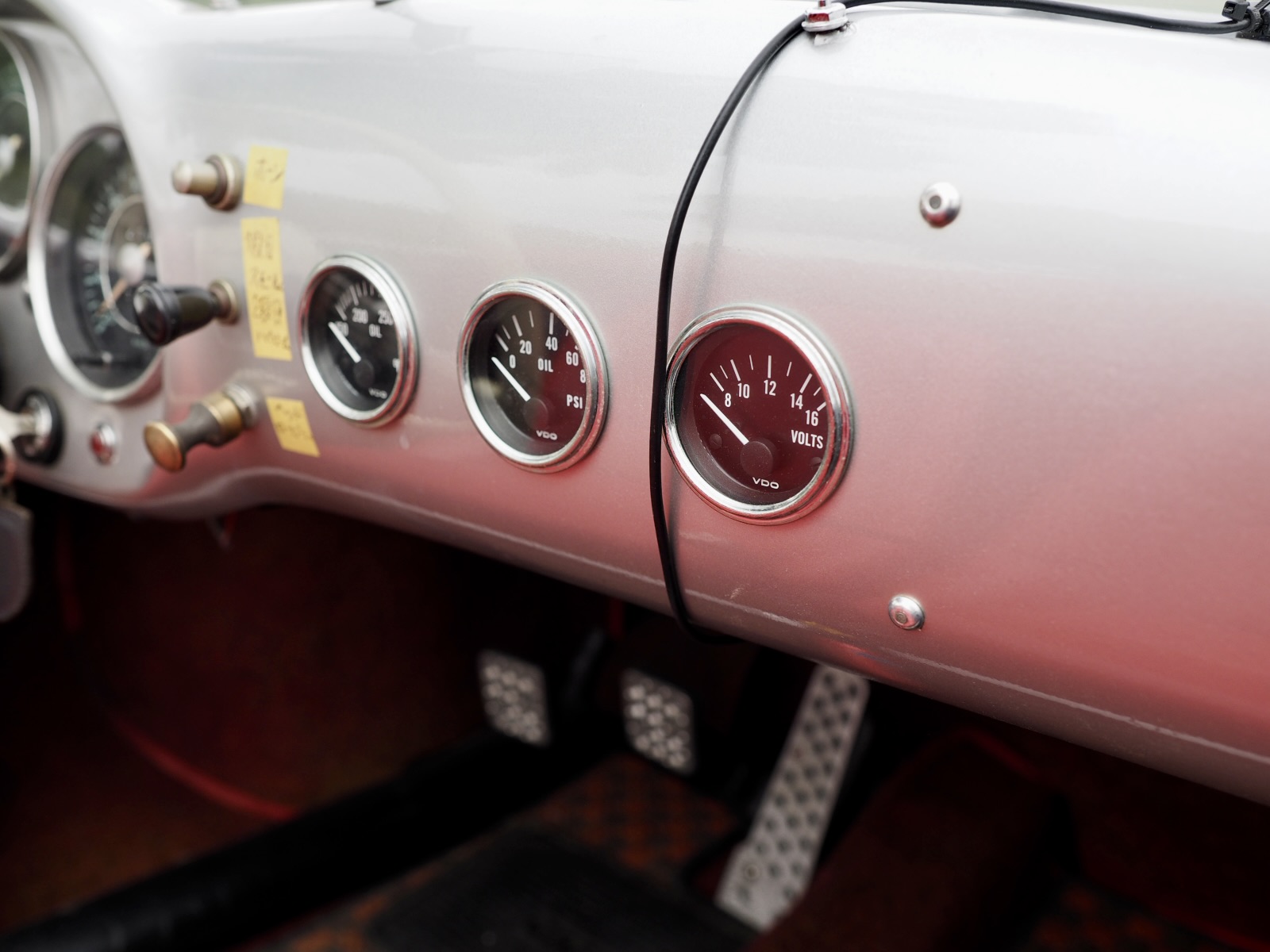
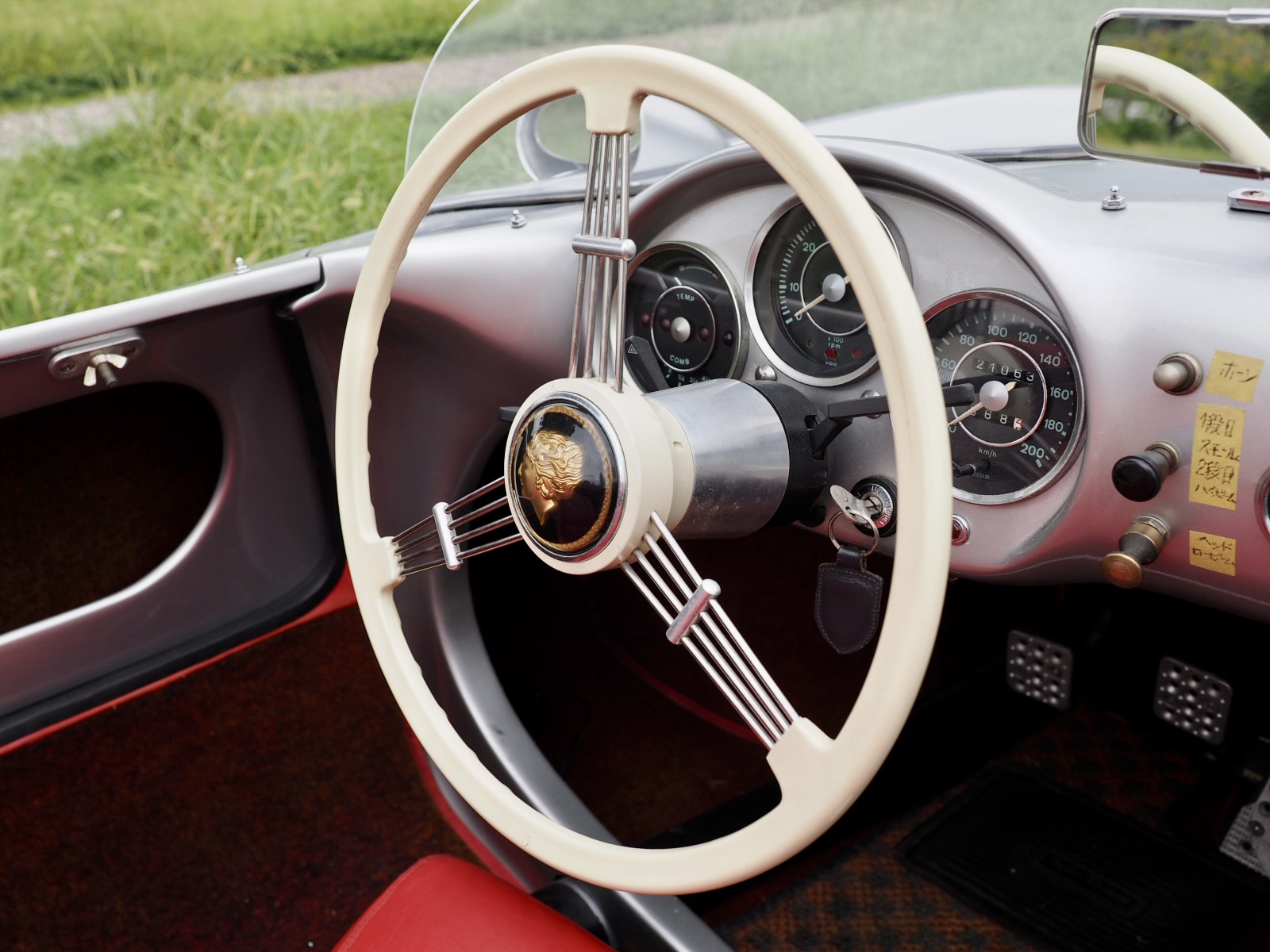
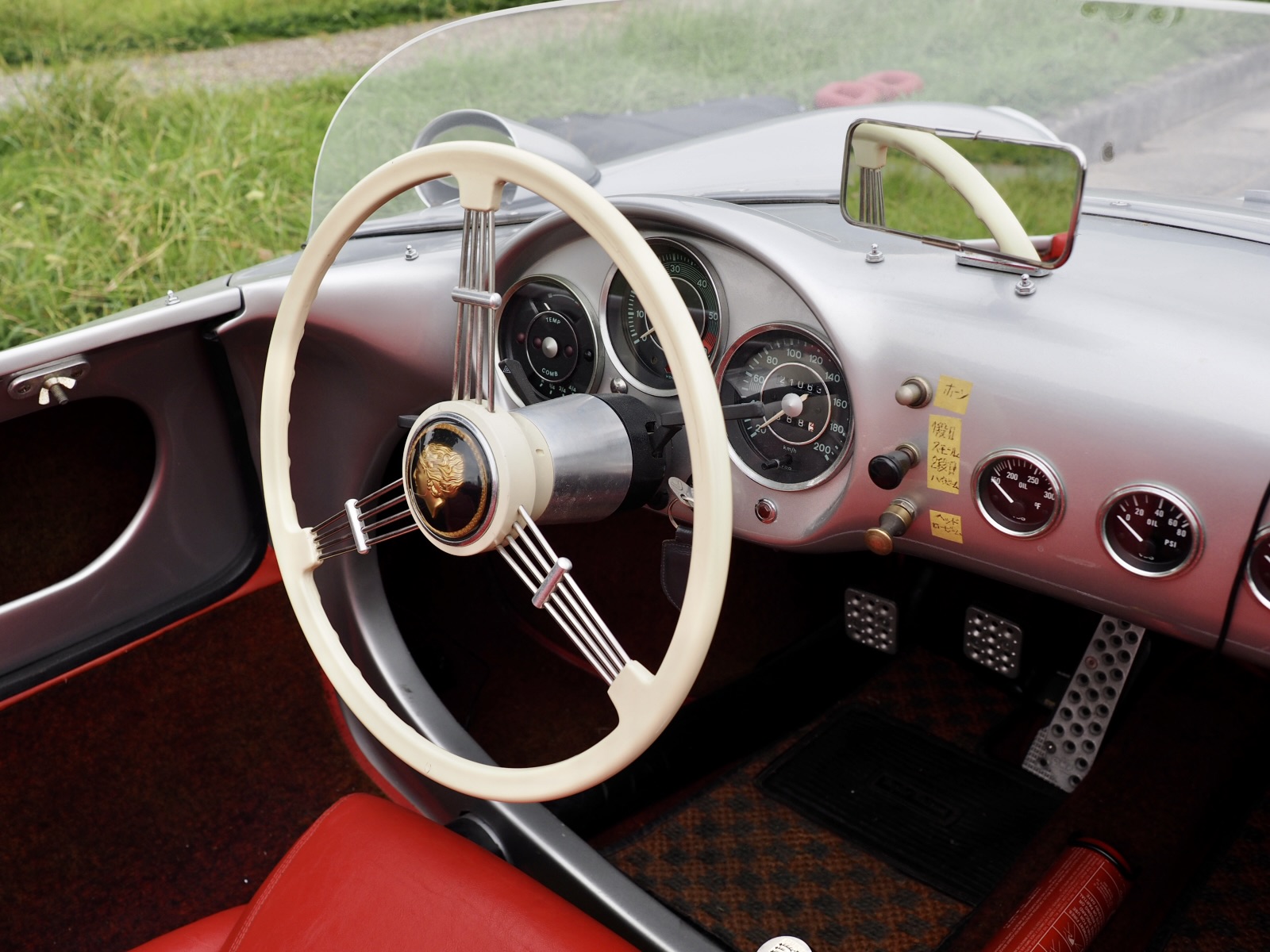
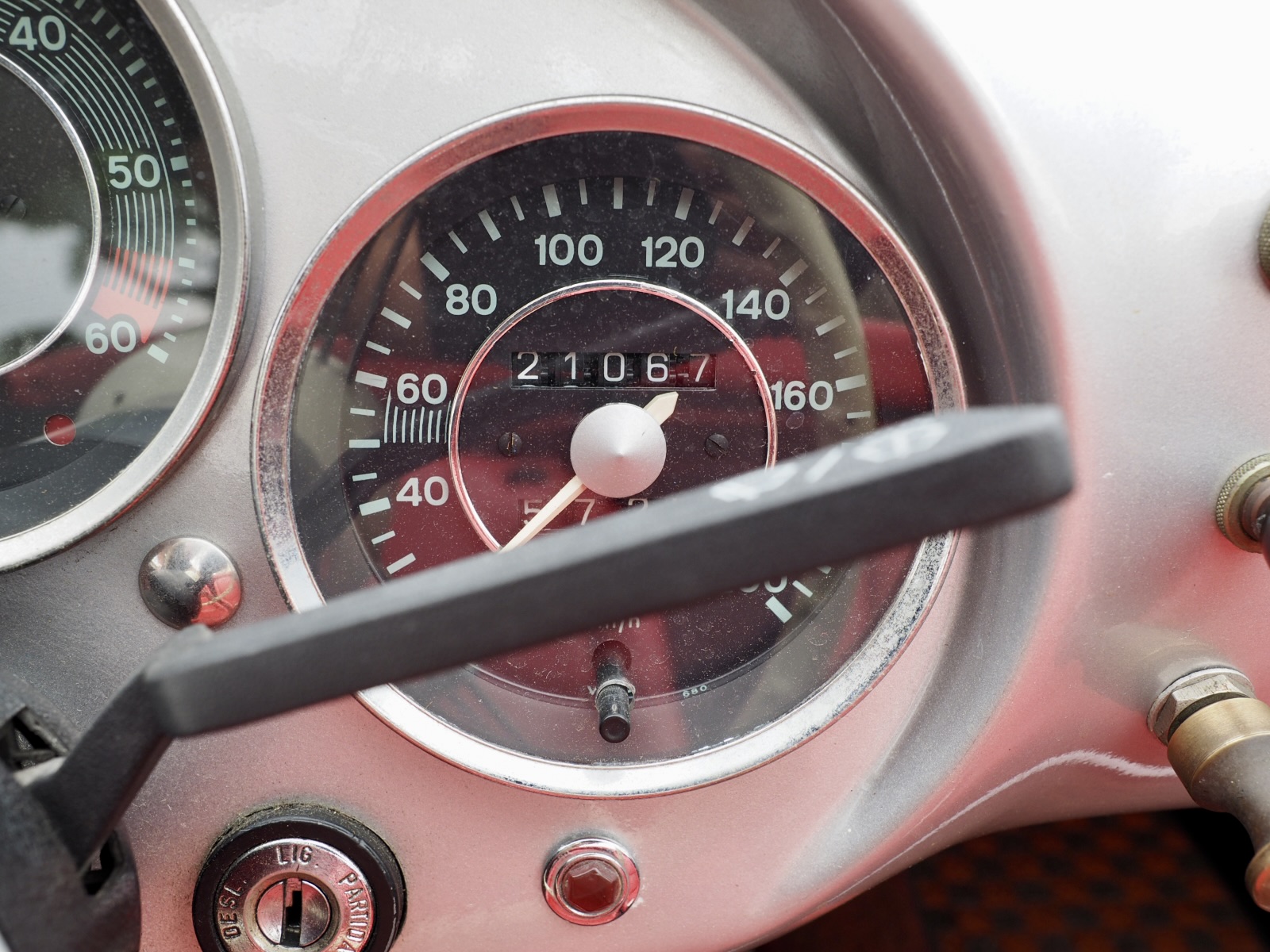
Inside, vivid red bucket seats contrast dramatically with the silver body and strongly evoke the red interior of Dean’s 550-0055. Low seats sit side by side with simple door trim inside a narrow cockpit wrapping tightly around the driver. Ahead are three large instruments: a central VDO tachometer, a speedometer marked to 200 km/h on the right, and a combination gauge on the left, all paying clear tribute to the original Porsche 550 cockpit…
Perhaps the most intriguing feature of the cockpit is the large ivory Petri-style steering wheel…
The original Porsche 550 Spyder used a steering wheel made by the German firm PETRI…
Its slim ivory rim and unusual spoke construction, formed from groups of thin metal rods, became one of the signature designs of 1950s Porsche…
The wheel fitted here is a replica of that Petri type, another detail closely matching Dean’s car…
At its center is a ‘Golden Lady’ horn button, a 1950s-style vintage accessory showing a gold female profile on a black background. It adds both period-correct accessory culture and a richly evocative accent…
Looking closely at all these details, it becomes clear that this BECK 550 Spyder not only recreates many features of James Dean’s 550-0055 directly, but also seeks to express the culture surrounding 1950s racing cars themselves…
The image of James Dean in 1950s cinema, his free life unconstrained by conventional values, and the intense story of the Porsche 550 he owned for only nine days at the end of his short 24-year life…
That story is deeply concentrated here…
Seeing the actual car, you can feel how strongly its creator was moved by that story and how much passion went into trying to recreate ‘Little Bastard.’ That effort deserves genuine respect…
And there is more…
In addition to the normal windshield used for inspection, the car comes with a black tonneau cover, removable red headrest and related small lamps…
The tonneau covers the open cockpit and is a practical accessory with direct roots in 1950s racing sports cars…
A red headrest required for inspection is also finished to suit the interior. The car can therefore retain its usual racing-screen appearance while being reconfigured when necessary. The fact that these accessories remain with the vehicle also makes it reassuringly practical to own, drive and enjoy today…
There are even highly detailed 1/8-scale models completely recreating James Dean’s 550-0055 that sell for prices exceeding this real car…
Yet few tribute cars can have been built with this degree of accuracy. More importantly, this is not merely a beautifully prepared display replica: it is a genuine sports car with an approximately 1.9-liter air-cooled flat-four and a 650 kg body, capable of delivering genuinely exhilarating performance…
That is exactly what James Dean wanted…
Not simply to own a beautiful racing car, but to take the wheel himself and experience the joy of driving…
That is where the true respect of an homage lies—and where the value of a tribute car is found…
Chapter Three…
I actually drove it…! The author’s post-interview notes on the 1995 Porsche 550 Spyder by BECK “Little Bastard” James Dean Tribute…
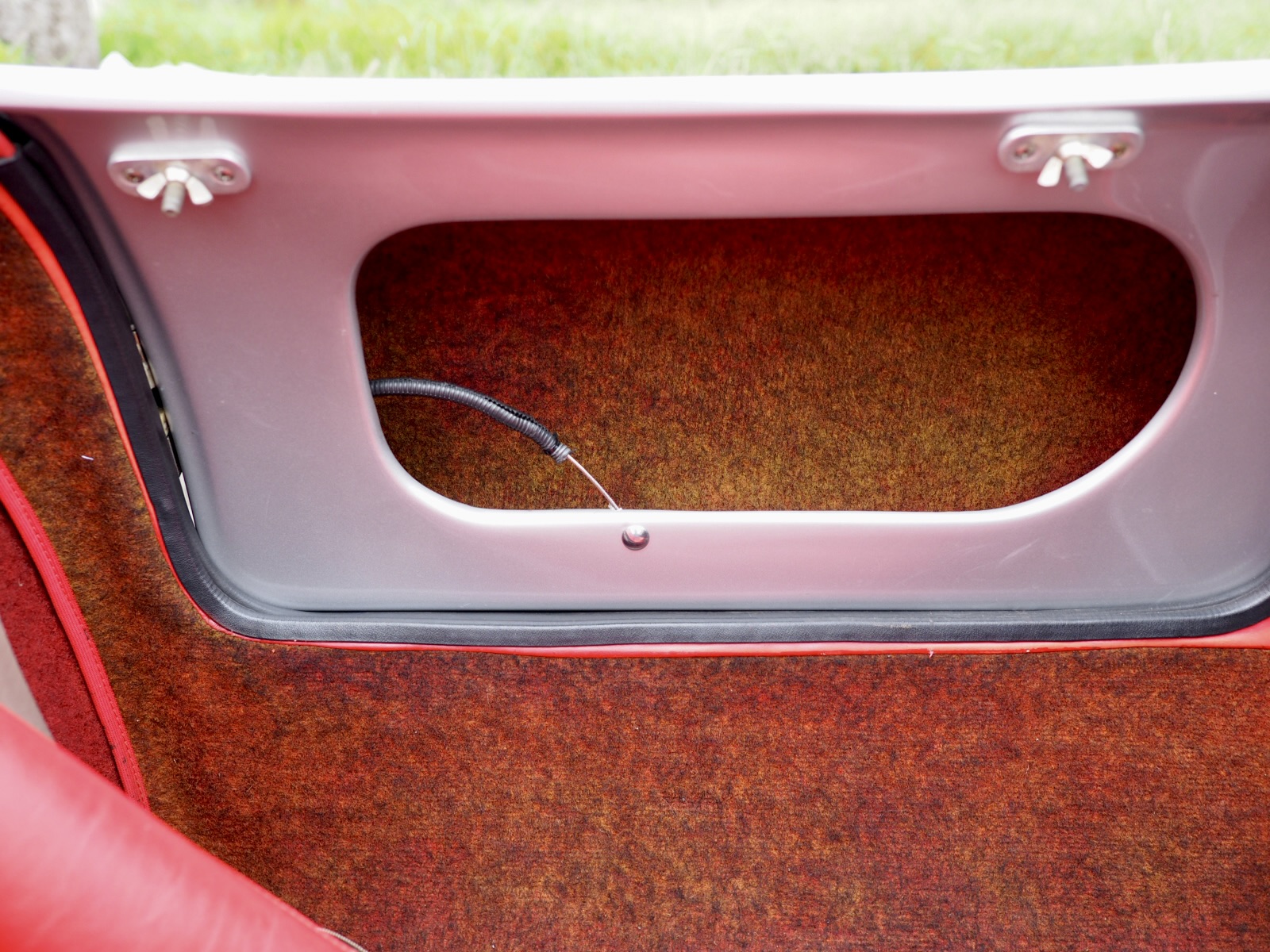
There are no exterior door handles. You reach inside, pull a wire cable and release the door latch—the ritual of climbing into this car begins with the wonderfully stimulating manners of a 1950s racing machine…
The seating position is so low that getting in takes a little practice…
But once seated, the view from a position as low as a Caterham Super Seven or Lotus Europa is irresistibly exciting. The thrill begins the instant you climb in—and surely it felt much the same in 1955…
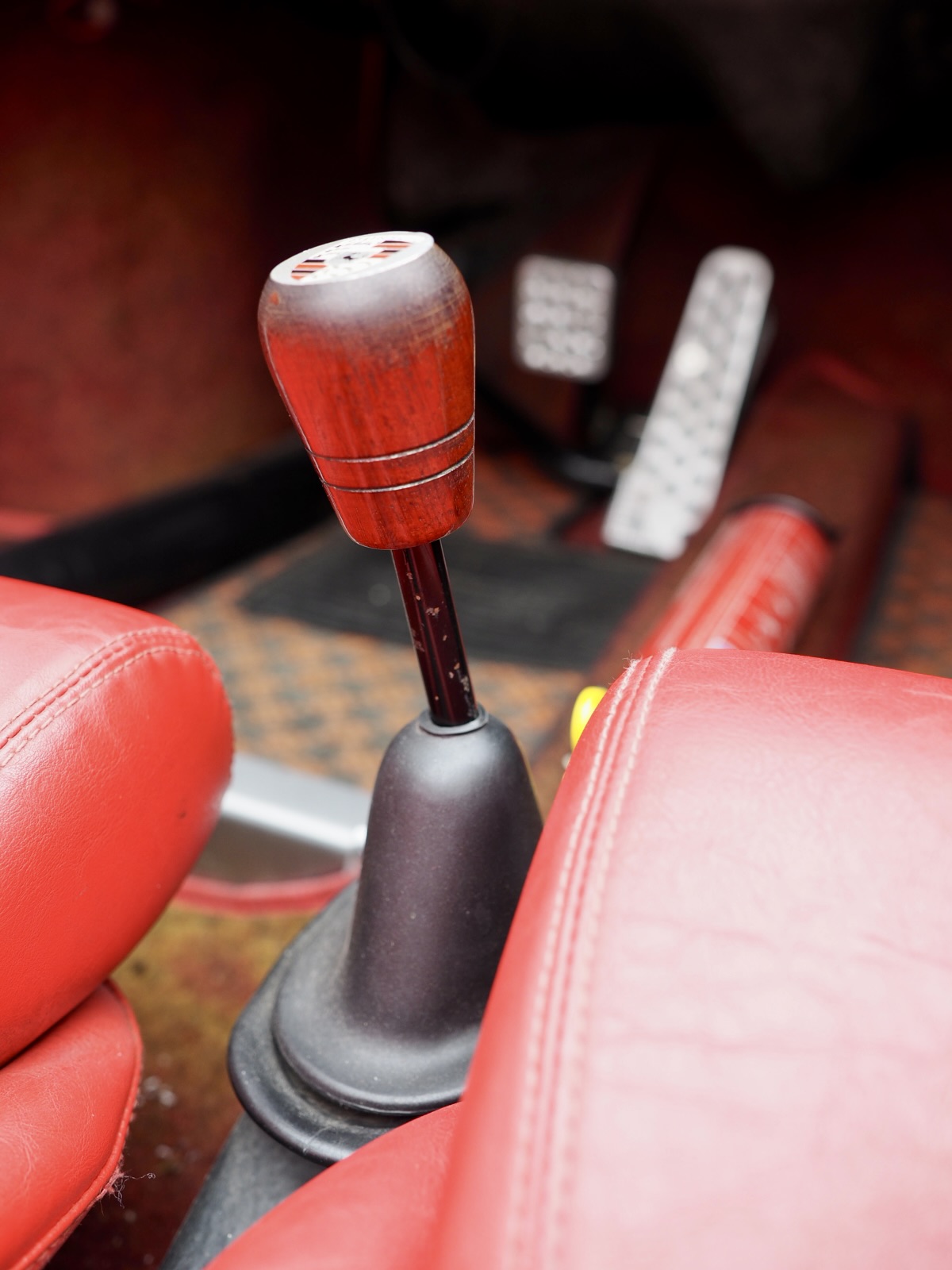
Your legs stretch almost straight ahead to operate classic Porsche-style floor-hinged accelerator, brake and clutch pedals, while you hold the slender Petri-style wheel close to your body—dimensions straight from a 1950s racing car…
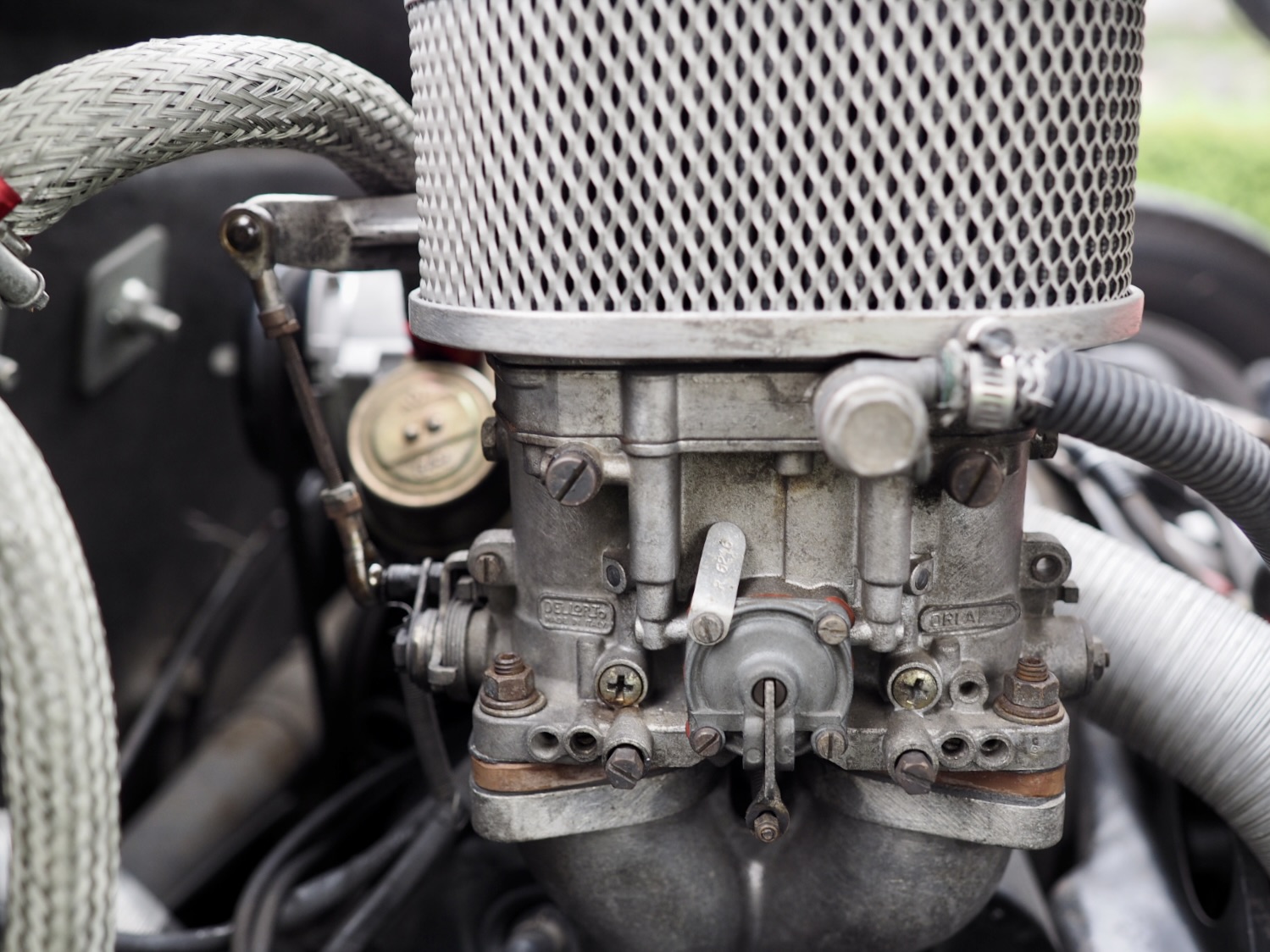
With the fierce induction sound of well-tuned twin Dell’Orto downdraft carburetors immediately behind your back, the flat-four spins with such energy that it is hard to believe its family connection to the engine of a Volkswagen Type 1, making the needle of the classic Porsche-style VDO rev counter dance wildly…!
Although the homage body is FRP rather than original aluminum, its curves are exceptionally beautiful. Even so, the car weighs only 650 kg—lighter than many lightweight Seven-type cars—and with a near-2.0-liter flat-four it launches this beautiful machine forward with explosive eagerness…!
The period detailing is superb…!
Slim Firestone Deluxe Champion tubeless tires, with their beautiful classic tread pattern and now difficult-to-source imported availability, combine with road noise flowing into the open cockpit to create a world that feels exactly like 1955…
Here the tribute becomes complete, inviting the driver into a wonderful world…
Surely I am not the only one who feels as if ‘time itself melts away’…
This truly unique car will continue to offer the next owner an endless dream in the garage—a living expression of the youthful James Dean who raced through his short life at full intensity…
The more you learn, the more you find yourself thinking, ‘It is incredible that they built it this closely to James Dean’s 550-0055…’
There is only one detail…
On September 21, 1955, shortly after taking delivery, James Dean had a minor collision in town and lost the left-side driver’s indicator lens. There was no time to repair it before he left for Salinas several days later…
Every surviving photograph from that period shows the car with that indicator lens still missing…
Understandably, this tribute does not go quite that far…
There was an enthusiast who poured every ounce of dream and passion into completely recreating the ‘Little Bastard’ loved by James Dean...! Authentic right down to the smallest details...! This 1995 Porsche 550 Spyder by BECK ‘Little Bastard’ James Dean Tribute is a machine that carries dreams and romance—and drives brilliantly...!
Please come to Nagoya, Aichi Prefecture, for the ultimate viewing filled with romance and history…
This exceptional 1995 Porsche 550 Spyder by BECK ‘Little Bastard’ James Dean Tribute is currently located in Aichi Prefecture.
As this is a private-party sale, no consumption tax or dealer fees will be charged.
Upon purchase, the buyer will be responsible for prorated automobile tax (annual amount: ¥45,400) and settlement of the recycling deposit (¥9,880).
Transportation should be arranged by the buyer, but please feel free to consult us if desired. We can prepare a quotation based on distance and can also deliver the vehicle using our own 3-ton flat-loader transporter.
【Regarding Inquiries…】
The vehicle on this page is listed on Estate Sale Supremacy®, a cross-border e-commerce platform for classic and collectible cars.
Estate Sale Supremacy® is a Japanese interpretation of North American estate-sale culture, introducing cherished vehicles through owner interviews, written features and video.
We faithfully express the current owner’s feelings while preserving the memories in the heart, and we support a secure sales-brokerage process to ensure the vehicle is properly passed on to the next generation.
This article was written based on an approximately three-hour interview with the owner beginning at 11:00 a.m. under cloudy skies on October 4, 2026. Because the inspection time was limited, the description may not represent the vehicle’s condition with 100% accuracy. Not every statement in the article has been independently verified, and comments regarding condition reflect the weather, circumstances and the author’s subjective impressions at the time of the interview.
For questions regarding the listed vehicle or to request an in-person inspection, please contact us using the form at the bottom of this page. As this is a private-party transaction, in order to prevent casual viewing requests, inspections are limited to customers seriously considering a purchase.
Thank you for your consideration.
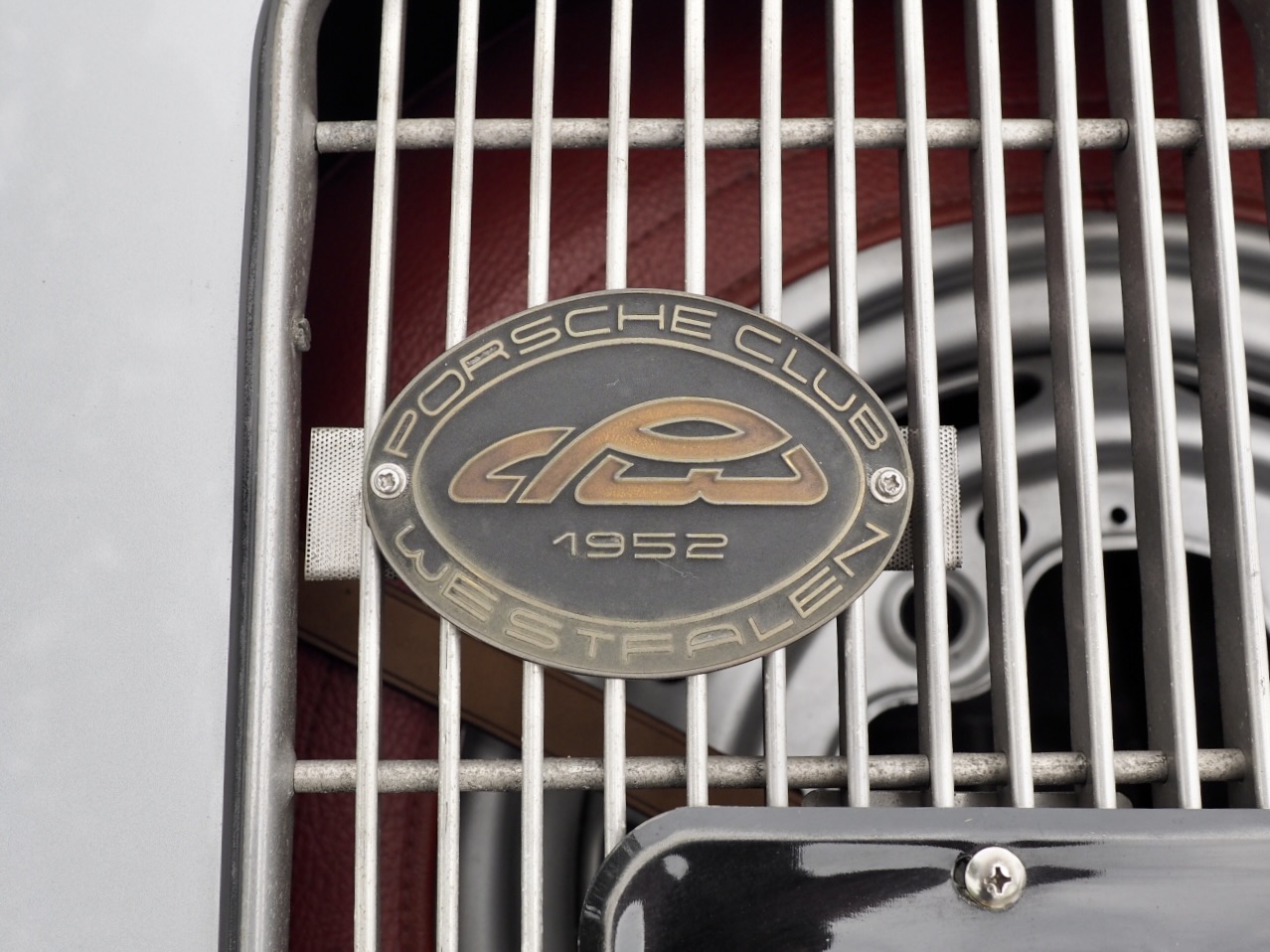
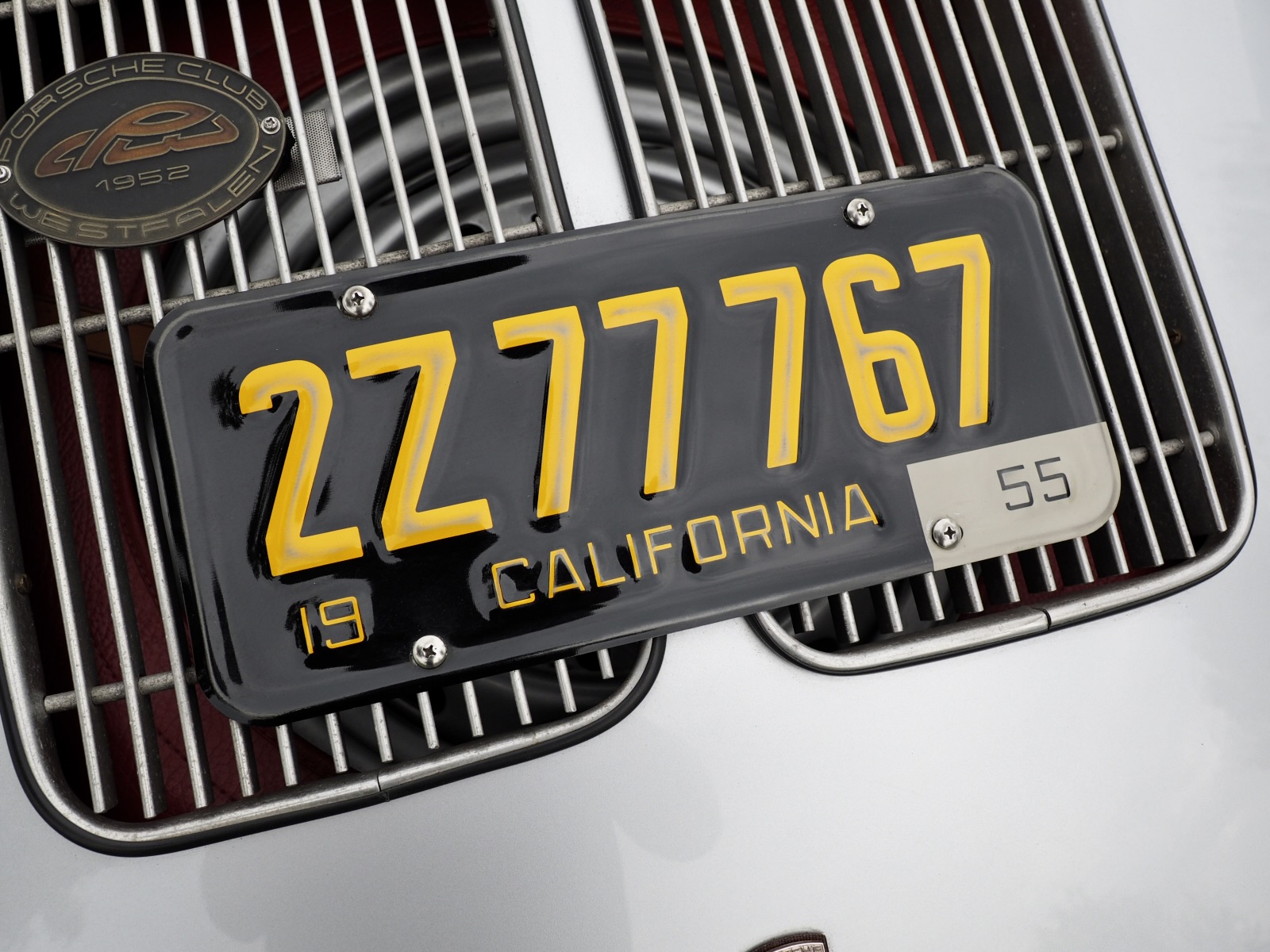
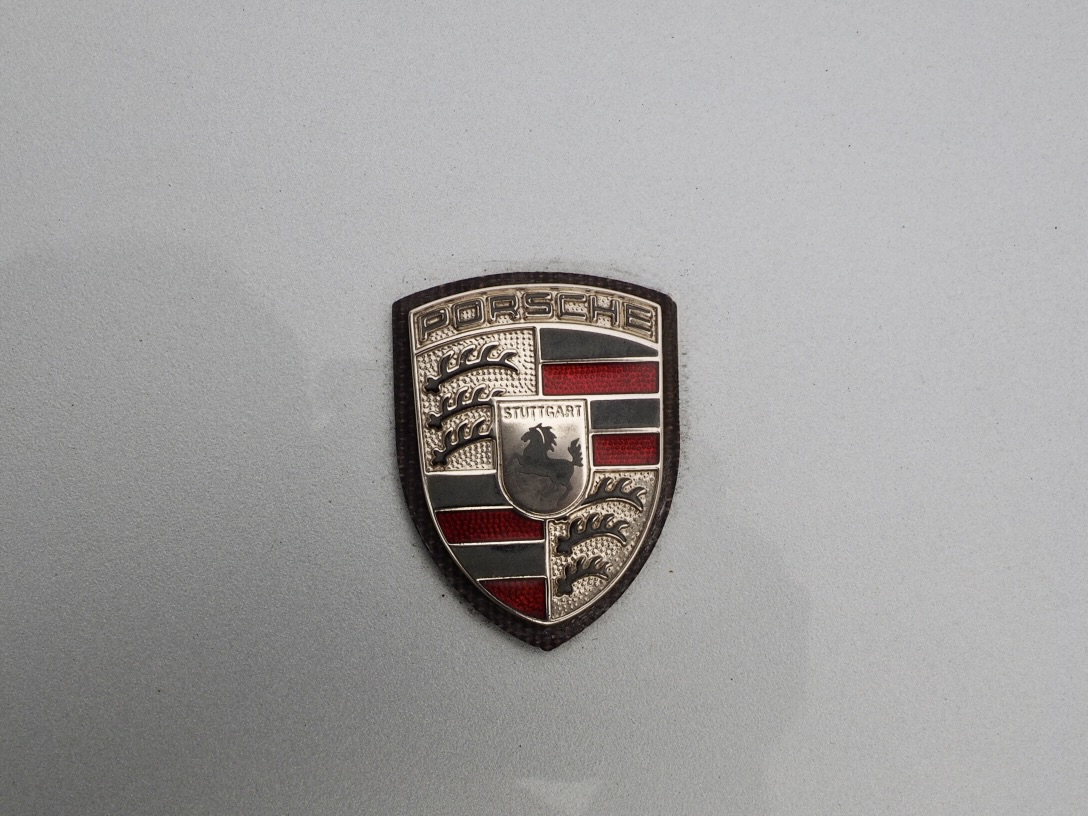
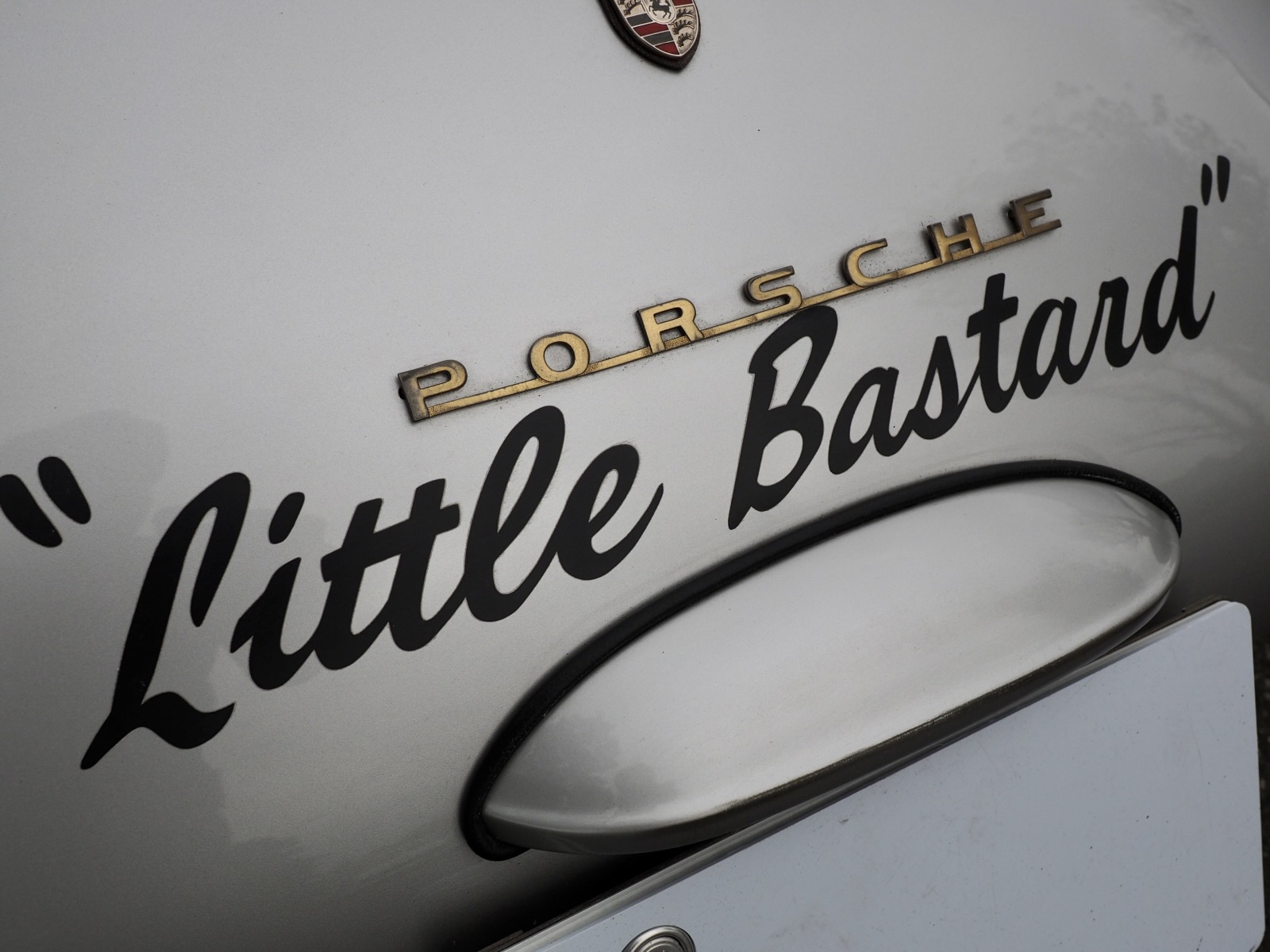
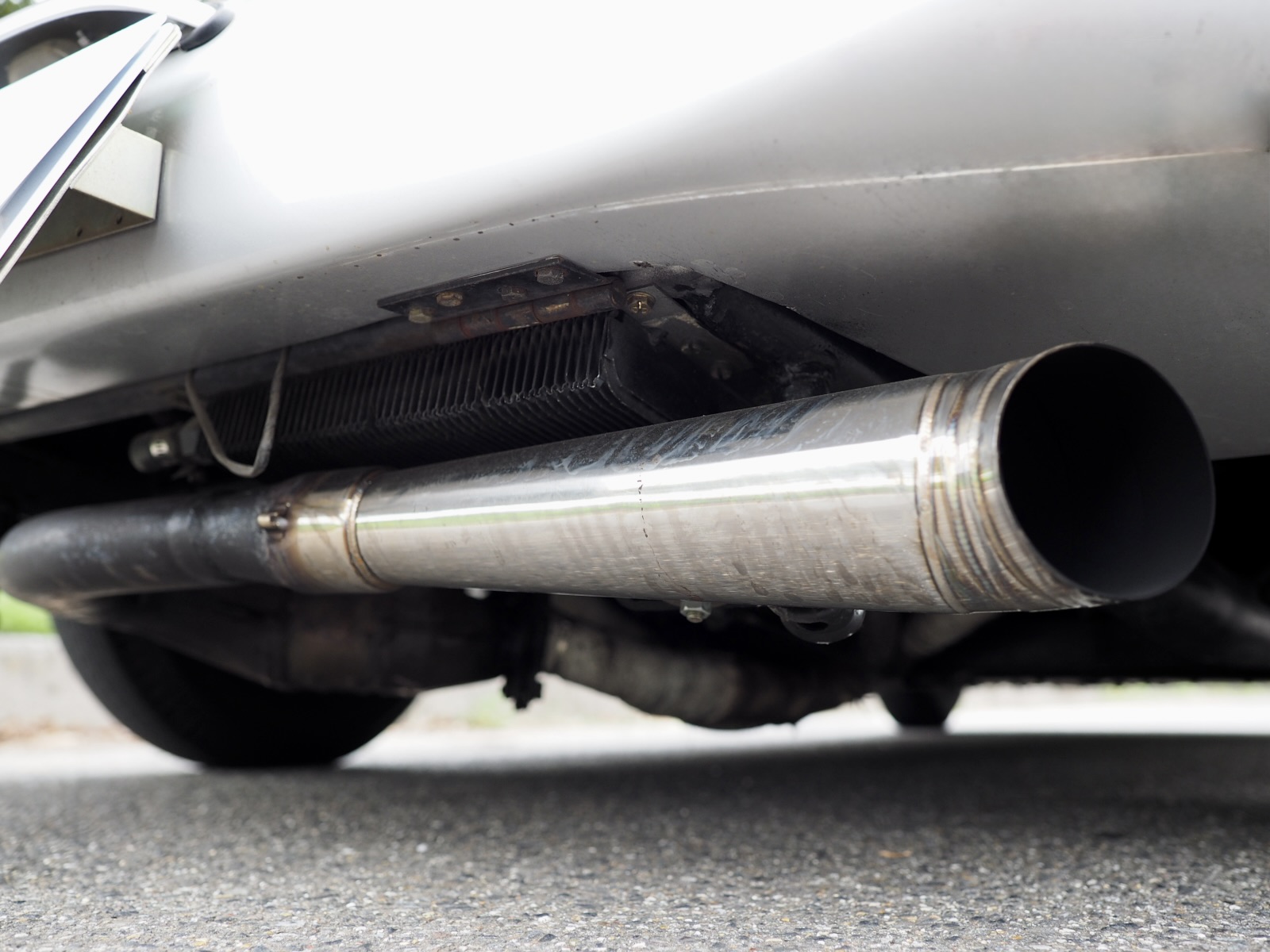
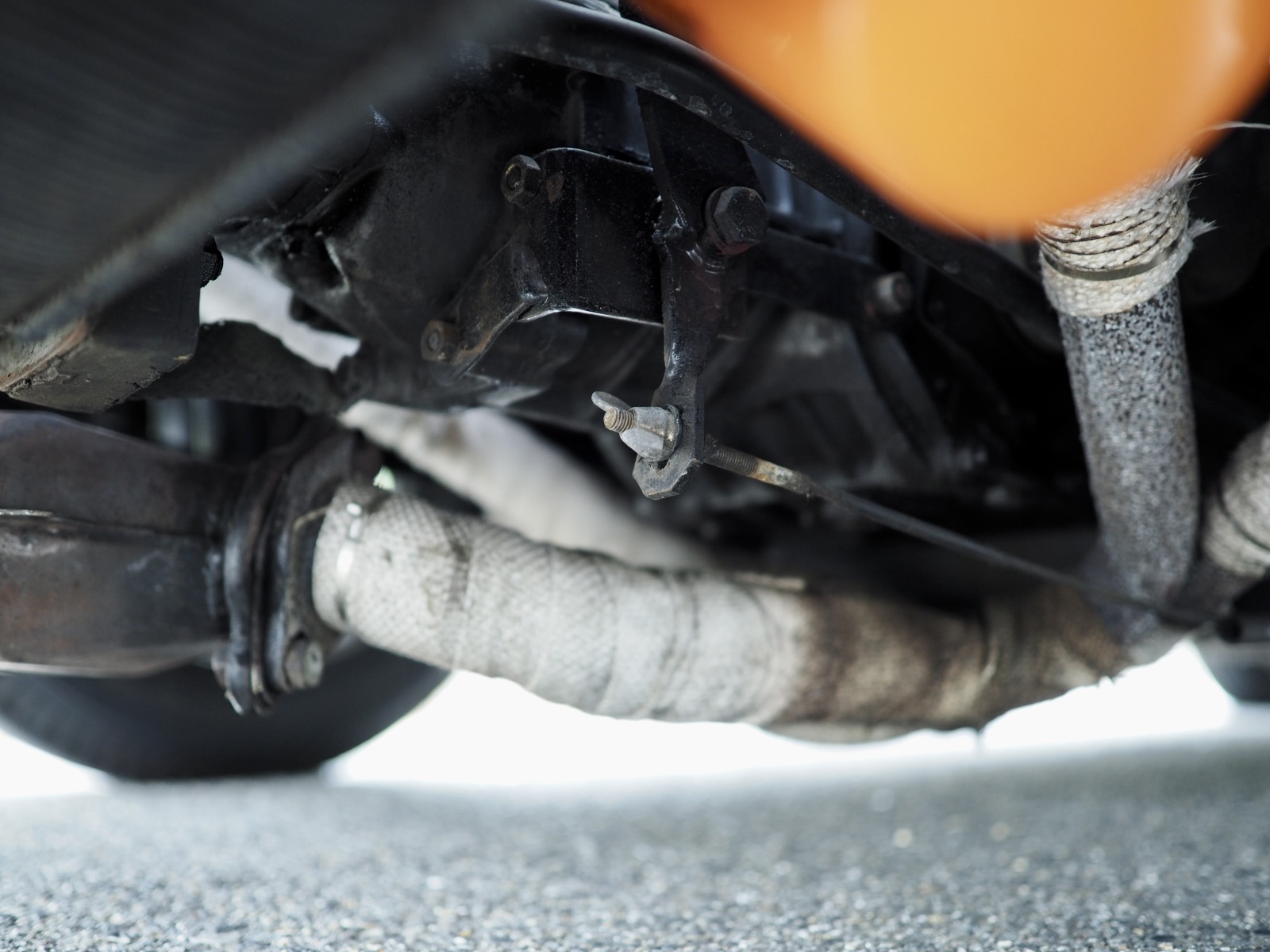
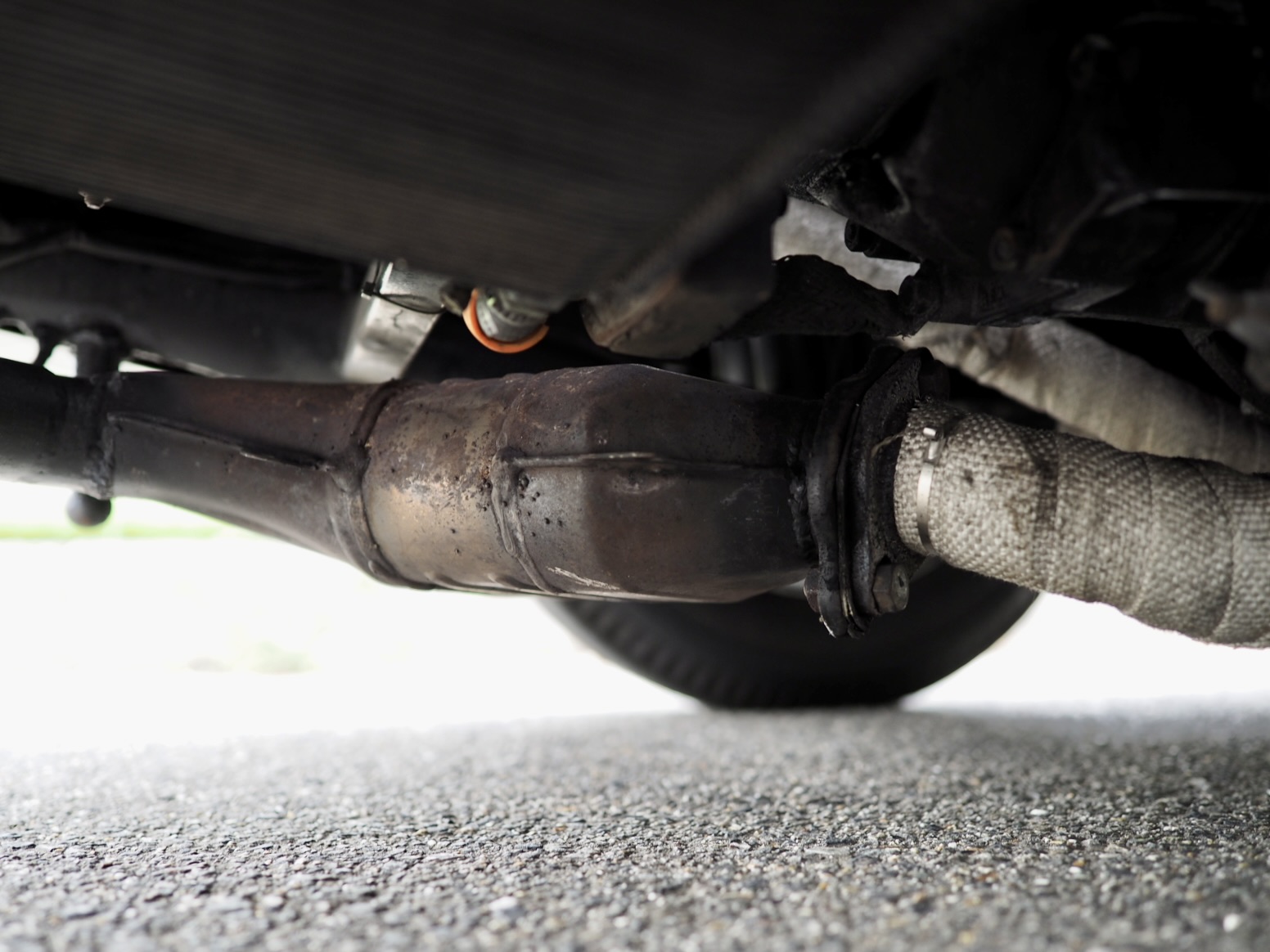
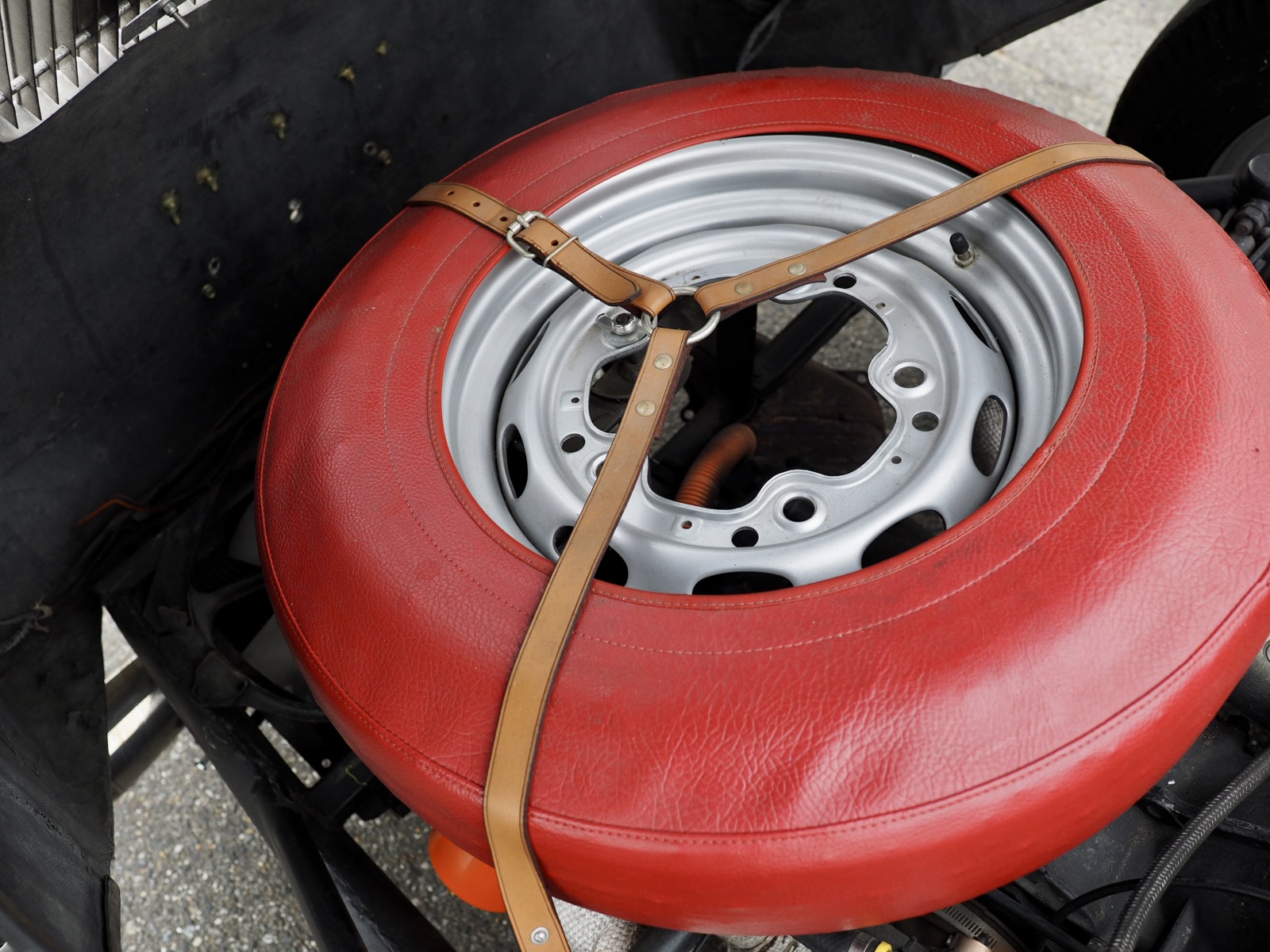
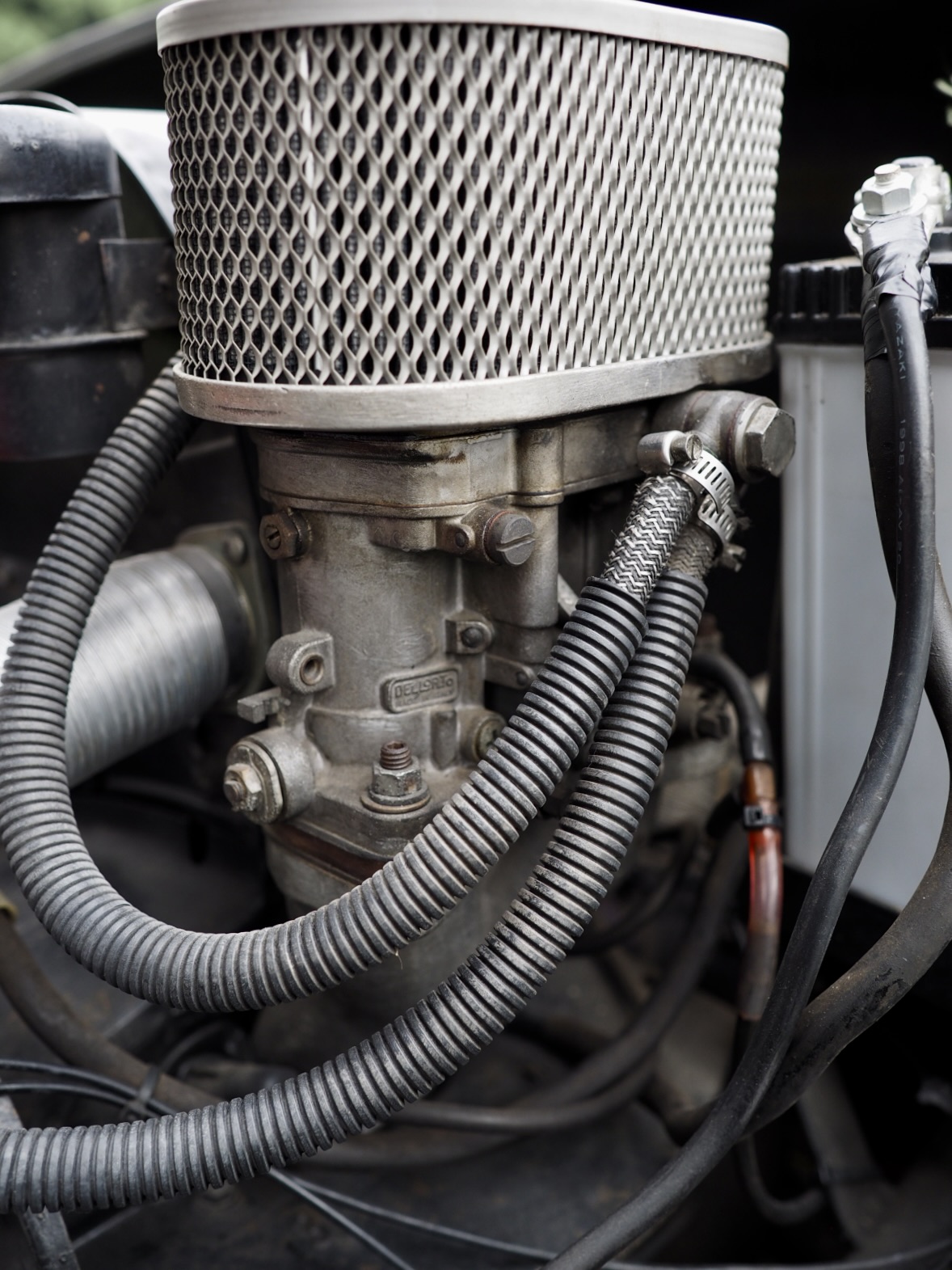
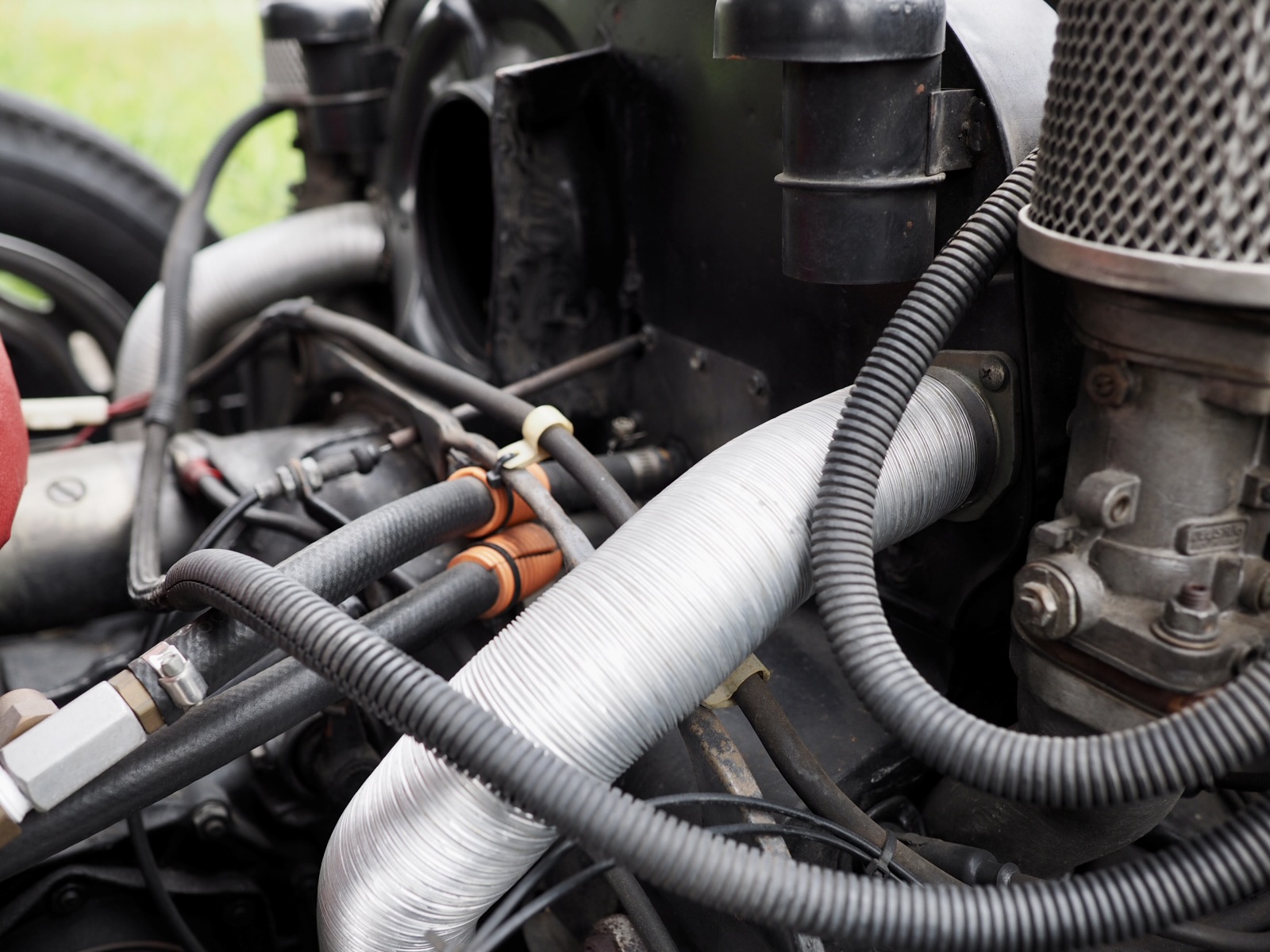
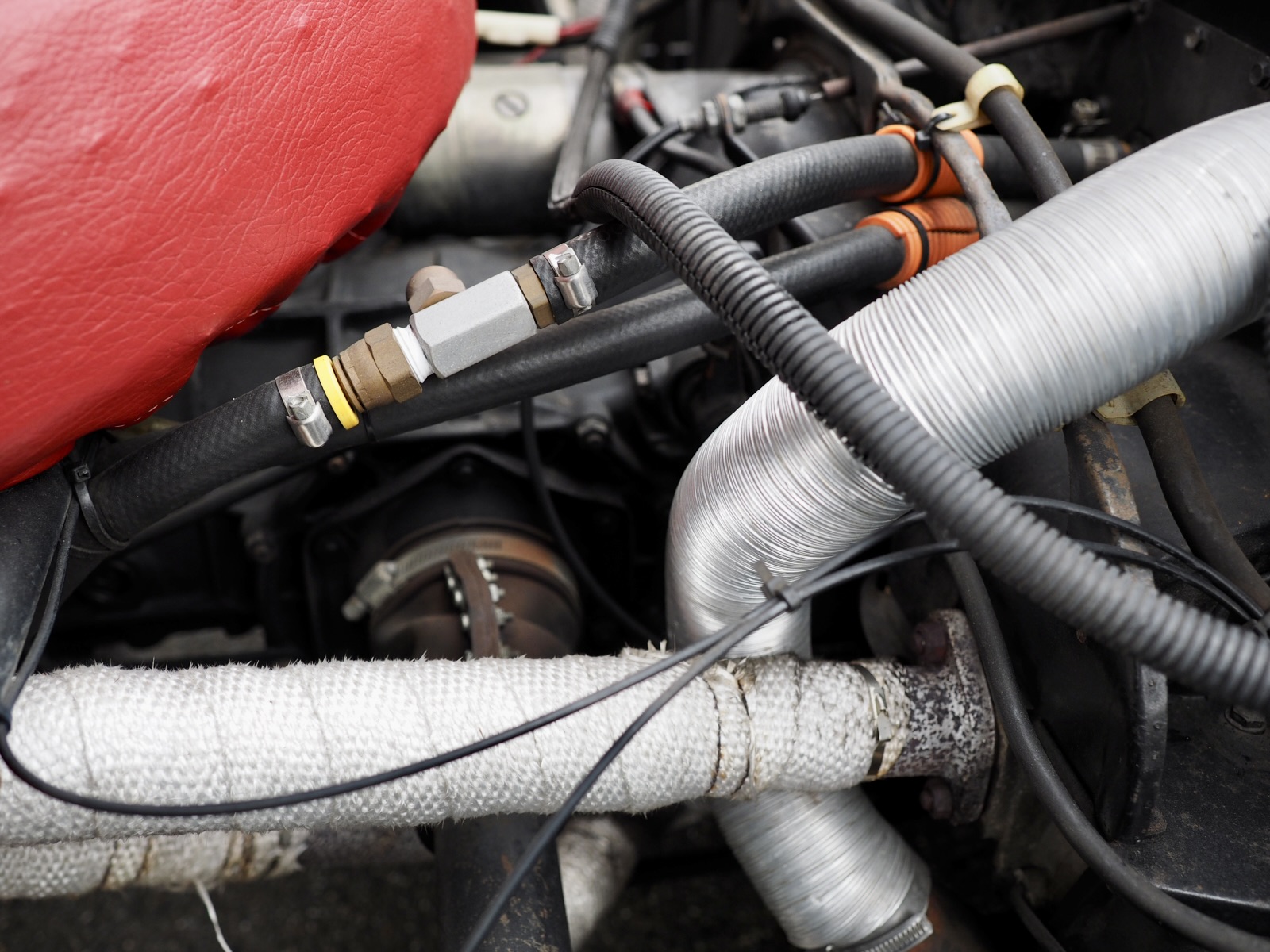
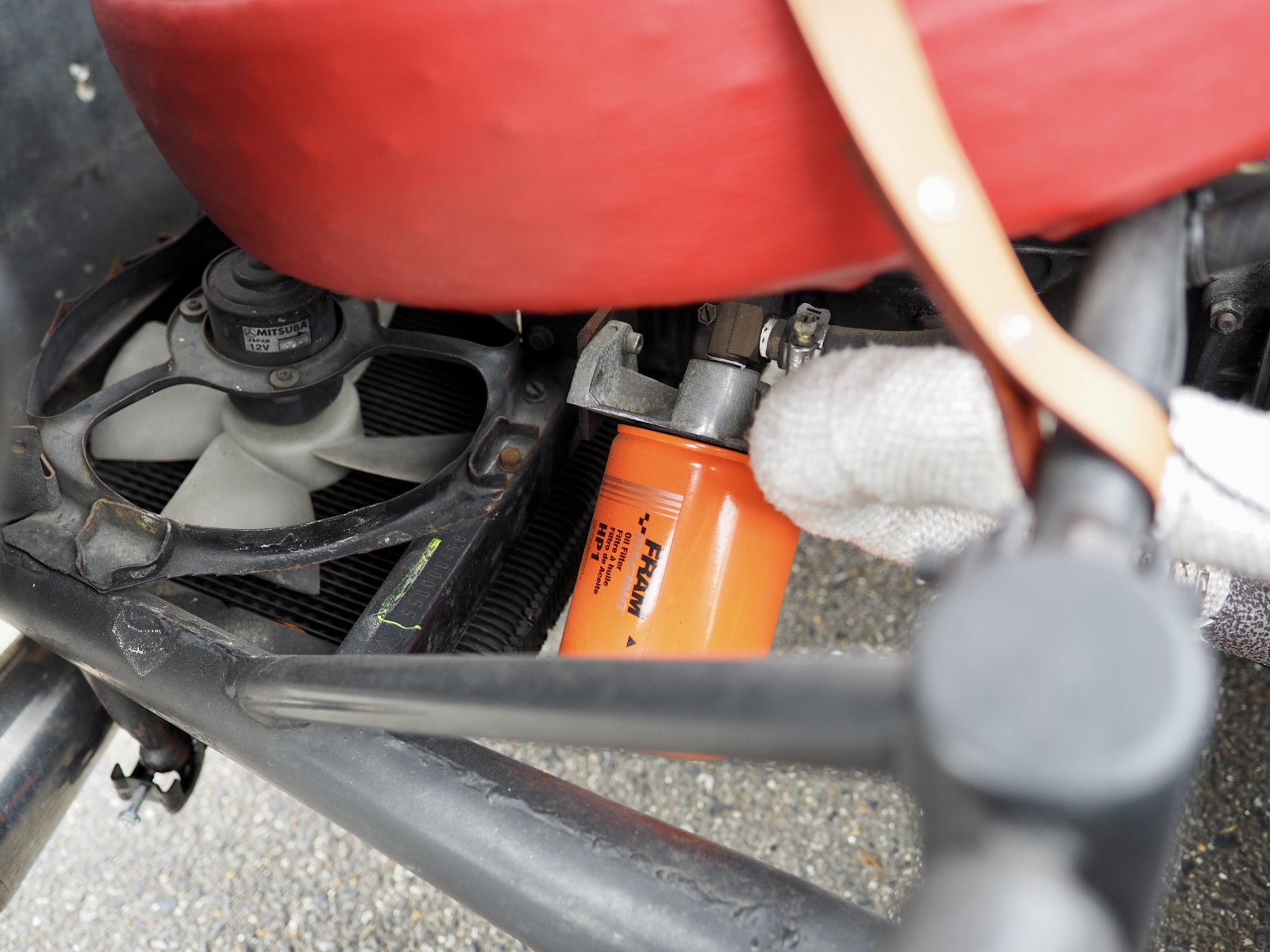
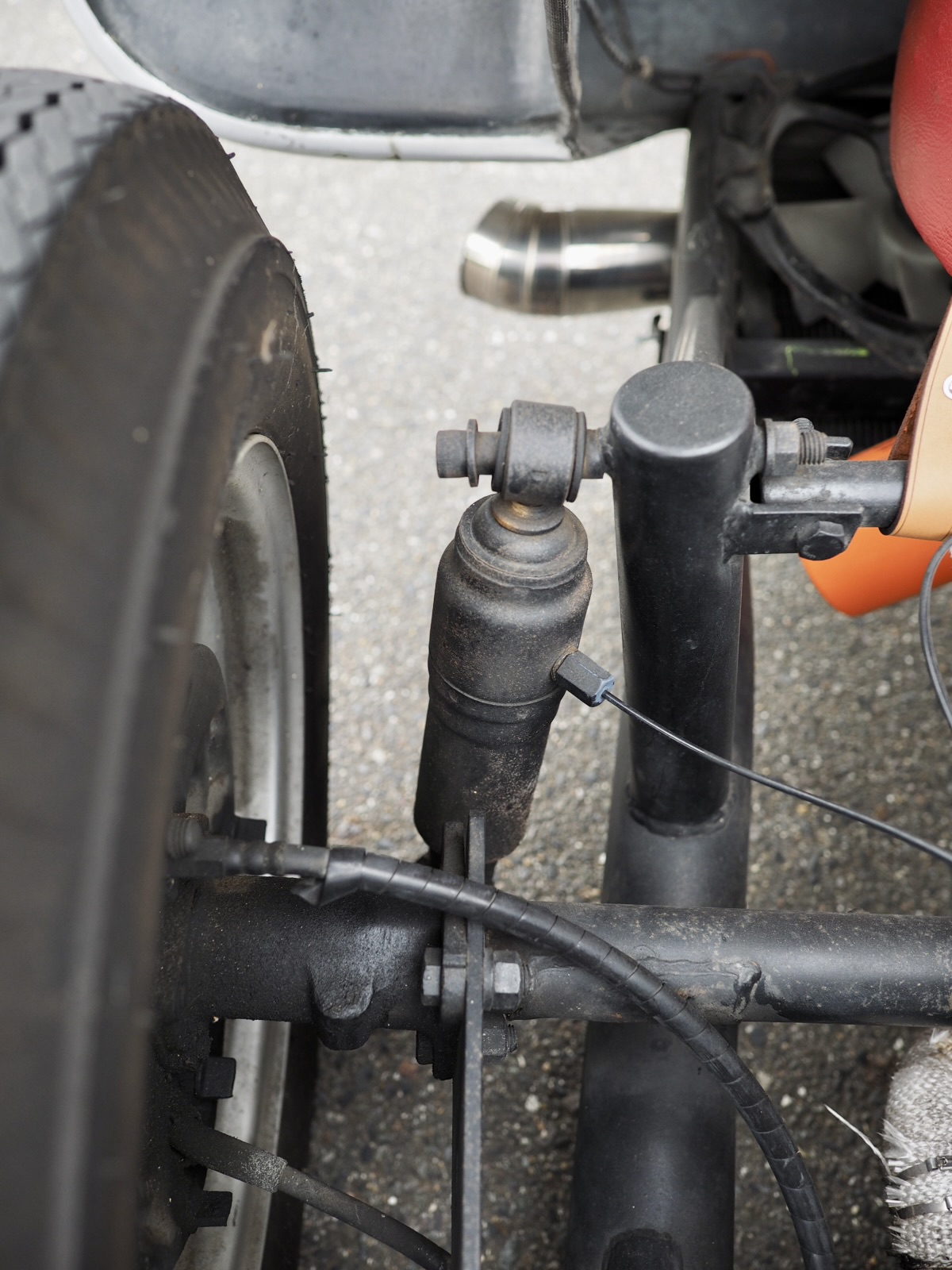
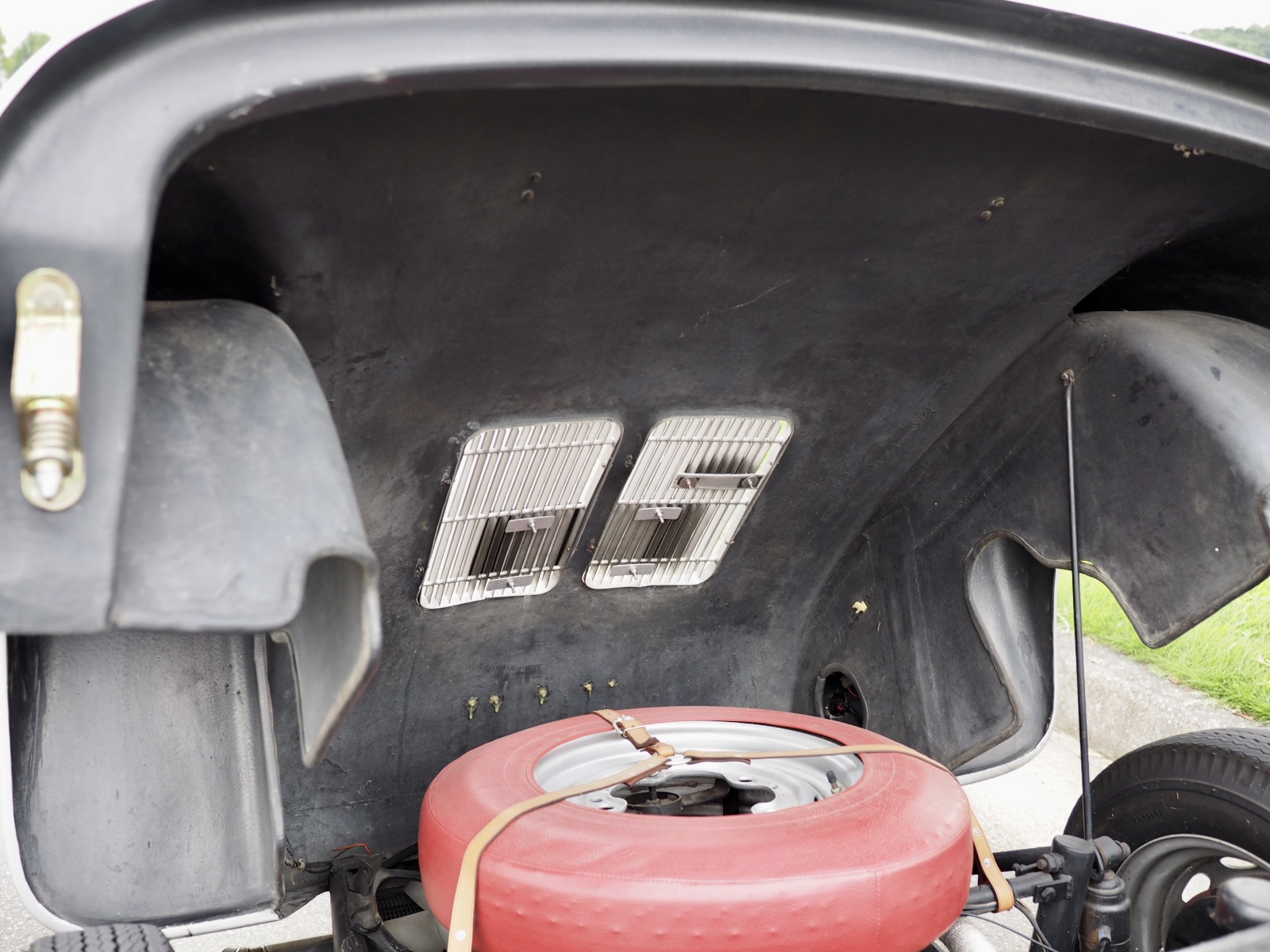
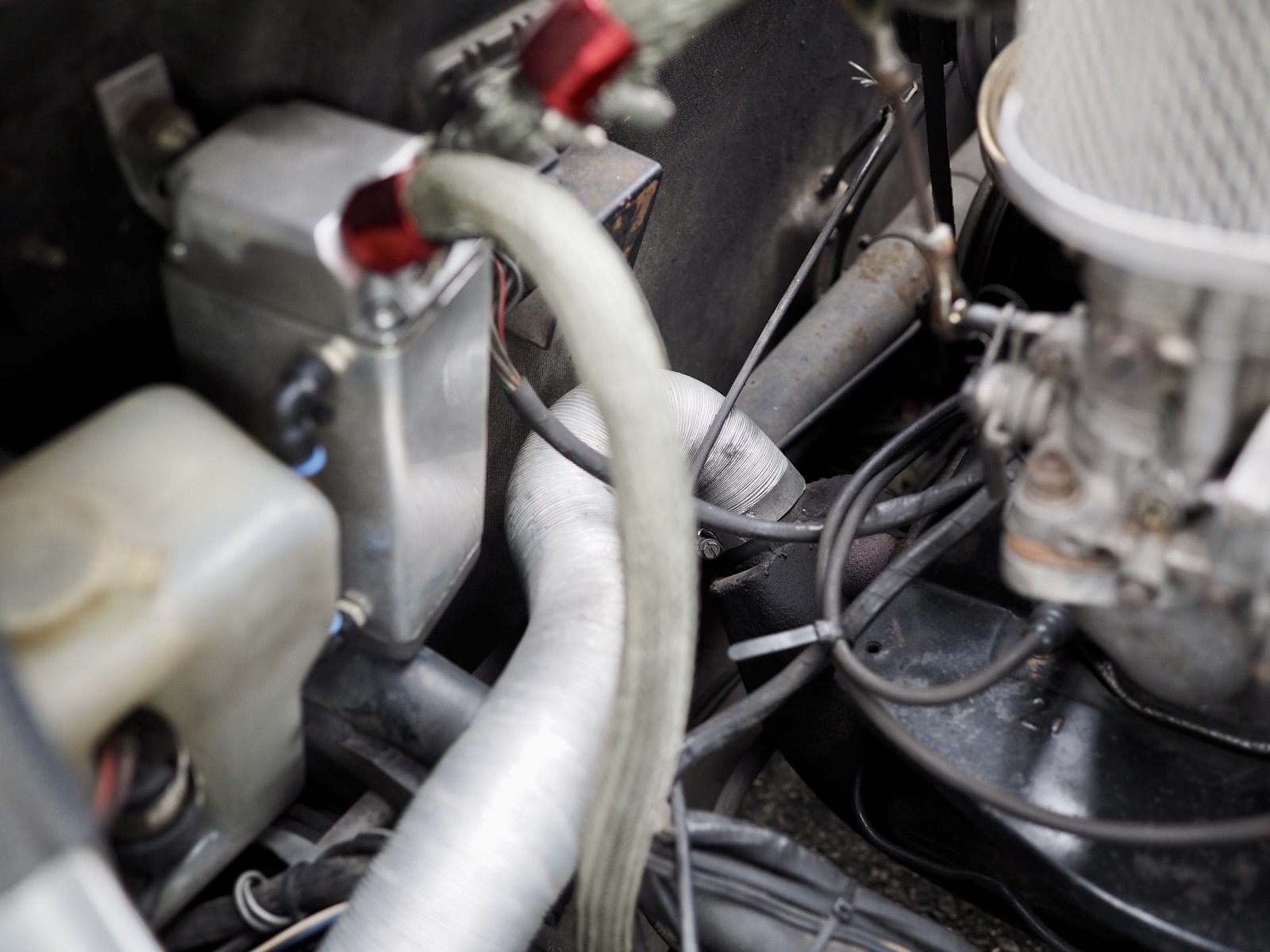
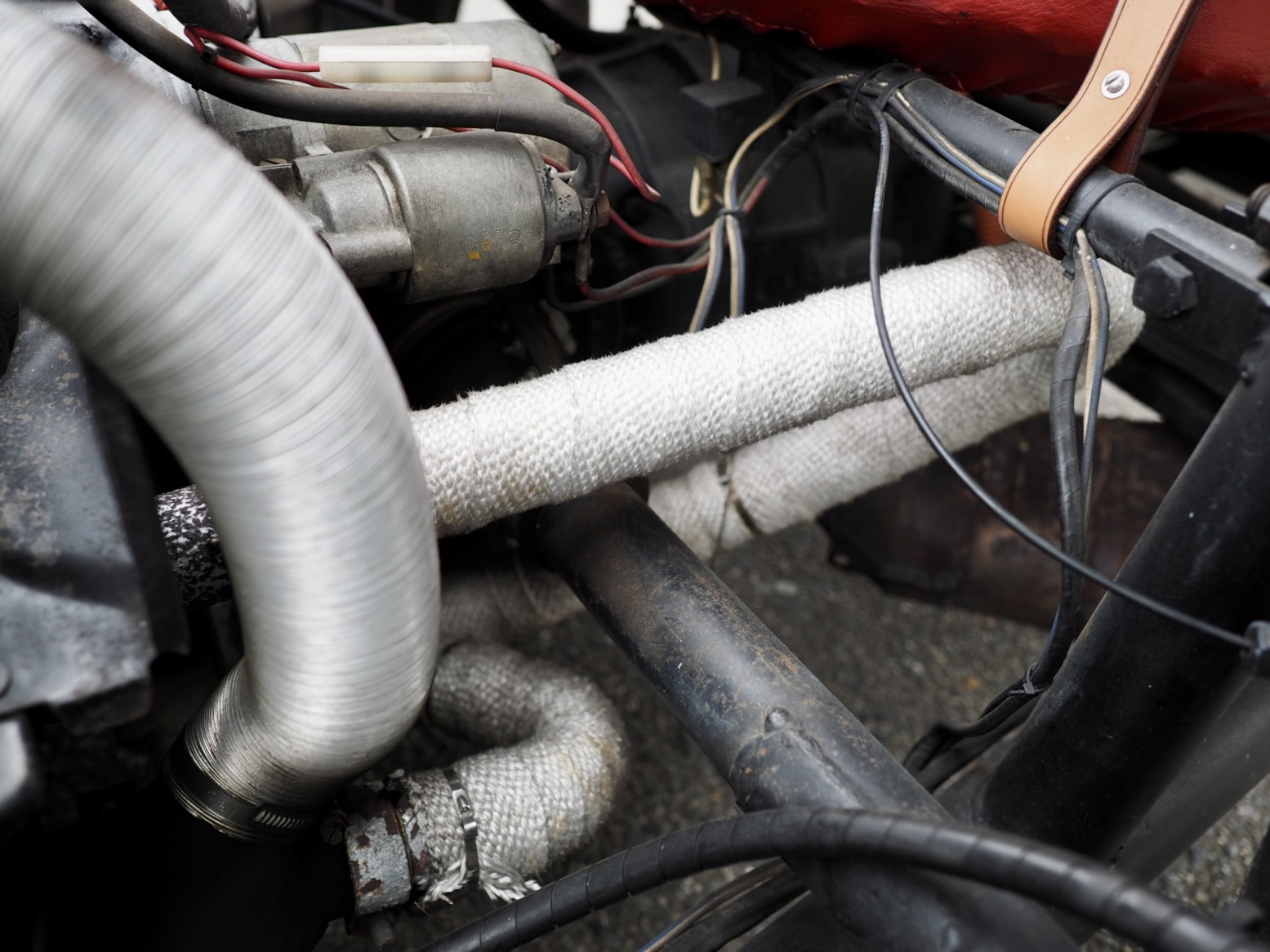
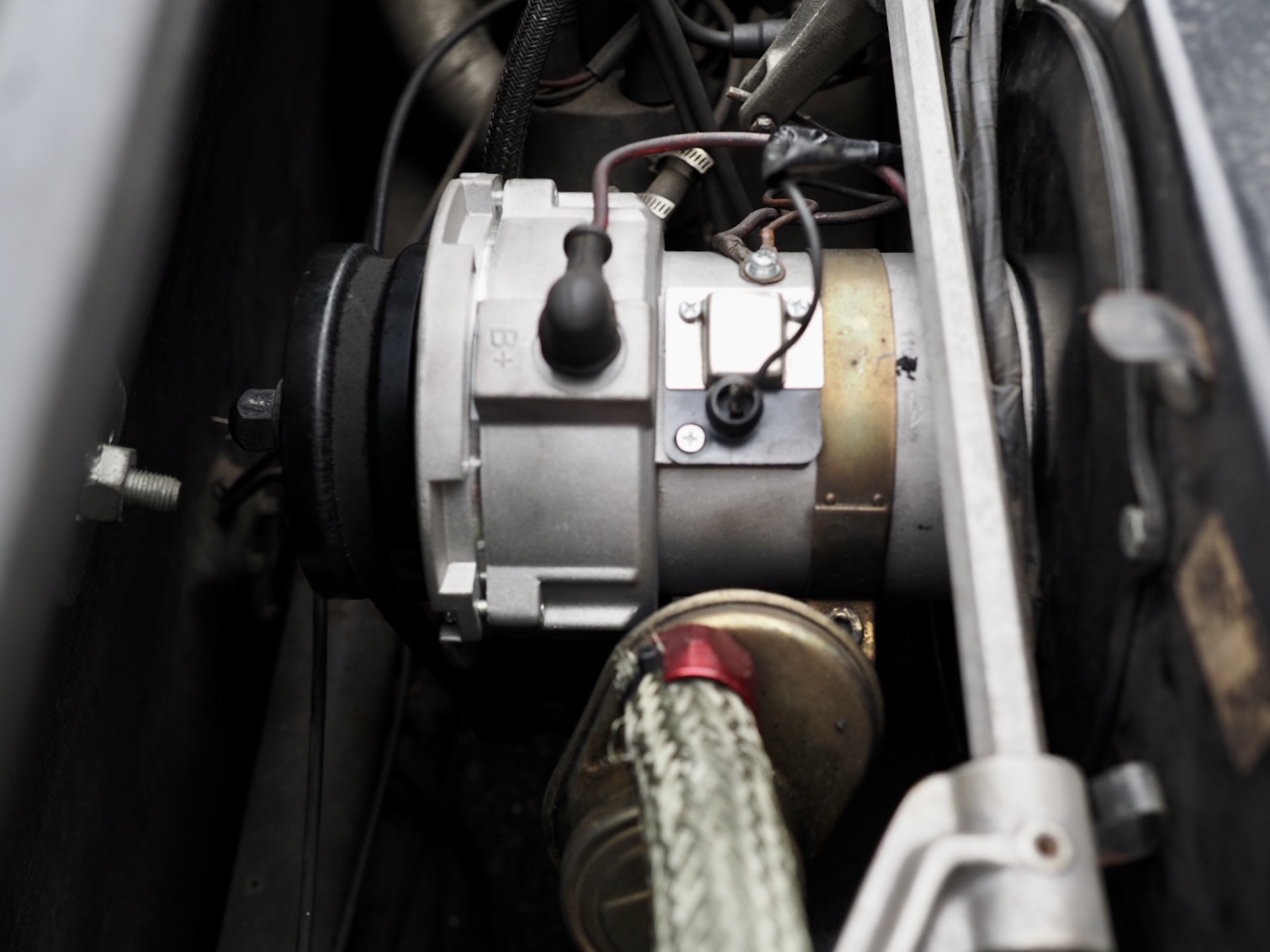
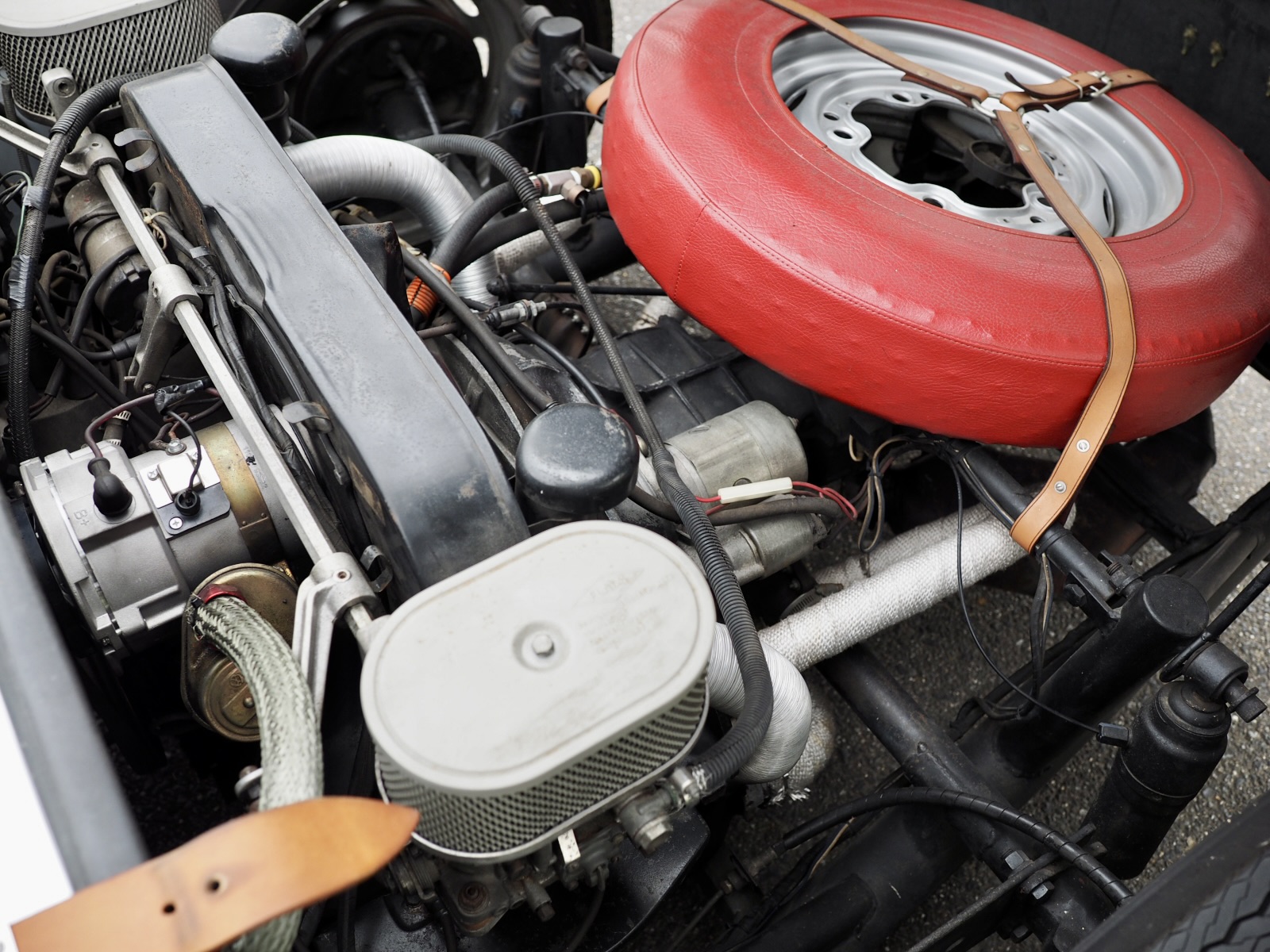
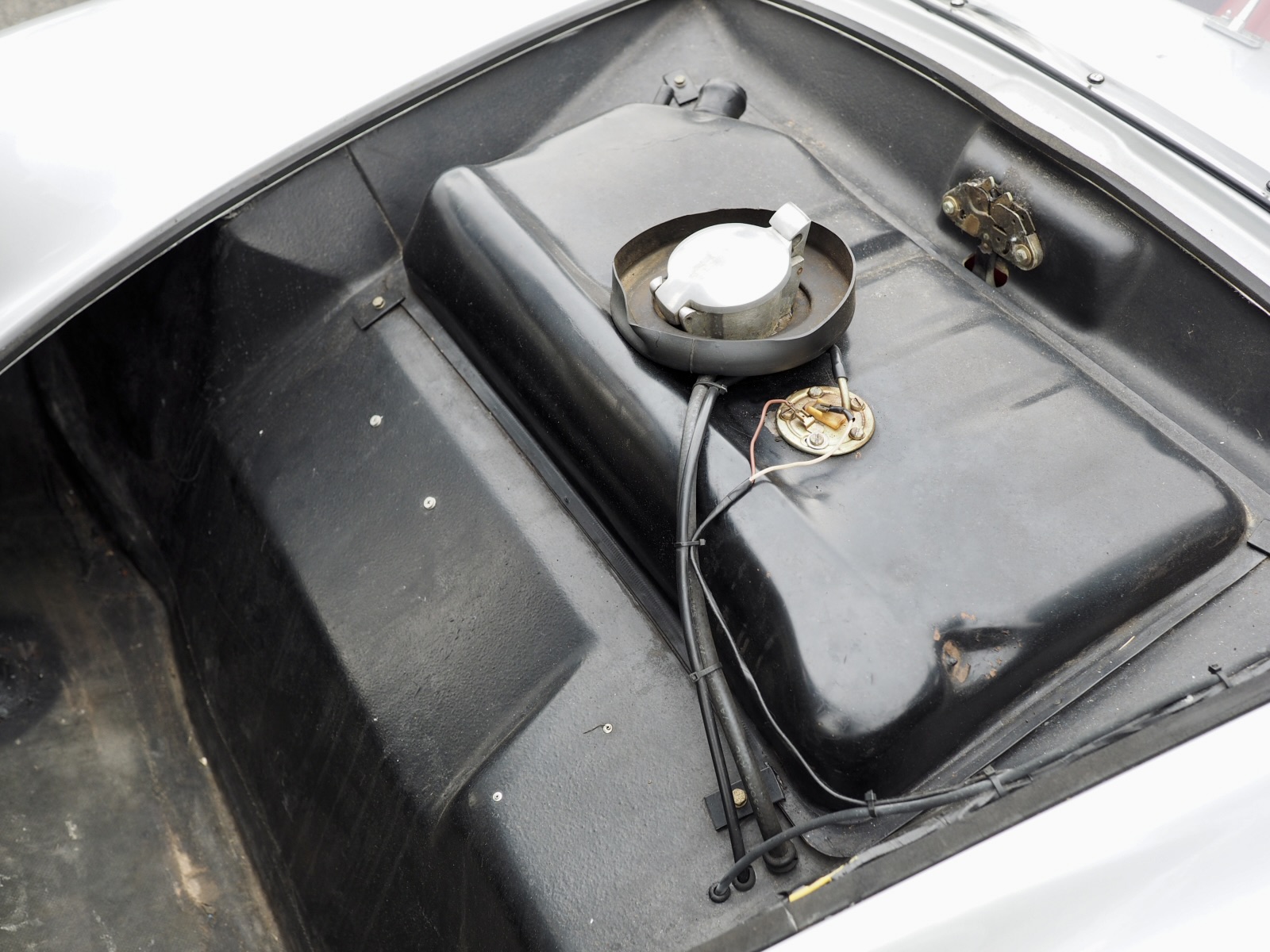
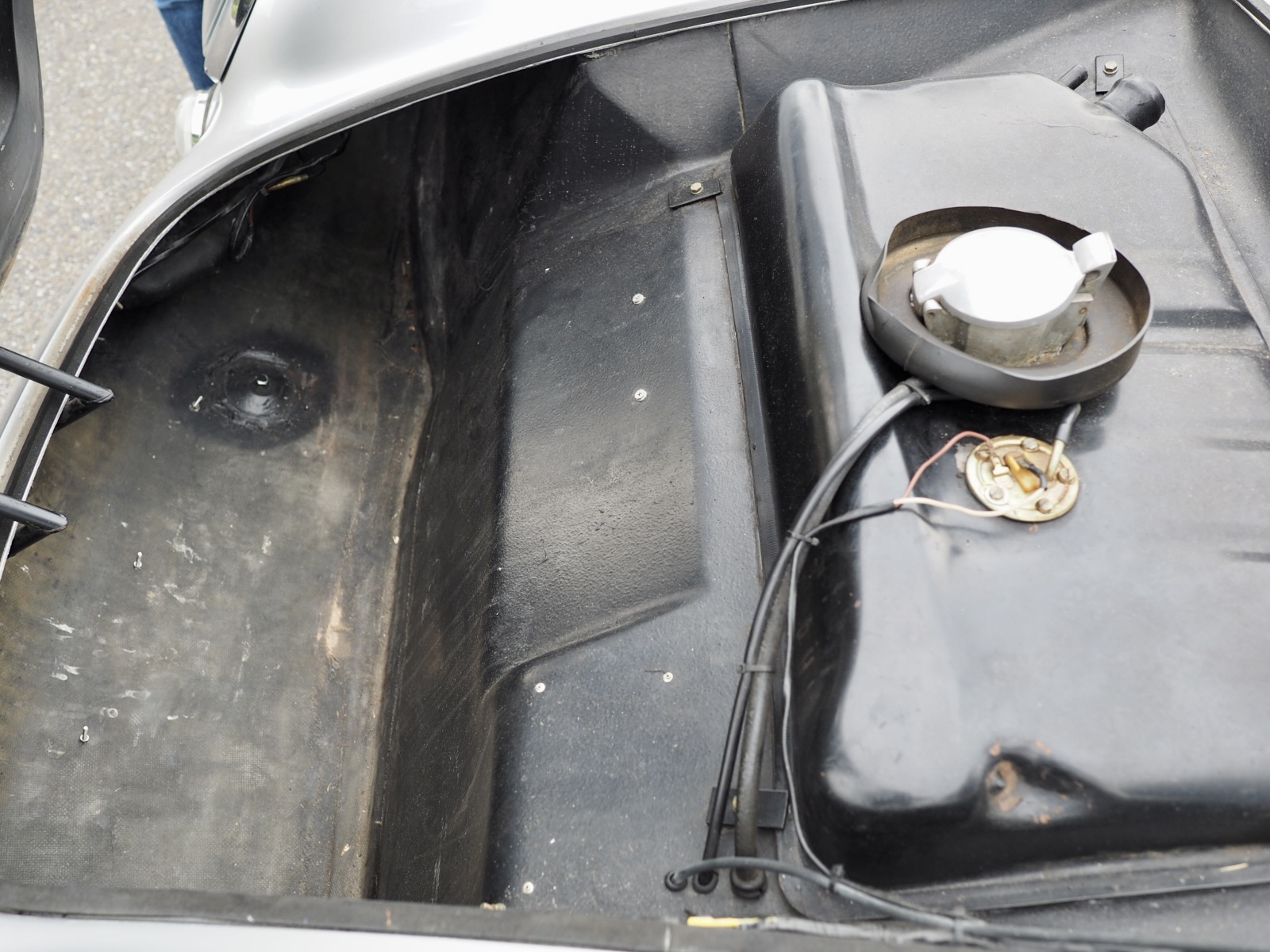
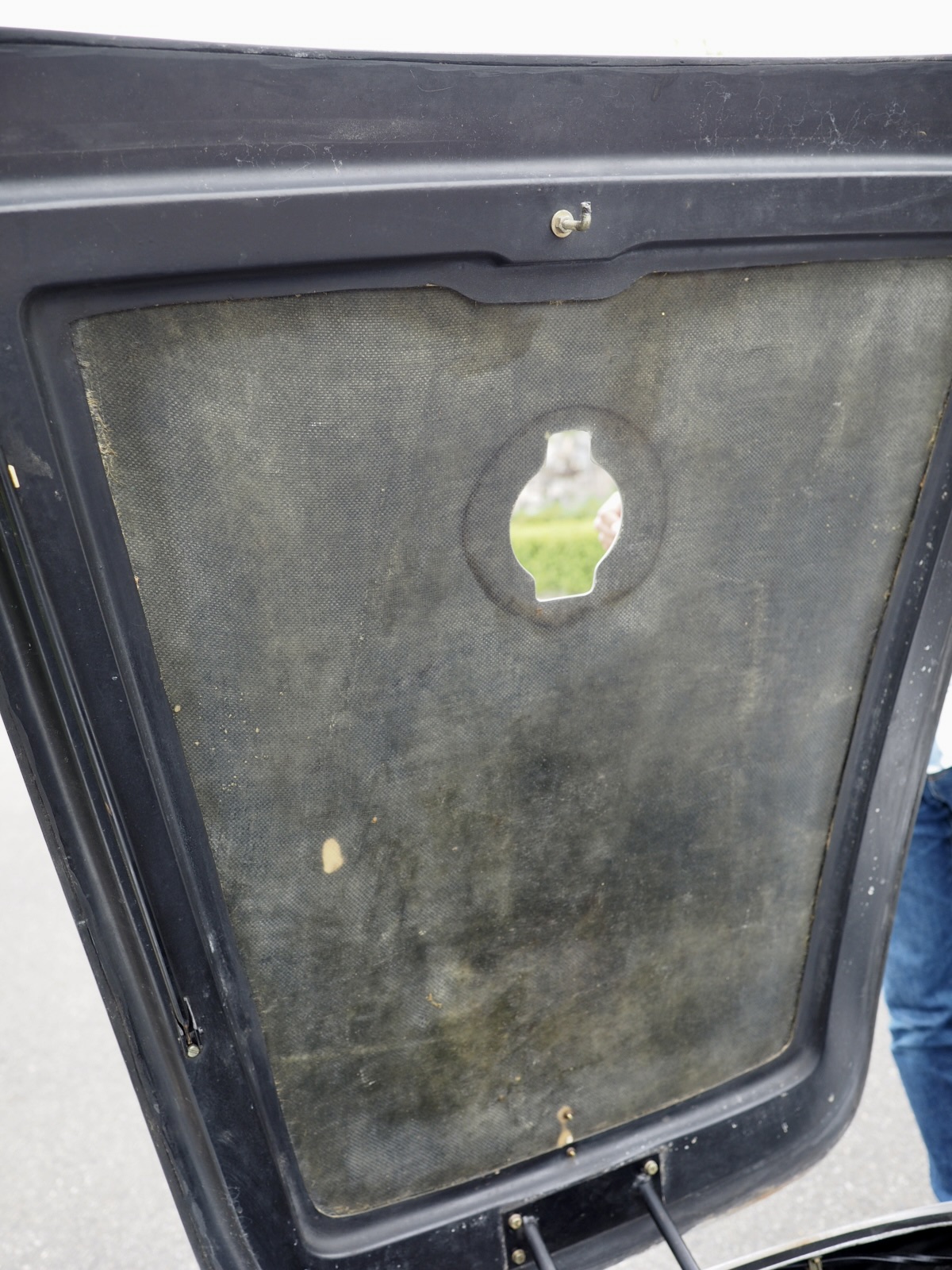
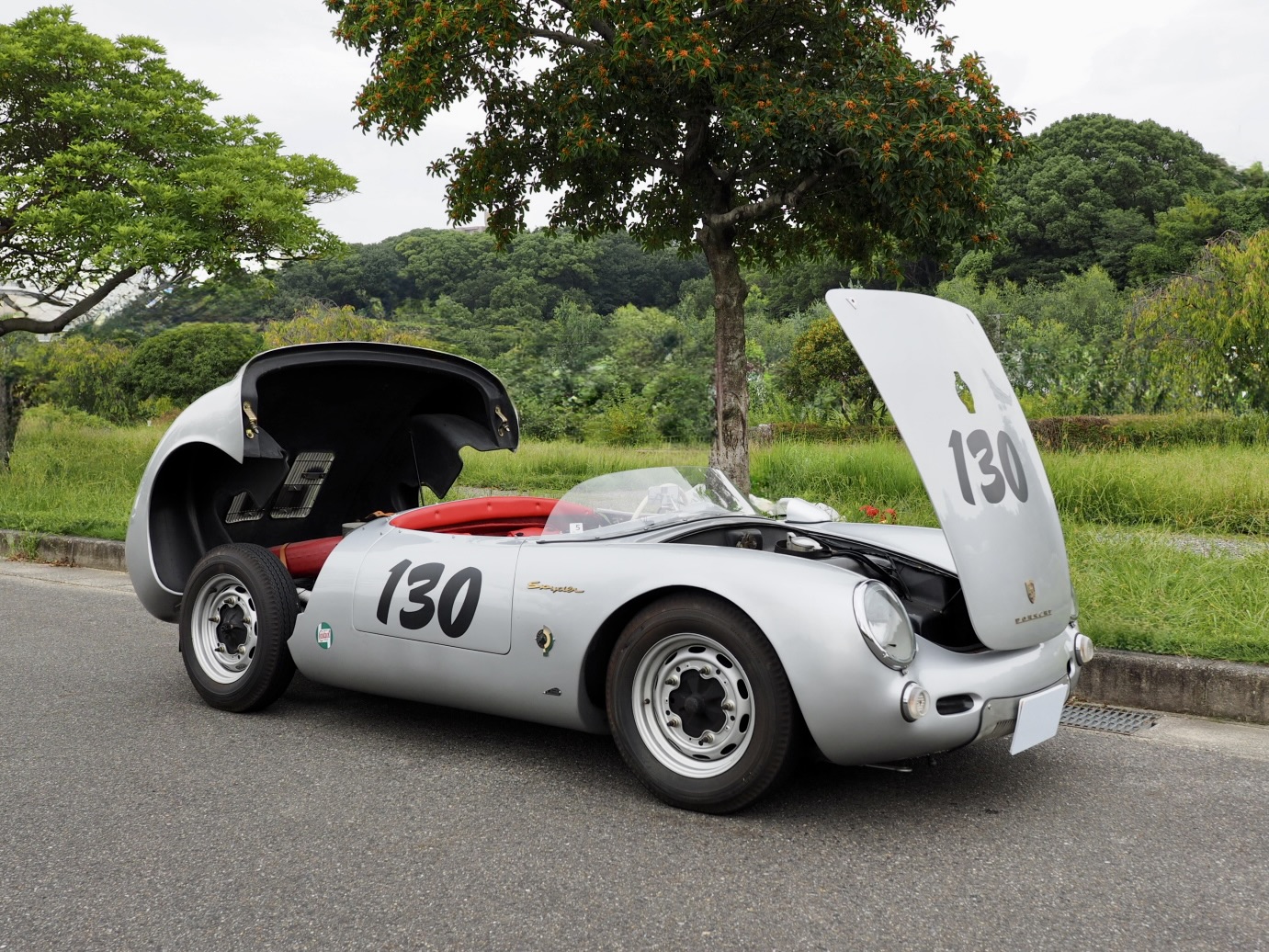
The detailed condition of the vehicle is described in each photo.
On the top slide you will find 50 attractive photos of the vehicle! Please click on a photo to view it with its description. Click outside the picture to return to the page.
SPEC
Length
375 cm
Width
160 cm
Height
102 cm
Weight
650 kg